
 Business License
Engineering Support for Mining Wear Parts Projects
Mining wear parts engineering support is the part of a supply relationship that happens before a price is agreed, and it decides whether the part fits the machine when it arrives.
A wear part stops behaving like a commodity when the drawing is missing, the material was changed years ago, or the machine has been rebuilt around a different profile.
This article sets out what a custom casting service covers, how OEM mining parts manufacturing works from a sample, and where the line runs between a supplier who quotes and a supplier who solves.
It is written for buyers and maintenance engineers who have spent time making a nearly correct part fit.
1. What Mining Wear Parts Engineering Support Covers
Mining wear parts engineering support covers the work that turns a request into a specification: reading the drawing, confirming the material, checking the geometry against the machine, and agreeing what will be inspected.
On a simple part that takes an hour, and on a crusher liner or a mill end cover it can take several days.
The work is worth doing because a part made to the wrong specification fails in service, and the cost of that failure is measured in downtime rather than in the price of the casting.
The scope normally includes six items.
A drawing review, which confirms that the dimensions on the drawing agree with each other and with the machine model.
A material proposal, which states the grade and the heat treatment and explains why they suit the duty.
A pattern plan, which says whether a new pattern is needed and how it will be stored.
A first article inspection, so the customer can approve a sample before a batch is made.
And a document package that travels with the parts and stays on file afterwards.
Shenyang Delonshine Technology has built its wear parts business on this sequence.
The company was established more than two decades ago and now runs a workshop of 5,000 to 10,000 square metres with a team of 51 to 100 people.
Its annual export value sits between US$2.5 million and US$5 million, spread across 13 export regions, and it ships from Dalian, Tianjin, Qingdao and Shanghai.
2. From Sample to Drawing: the Start of a Custom Casting Service
A custom casting service usually begins with a sample rather than a drawing, because the machine is older than the paperwork that came with it.
A worn part sent to the workshop carries the geometry even when no one can find the original drawing.
The task is to recover that geometry accurately while separating wear from the original form.
The method is straightforward.
The sample is cleaned and measured at points that a wear pattern does not affect, such as a bolt circle, a bore or an unmachined register.
Where the sample is distorted, a three dimensional scan gives a surface model that can be compared against the surviving features.
The recovered geometry is then drawn up with casting allowances added, since a cast part shrinks as it cools and needs machining stock where a face is finished.
The customer approves the drawing before any pattern is cut.
Wear has to be estimated rather than copied.
A liner that has lost 30 millimetres of section should not be reproduced at the worn size, and the original figure has to be established from the remaining features or from a sister machine.
That judgment is where experience matters, and it is the reason a first article is worth inspecting before a batch is committed.
Delonshine Technology returns a dimensional drawing with the quotation when a customer supplies a sample, so the customer can confirm the interpretation before an order is placed.
3. OEM Mining Parts Manufacturing and Reverse Engineering
OEM mining parts manufacturing goes one step further than a one-off casting, because the part has to be repeatable.
A mine that replaces the same liner four times a year needs every batch to interchange with the last one.
That requires the geometry, the material and the inspection standard to be fixed and recorded rather than re-derived on each order.
Three controls make repeatability possible.
The pattern is retained and its condition is checked before each use, since a worn pattern produces a part that drifts out of tolerance over time.
The material specification is fixed by grade and by a chemistry range, not by a trade name.
And a batch number links every casting to its inspection record, so a question asked two years later can still be answered.
The table below shows what repeatability depends on across a supply programme.
| Element | Control | Why it matters |
|---|---|---|
| Pattern | stored and checked each use | keeps geometry stable across batches |
| Material | grade plus chemistry range | removes variation between heats |
| Heat treatment | recorded cycle per batch | keeps hardness and toughness consistent |
| Machining | drawing tolerances on finished faces | makes parts interchangeable |
| Identification | batch number on each casting | ties the part to its records |
Delonshine Technology keeps patterns and inspection records for repeat programmes, so a customer reordering the same liner receives a part that matches the previous batch.
4. Pattern Design inside a Custom Casting Service
Pattern design is the step where a drawing becomes something a foundry can actually produce, and it decides the quality of the casting more than any later operation.
A pattern carries the shrinkage allowance, the machining stock and the parting line, and it sets where the metal enters and where the feeders sit.
Several decisions are taken at this stage.
Shrinkage allowance is applied across the pattern, and its value depends on the alloy and on how much the section is restrained.
Machining stock is added to faces that will be finished and left off faces that will not.
Gating and feeding are arranged so that the last metal to solidify sits in a feeder rather than inside the casting.
And draft is added so the pattern releases from the sand without tearing the mould.
A custom casting service that skips this care produces a part that looks correct and fails inspection.
Internal shrinkage is the usual result, and it is invisible until the part is radiographed or until it breaks in service.
Shenyang Delonshine Technology casts in carbon steel, high manganese steel, heat resistant steel and grey iron.
The melting shop runs a 20 tonne electric arc furnace alongside 7 to 10 tonne medium frequency induction furnaces, and the largest single casting the workshop can pour is 100 tonnes.
5. Material Selection within Mining Wear Parts Engineering Support
Material selection within mining wear parts engineering support is a balancing exercise between hardness and toughness, and it starts from the failure seen in service.
A part that wears evenly and reaches the end of its section is abrasion limited, and a harder grade will help.
A part that cracks, bows or breaks is impact limited, and a harder grade will make the problem worse.
The available families suit different duties.
High manganese steel work hardens under impact and suits jaw plates, cone mantles and other parts that see heavy loading.
Alloy and carbon steel castings suit structural items such as end covers, trunnion supports and gear blanks.
Heat resistant steel suits parts that run hot, and grey iron suits housings and covers where castability and damping matter more than wear resistance.
The table below sets out the usual mapping from duty to material family.
| Duty seen in service | Material family | Reason |
|---|---|---|
| Heavy impact with abrasion | high manganese steel | work hardens under repeated blows |
| Steady abrasion, little impact | alloy steel or white iron | hardness carries the duty |
| Structural load and alignment | carbon or alloy steel casting | strength and machinability |
| Elevated temperature | heat resistant steel | retains strength when hot |
| Housing and closure | grey iron | castability and vibration damping |
Delonshine states the proposed grade and treatment with the quotation and explains the reasoning, so the customer can challenge the proposal before the casting is poured.
6. Field Trials for Mining Wear Parts
A field trial is the dependable test of a wear part, because a workshop can measure hardness and dimensions but not how a part behaves in a real circuit.
A trial normally uses a small number of parts rather than a full set, so that the risk is contained if the material or profile turns out to be wrong.
A useful trial has three parts.
A baseline measurement is taken when the trial parts are fitted, including the section thickness at marked points.
The parts are removed at a set interval and measured again at the same points, so the wear rate can be calculated.
And the result is compared with the previous part from the same position, on the same duty, before any conclusion is drawn.
Without a baseline, a trial produces an opinion rather than a figure.
A jaw plate that lasted four months may have lasted three or five under the same conditions, and a measured wear rate removes the guesswork.
A copper concentrator trialled a mill liner in a harder grade at one position while the remaining positions kept the original material. Measurement at 90 days showed the trial liner had worn roughly a fifth less at the lifting face with no cracking. The following order moved the whole shell to the new grade, and the decision rested on the measured figures rather than on a promise.
7. Documentation in OEM Mining Parts Manufacturing
Documentation in OEM mining parts manufacturing is what allows a buyer to accept a shipment with confidence rather than on trust.
It also protects the supplier, because it records the condition of the part at the moment it left the workshop.
The table below lists the records that normally accompany a batch.
| Record | What it shows |
|---|---|
| Material certificate | grade and chemistry of the heat |
| Heat treatment chart | the cycle actually applied |
| Hardness results | the figures at agreed positions |
| Dimensional report | measured values against the drawing |
| Inspection results | penetrant or ultrasonic findings |
| Packing list | parts, weights and marks per package |
Each part carries a batch number that ties it to those records.
That link matters most when a customer asks a question about a part that has been in service for two years, since the answer is in the file rather than in someone's memory.
Delonshine issues this package with every order and keeps a copy against the batch number.
8. After Sales Support for Mining Wear Parts
After sales support for mining wear parts is where a supply relationship either becomes a programme or ends with the first order.
A supplier who understands how the parts performed can adjust the next batch, and a supplier who never sees the used parts cannot.
Useful support covers four areas.
Wear analysis on returned parts, which distinguishes an abrasion problem from an impact problem and points to a change in material or profile.
Replacement planning, which uses measured wear rates to set reorder points rather than relying on a calendar.
Pattern retention for the customer programme, so a part can be reproduced from the original drawing years later.
And a documented answer when a part fails early, because a failure investigated properly becomes a design change rather than a complaint.
Delonshine Technology treats the first order as the start of a programme rather than as a transaction, and it uses the feedback from delivered parts to refine the next batch.
9. Frequently Asked Questions about Engineering Support for Mining Wear Parts
9.1 What does mining wear parts engineering support include?
Mining wear parts engineering support covers drawing review, material proposal, pattern planning, first article inspection and the document package that travels with the parts. It also covers the judgment calls that a drawing does not answer, such as how much wear to add back when a sample has been in service for years. On a simple part the work takes an hour, while a crusher liner or a mill end cover can take several days of review before an order is placed.
9.2 How does a custom casting service work from a sample alone?
A custom casting service starts by recovering geometry from the sample at points that wear does not affect, such as a bolt circle, a bore or an unmachined register. Where the part is distorted, a three dimensional scan produces a surface model that can be compared against the surviving features. Casting and machining allowances are then added before a pattern is cut, and the drawing is sent to the customer for approval. A first article is inspected and approved before a batch is committed.
9.3 What makes OEM mining parts manufacturing repeatable across batches?
OEM mining parts manufacturing stays repeatable when the pattern is retained and checked before each use, the material is fixed by grade and chemistry range, and every casting carries a batch number linked to its inspection record. Pattern condition matters most, because a worn pattern produces parts that drift out of tolerance over a series of orders. Fixing the material by chemistry rather than by a trade name removes variation between heats, and recorded heat treatment keeps hardness consistent from batch to batch.
9.4 How is a wear part trial set up so the result means something?
A wear part trial needs a baseline measurement at marked points when the trial part is fitted, a re-measurement at the same points at a set interval, and a comparison against the previous part from the same position on the same duty. Without a baseline, the trial produces an opinion rather than a figure, since a part that lasted four months might have lasted three or five under the same conditions. Measuring at fixed points converts the trial into a wear rate that can be compared directly.
Recently Posted
-
Casting Capability: From a 20-Ton Arc Furnace to 100-Ton Castings
October 8, 2026A buyer sourcing a heavy spare part for a grinding mill or a primary crusher is really asking two questions about the supplier. Ca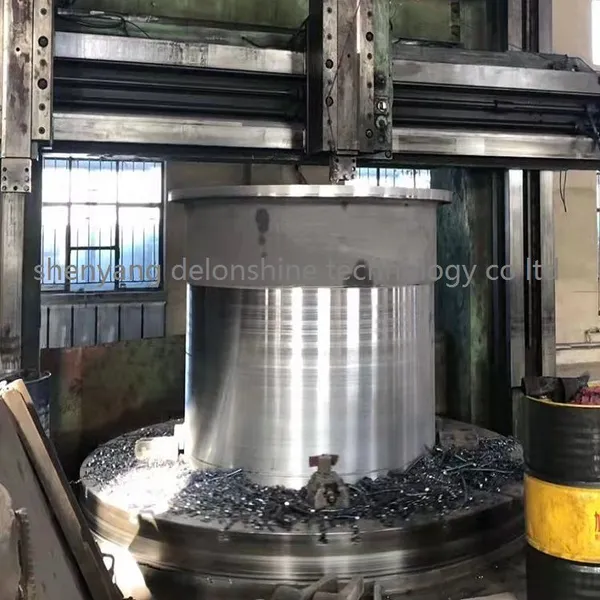 Read More
 -
Ultrasonic and Magnetic Particle Testing on Mining Big Gears
October 7, 2026A mining big gear weighing 20 tonnes and measuring 5 metres across cannot be inspected by looking at it. The defects that end its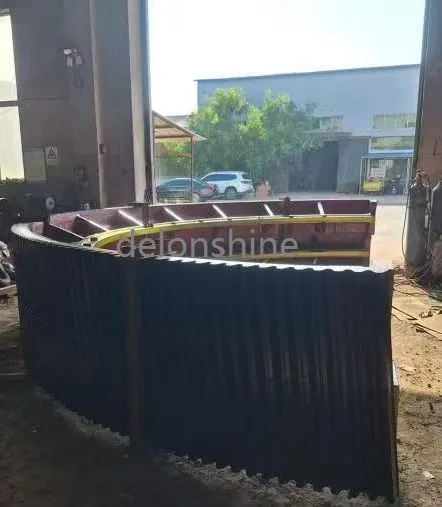 Read More
 -
Jaw Crusher Plates in Hard Rock Quarrying
October 7, 2026A granite quarry asks more of a quarry jaw crusher plate than a river gravel pit does. Rock that is hard, abrasive and blocky puts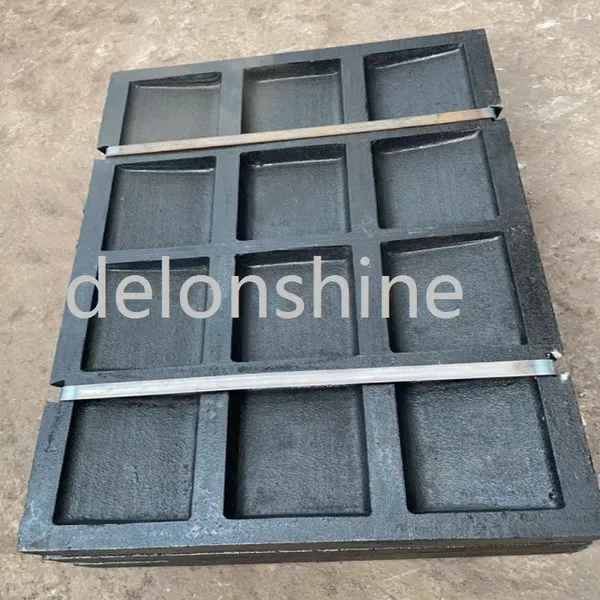 Read More
 -
Jaw Crusher Plate Material Grades: Mn13, Mn18 and Mn22
October 7, 2026Two quotations for the same jaw crusher plate often differ by a wide margin, and the reason is usually the grade written on the dr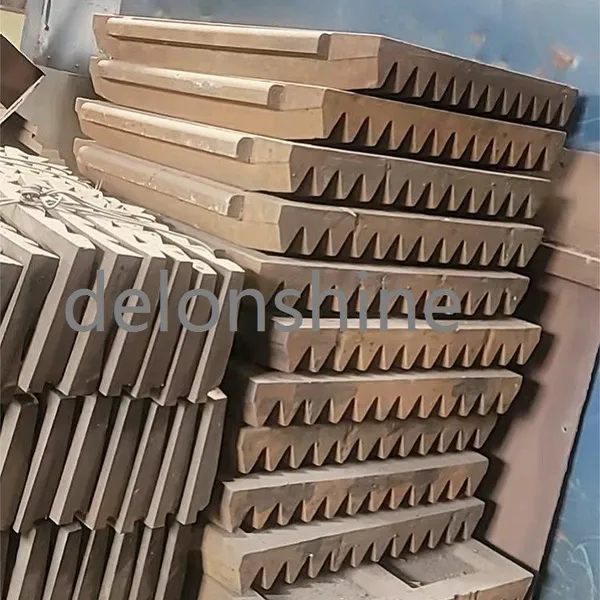 Read More

Contact Us
Recommended Products
-
 Vertical Mill Reducer Planetary Gear AssemblyNegotiableMOQ: 2 Combos
 -
High Precision Mining Equipment End Cover Wear Resistant Crusher End CapNegotiableMOQ: 2 Pieces
-
Heavy Duty Mining Equipment Cast HousingNegotiableMOQ: 2 Pieces
-
Mining Parts Concave MantleNegotiableMOQ: 2 Pieces
-
High Strength Cast Steel Crusher Lifting Beam Heavy Load Mining Equipment Spare PartNegotiableMOQ: 2 Pieces
-
OEM Replacement Mining Spare Parts for Stone Crushing PlantNegotiableMOQ: 2 Pieces
-
Cast Steel Ball Mill Head for Mineral ProcessingNegotiableMOQ: 2 Pieces
-
Large Diameter Cast Gear for Ore Grinding MillNegotiableMOQ: 2 Pieces
-
Wear Resistant Mining Spare PartsNegotiableMOQ: 2 Pieces
-
Industrial Wet Dry Ball Mill for Mineral ProcessingNegotiableMOQ: 2 Pieces


-
High Wear Resistant Ball Mill Wear Parts Ball Mill Gear Pinion Liner for Mining Processing PlantNegotiableMOQ: 2 Pieces
-
Heavy Duty Equipment CasingNegotiableMOQ: 2 Pieces
-
Customized Main Shaft for Cone CrusherNegotiableMOQ: 2 Pieces
-
Ball Mill Head With Flange and Bolt HolesNegotiableMOQ: 2 Pieces
-
Heavy Duty Equipment CasingNegotiableMOQ: 2 Pieces


-
Crusher Wear Parts for Mining MachineryNegotiableMOQ: 2 Pieces
-
High Manganese Steel Jaw Crusher Fixed & Swing PlatesNegotiableMOQ: 2 Pieces
-
Cast Steel Safety Toggle Plate for Jaw Crusher Overload ProtectionNegotiableMOQ: 2 Pieces
-
High Manganese Steel Mill LinerNegotiableMOQ: 2 Pieces
-
Main Shaft Steel Sleeve Lock Nut for Cone CrusherNegotiableMOQ: 2 Pieces