
 Business License

Casting Capability: From a 20-Ton Arc Furnace to 100-Ton Castings
A buyer sourcing a heavy spare part for a grinding mill or a primary crusher is really asking two questions about the supplier.
Can the foundry pour a casting of that size, and can it control the process closely enough that the casting arrives sound.
Shenyang Delonshine Technology Co Ltd has been answering both questions from a works in Shenyang for more than two decades.
This article describes the melting capacity, the process route and the inspection stages behind that answer.
1. What Large Casting Capability Means in Practice
Large casting capability is not a single number, and treating it as one is how buyers run into trouble.
A works may be able to melt 100 tonnes in one heat and still be unable to handle the part, because capacity also depends on crane capacity, moulding pit dimensions, heat treatment furnace size and machining reach.
The useful measure is the weight and diameter the whole route can process rather than the weight one furnace can melt.
At the Shenyang works the practical envelope runs to a single piece of up to 100 tonnes.
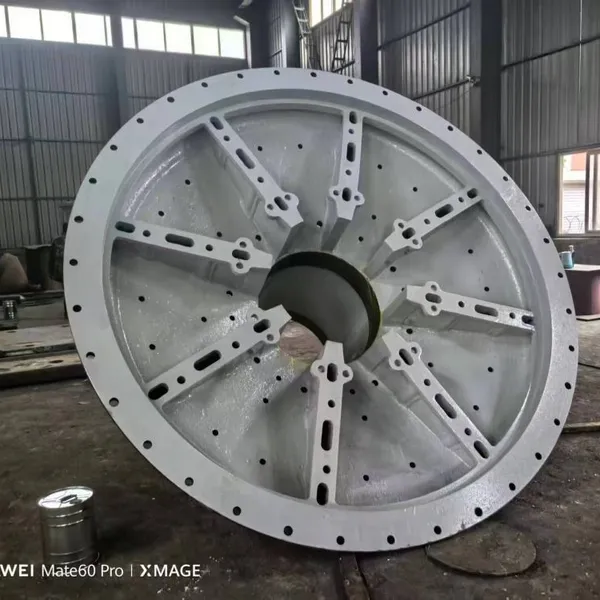
That covers grinding mill end covers in the 2 to 30 tonne range, girth gear rings and mill heads for large mills, and crusher components of a similar size.
Below that range the same plant produces pump parts, valve bodies and general industrial castings in batches.
A 100 ton steel casting is therefore a routine item for this works rather than an exceptional one.
Capability also has a floor as well as a ceiling.
A foundry equipped for very large castings is not automatically the economical choice for a 20 kilogram part.
Delonshine Technology quotes both, and the technical team will say so when a smaller casting belongs with a different production route.
2. Melting Capacity Behind a 100 Ton Steel Casting
The melting shop is where a 100 ton steel casting is decided.
One arc furnace rated at 20 tonnes and two induction furnaces in the 7 to 10 tonne range allow the works to melt, refine and hold metal for a heavy pour.
For a very large casting, more than one furnace contributes to the same ladle, and the chemistry is checked and corrected before the metal leaves the shop.
Melting capacity is quoted in tonnes, and the figure that matters at the point of pour is temperature and chemistry rather than volume.
Steel leaves the furnace at a temperature that gives the ladle enough time to travel and fill a large mould without freezing in the runners.
Spectrometer analysis on every heat confirms the composition before pouring begins.
The table below summarises the melting and casting envelope.
| Item | Capacity or range |
|---|---|
| Arc furnace | 20 tonnes |
| Induction furnaces | two units, 7 to 10 tonnes each |
| Maximum single piece | up to 100 tonnes |
| Materials cast | carbon steel, high manganese steel, heat resistant steel, gray iron |
| Typical heavy parts | mill end covers, girth gear rings, crusher frames and heads |
Multiple heats require a pouring plan rather than a single decision.
Sequence, temperature loss and ladle movement are worked out in advance, because a heavy casting cannot be poured twice.
That planning is the part of the operation a buyer never sees and always pays for, one way or the other.
3. From Pattern to Pour: Process Control in a Mining Casting Foundry
A mining casting foundry earns its reputation in the steps between the drawing and the pour.
Pattern making comes first, and for a replacement part the pattern is often generated from measurements taken on the machine rather than from a complete drawing.
Riser and gating design follows, and on a heavy section that design is the main defence against shrinkage.
Moulding and core making come next.
Large castings are produced in sand moulds assembled in a pit, with chills placed where a heavy section meets a lighter one.
Mould hardness, coating and the drying cycle all affect the surface quality of the finished casting.
Pouring is the point of no return.
Temperature is checked again immediately before the ladle is tipped, and the pour is monitored so that the mould fills at a controlled rate without turbulence that would fold slag into the metal.
After pouring, the casting is left to cool under a controlled schedule rather than stripped as soon as it can be handled.
4. Heat Treatment and Machining After a Large Casting
Cooling is followed by heat treatment, and the schedule decides the mechanical properties a buyer later reads on a certificate.
Normalising refines the grain structure, and quenching and tempering raises strength where the duty calls for it.
Manganese steel takes a different route, with a solution treatment that produces the austenitic structure the grade depends on.
Furnace size sets another limit on large casting capability.
A casting that cannot fit inside a heat treatment furnace has to be treated in sections or accepted with properties that vary across the part, and neither option is attractive on a load-bearing component.
The Shenyang works plans the heat treatment route before quoting, so that a ring or a cover is not cast at a size the furnace cannot accept.
Machining follows heat treatment.
Bores, joint faces, bolt holes and gear teeth are cut after the casting has been stress relieved, because cutting them before would allow the material to move.
Tooth cutting on a large ring is done on a machine the ring itself has to fit inside, which is a constraint worth confirming before an order is placed.
5. Inspection Stages That Protect a 100 Ton Steel Casting
A 100 ton steel casting cannot be reworked into a good one after it is finished, so inspection runs through the whole route rather than at the end.
Chemical analysis on every heat, mechanical testing on cast test bars, and nondestructive examination of the finished part together form the evidence trail.
Each stage exists to catch a different class of problem.
Dimensional inspection is part of the same discipline.
Bolt circles, joint faces and machined bores are measured against the drawing on the finished casting, and the figures travel with the shipment.
A buyer who receives those numbers can compare them with the machine before the casting is lifted into place.
Nondestructive examination is planned for the regions where load concentrates.
Ultrasonic testing covers the interior of heavy sections, while magnetic particle inspection examines machined tooth flanks, root radii and joint faces.
Delonshine issues both reports against the heat number of the casting, so each figure can be traced to one melt and one inspection.
6. Packing and Lifting a Large Casting for Export
A casting that survives the foundry can still be damaged on the way to a port.
Packing for heavy parts is therefore engineered rather than improvised, and lifting points are confirmed before the crate is closed.
The objective is that the part arrives with its machined surfaces unchanged.
Heavy castings travel in steel cradles or timber cradles with steel reinforcement, depending on the shape and the route.
Machined faces are protected with timber battens and anti corrosion coating, and small parts are bundled so that they cannot move inside the crate.
Shipping marks, weights and lifting diagrams are marked on the outside of each package.
Four ports serve the export programme.
Dalian is the closest, with Tianjin, Qingdao and Shanghai used according to the destination and the sailing schedule.
For a buyer in Europe or the Americas, that choice affects transit time by a week or more, and it is worth discussing when the order is placed rather than when the casting is ready.
7. The Materials a Mining Casting Foundry Casts
The material range determines which parts a mining casting foundry can serve.
Carbon steel covers structural castings such as end covers, frames and housings where strength and weldability matter.
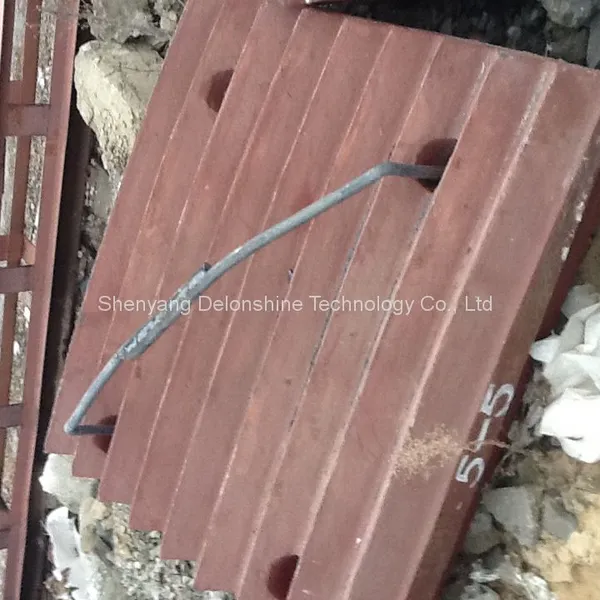
High manganese steel covers wear parts that must resist impact, including jaw plates, concave and mantle components and hammer heads.
Large casting capability in carbon steel is what makes a replacement end cover or gear ring possible at all on an older machine.
Heat resistant steel serves parts that see elevated temperature, such as grate plates and components close to a kiln or a dryer.
Gray iron covers housings, bearing caps and covers where compressive strength and damping matter more than tensile strength.
The grade is selected against the duty rather than against the price alone.
A buyer can confirm the choice quickly by sending three pieces of information.
The drawing or pattern number, the service the part sees, and the failure history of the previous casting.
Those three together usually decide the grade before any discussion of price begins.
8. Where Large Casting Capability Wins and Where It Does Not
Large casting capability pays when a plant is replacing a heavy part that is difficult to source.
A mill end cover, a girth gear ring or a crusher frame on an older machine is often unavailable as a catalogue item, and a works that can cast from measurements restores the machine without a redesign.
It also pays where a plant wants a casting made to its own drawing rather than to a supplier's standard range.
There are limits worth stating.
A single replacement casting is slower than a stocked part, because pattern making, pouring, heat treatment and machining all sit between the order and the shipment.
Where a machine is critical and the outage window is short, a plant is often better served by confirming lead times in advance and holding a spare than by ordering after the failure.
Export experience shortens the rest of the process.
Delonshine has supplied castings to buyers across 13 regions, including North and South America, Europe, Southeast Asia, Africa, the Middle East and Oceania, with an annual export value in the range of US$2.5 million to 5 million.
That experience shows up in the documents and the packing as much as in the casting itself.
A North American mill operator needed a replacement end cover for an older grinding mill and had no complete drawing for the machine, so the works produced a pattern from measurements taken on site and delivered the casting within the outage window the plant had planned.
A plant in Southeast Asia ordered a set of mill liners together with the matching fasteners and backing compound, and receiving all three in one shipment removed a delay that had affected the previous reline.
9. Frequently Asked Questions about Large Casting Capability
9.1 What is the maximum part weight a foundry like this can produce?
At the Shenyang works a single piece can run to 100 tonnes, which covers heavy mill end covers, girth gear rings and large crusher components. That figure describes the finished casting rather than the furnace capacity, and both matter. A single casting at that weight needs a crane, a moulding pit, a heat treatment furnace and a machining machine that can all accept it. Buyers are therefore better served by asking for the practical envelope of the whole route than by asking for a single maximum weight.
9.2 How long does a 100 ton steel casting take to produce?
Production after the order depends on whether a pattern already exists. Where the works holds the pattern, the sequence runs through moulding, melting, pouring, cooling, heat treatment and machining, and the total is measured in weeks rather than days. Where a new pattern has to be made from measurements or a drawing, add further time before the first pour. The reliable approach is to ask for a stage by stage schedule with the quotation, then to check which stages sit on the critical path for the specific part.
9.3 Which materials are available from a mining casting foundry?
The common range covers carbon steel, high manganese steel, heat resistant steel and gray iron, with each family suited to a different duty rather than to a different price bracket. Carbon steel suits structural castings such as end covers and frames, and high manganese steel suits wear parts that must absorb impact. Heat resistant steel suits parts exposed to elevated temperature, and gray iron suits housings and caps where damping and compressive strength matter. Where a drawing names a standard grade, the works will confirm whether that grade is available or propose an equivalent.
9.4 How can a buyer verify a heavy casting before it ships?
Ask for the inspection file and read it rather than filing it. It should contain chemical analysis for the heat, mechanical test results from cast bars, dimensional measurements taken on the finished part, and nondestructive test reports for the regions where load concentrates. Every document should carry the heat number so that it can be traced to the specific casting. Where a third party inspection is required, agree the scope and the access before the casting reaches final machining, because some checks cannot be repeated once the part is finished.
Recently Posted
-
Bowl Liner and Mantle: How the Two Cone Crusher Liners Work Together
October 14, 2026A mantle and bowl liner set that is renewed one half at a time usually costs a plant more than a cone liner pair changed as a set,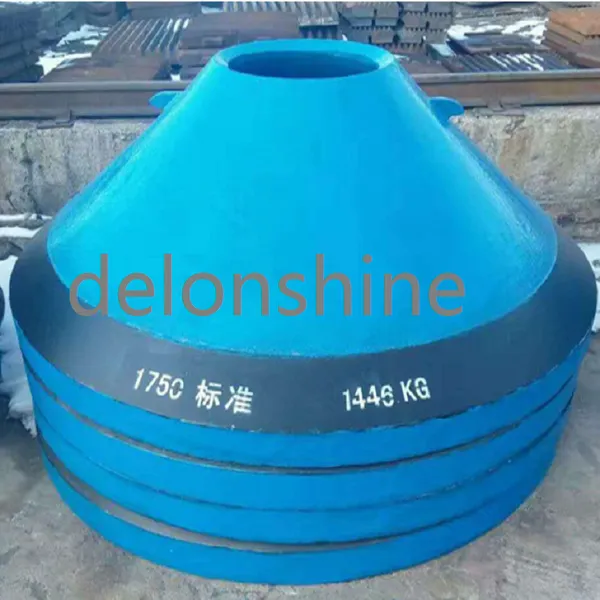 Read More
 -
Bowl Liner Explained: The Stationary Bowl Liner in a Cone Crusher
October 14, 2026An owl liner cone crusher part is the stationary liner that lines the crushing chamber and breaks rock against a moving mantle by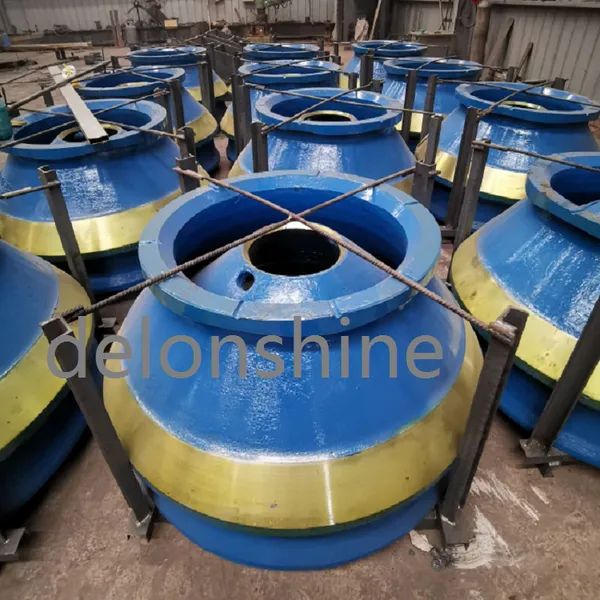 Read More
 -
Bowl Liner and Mantle: How the Two Cone Crusher Liners Work Together
October 13, 2026A mantle and bowl liner set that is renewed one half at a time usually costs a plant more than a cone liner pair changed as a set,
Read More -
Bowl Liner Explained: The Stationary Bowl Liner in a Cone Crusher
October 13, 2026An bowl liner cone crusher part is the stationary liner that lines the crushing chamber and breaks rock against a moving mantle by
Read More

Contact Us
Recommended Products
-
 Vertical Mill Reducer Planetary Gear AssemblyNegotiableMOQ: 2 Combos
 -
High Precision Mining Equipment End Cover Wear Resistant Crusher End CapNegotiableMOQ: 2 Pieces
-
Heavy Duty Mining Equipment Cast HousingNegotiableMOQ: 2 Pieces
-
Mining Parts Concave MantleNegotiableMOQ: 2 Pieces
-
High Strength Cast Steel Crusher Lifting Beam Heavy Load Mining Equipment Spare PartNegotiableMOQ: 2 Pieces
-
OEM Replacement Mining Spare Parts for Stone Crushing PlantNegotiableMOQ: 2 Pieces
-
Cast Steel Ball Mill Head for Mineral ProcessingNegotiableMOQ: 2 Pieces
-
Large Diameter Cast Gear for Ore Grinding MillNegotiableMOQ: 2 Pieces
-
Wear Resistant Mining Spare PartsNegotiableMOQ: 2 Pieces
-
Industrial Wet Dry Ball Mill for Mineral ProcessingNegotiableMOQ: 2 Pieces


-
High Wear Resistant Ball Mill Wear Parts Ball Mill Gear Pinion Liner for Mining Processing PlantNegotiableMOQ: 2 Pieces
-
Heavy Duty Equipment CasingNegotiableMOQ: 2 Pieces
-
Customized Main Shaft for Cone CrusherNegotiableMOQ: 2 Pieces
-
Ball Mill Head With Flange and Bolt HolesNegotiableMOQ: 2 Pieces
-
Heavy Duty Equipment CasingNegotiableMOQ: 2 Pieces


-
Crusher Wear Parts for Mining MachineryNegotiableMOQ: 2 Pieces
-
High Manganese Steel Jaw Crusher Fixed & Swing PlatesNegotiableMOQ: 2 Pieces
-
Cast Steel Safety Toggle Plate for Jaw Crusher Overload ProtectionNegotiableMOQ: 2 Pieces
-
High Manganese Steel Mill LinerNegotiableMOQ: 2 Pieces
-
Main Shaft Steel Sleeve Lock Nut for Cone CrusherNegotiableMOQ: 2 Pieces