
 Business License

Jaw Crusher Plate Explained: Fixed Plate versus Swing Plate
A jaw crusher plate absorbs the first impact of every rock that enters a primary crusher.
Two plates work as a pair, one bolted to the frame and one carried on the moving pitman, and between them they reduce run-of-mine rock to a size a cone crusher can accept.
Few parts in a crushing plant cost more per hour of service, and few repay attention as well.
This article explains what each position does, why the fixed and swing sides wear differently, and how a maintenance team can read a discarded plate to learn something about its process.
1. What a Jaw Crusher Plate Is and Where It Sits
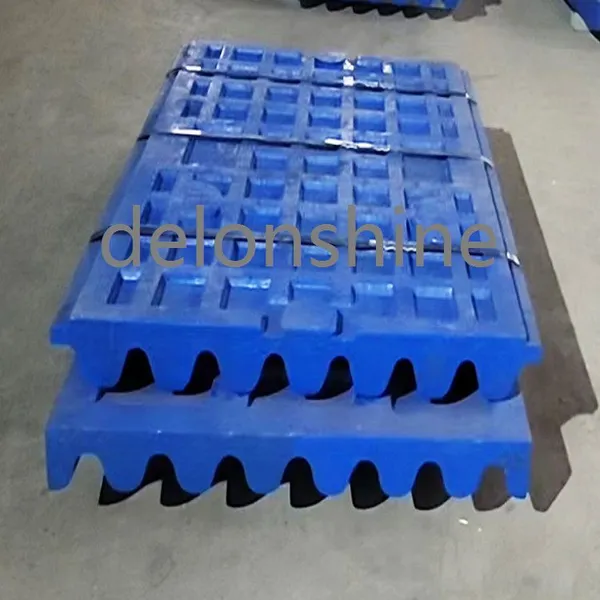
A jaw crusher plate is a heavy manganese steel casting fitted inside the crushing chamber of a jaw crusher.
It forms one of the two working surfaces that grip and break the feed material.
The plate normally runs the full width of the chamber and stands roughly 0.5 to 2 metres tall depending on the machine size.
The chamber itself opens at the top and narrows toward the bottom.
That taper is what allows a single pass to reduce a large lump in stages rather than in one strike.
Material enters through the feed opening, is gripped between the two faces, and leaves through the discharge gap once it is small enough to fall.
The two faces oppose each other across the chamber, and the gap between them changes continuously while the machine runs.
At the top the gap is wide, and at the bottom it closes to the closed side setting.
Everything a plant wants from the machine, from throughput to product shape, is decided within that geometry.
The table below summarises the two positions and the duty each one carries.
| Feature | Fixed side | Swing side |
|---|---|---|
| Mounting | bolted to the frame | carried on the pitman |
| Motion in service | stationary | reciprocating at roughly 200 to 350 strokes per minute |
| Tooth profile | often taller and sharper | often shallower and wider |
| Service interval | longer between changes | shorter in most circuits |
| Dominant load | compression and gouging | compression with a sliding component |
2. Why the Fixed Plate and the Swing Plate Do Different Work
One of the two positions is stationary in service, while the other reciprocates on the pitman at the speed of the eccentric shaft.
The motion looks simple from outside the machine, and it produces two quite different wear mechanisms inside.
The jaw crusher fixed plate receives the feed as it arrives.
Rock that has just been blasted and hauled still carries sharp corners, and those corners press into the surface before the material settles into the chamber.
The result is a gouging pattern that follows the direction of the feed fall.
The jaw crusher swing plate meets material that the fixed side has already partly restrained.
The reciprocating stroke both compresses the rock and drags the plate face across it, so sliding abrasion adds to the compressive load.
That combination normally wears the moving side faster in a hard rock application.
The difference explains why a plant should not order both positions to one specification without a reason.
Tooth height, thickness and profile can all be varied between them, and a supplier who understands the duty will usually quote them as separate line items.
A single shared specification is convenient for the warehouse and expensive for the crusher, which is why Shenyang Delonshine Technology quotes the two positions on separate lines.
3. Jaw Crusher Fixed Plate: Load Path and Wear Pattern
The jaw crusher fixed plate is bolted to the frame and backed by a liner plate or a set of wedges that spread the load into the casting.
Because it does not move, its wear pattern is easier to read than the swing side.
Distress usually appears in three places.
The region opposite the feed opening wears first.
This is where the largest lumps land with the most energy, and where every stroke transmits its force into the casting.
A plate that is worn thin at the top while the bottom remains almost new is reporting a feed that arrives with too much energy and too little preparation.
The tooth profile matters more on this side than many operators expect.
Tall, sharp teeth grip the rock and hold it, while a flattened profile cannot hold anything and the chamber begins to slip material instead of breaking it.
Slip is easy to hear, because the machine changes note and throughput drops while the power draw stays high.
Bolt hole wear is the third pattern.
Loose bolts let the casting lift and hammer against its seat, and once the holes have opened the plate cannot be retightened to its original torque.
A hole that has grown by more than roughly 2 millimetres is usually reason enough to take the part out of service rather than reinstall it.
Reusing a plate with opened holes transfers the damage to the frame seat, which is far more expensive to repair.
4. Jaw Crusher Swing Plate: Motion, Throw and Crushing Force
The jaw crusher swing plate is carried on the pitman, which is driven by the eccentric shaft through the toggle arrangement.
Its travel at the discharge end is the throw, measured as the difference between the open and the closed position.
Throw values on primary machines commonly fall between roughly 25 and 50 millimetres, and on smaller secondary units between 10 and 25 millimetres.
The moving position carries a stress cycle on every revolution.
At 250 strokes per minute a plate sees 15,000 load cycles in an hour of running, and that figure is worth remembering when a failure is later described as sudden.
Fatigue cracks typically start at a change of section, at a bolt hole, or at the root of a tooth.
Motion also changes the wear direction.
The jaw crusher swing plate travels a short distance while in contact with the rock, so abrasive particles cut along the flank rather than straight into it.
That is one reason the moving position often benefits from a slightly different tooth geometry from the fixed one.
The pitman itself introduces a second variable.
A worn toggle seat or a slack tension rod changes the effective throw, and the plate is then blamed for a change in product size that started somewhere else.
Checking the throw with a dial indicator before ordering new plates avoids that confusion.
5. Reading Wear on a Jaw Crusher Plate
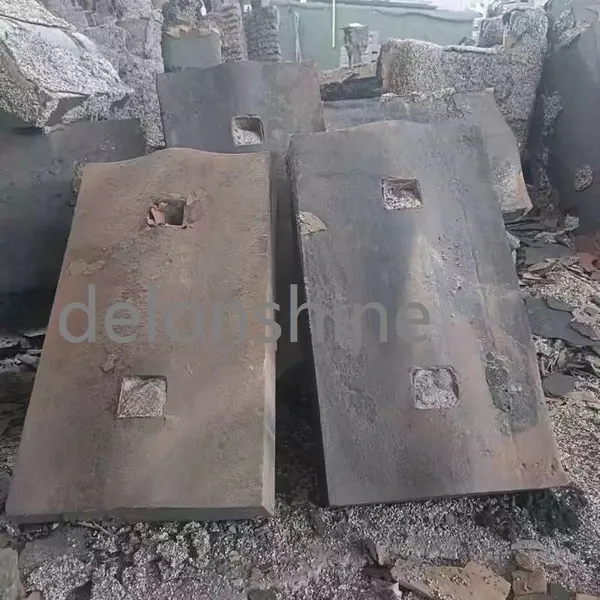
A worn jaw crusher plate is a record of what happened to it.
The pattern is more informative than the depth of wear, because it points to causes a plant can still correct.
A handful of patterns cover most of what a maintenance team will see in the field.
The table below sets out the main patterns and the likely cause behind each one.
| Wear pattern | Where it appears | Likely cause |
|---|---|---|
| Localised deep gouging | opposite the feed opening | oversized feed or too great a drop height |
| Smooth reduction in thickness | across the whole face | normal abrasive service, replacement due |
| Polished flanks with flat teeth | mid chamber | material slipping rather than breaking |
| Crack from a bolt hole | mounting region | loose bolts or an uneven seat |
| Uneven wear across the width | one half of the chamber | off centre feed or a misaligned machine |
A plate that is worn across one half of the chamber points to a feed that arrives off centre.
Correcting the feed or the feeder position is usually a lower cost move than ordering a heavier casting.
Equally, a plate with a crack radiating from a bolt hole is telling the plant that the mounting, not the material, needs attention.
Thickness is the measurement that decides replacement.
Most suppliers quote a wear limit as a fraction of the original section, commonly around 30 to 40 percent remaining at the thinnest point.
Measuring at a fixed set of positions, rather than at whichever point looks worst on the day, produces a record that can be compared across campaigns.
Delonshine asks for photographs of the worn face alongside those figures, because the pattern and the numbers together narrow the choice faster than either one alone.
6. Matching Plate Geometry to Feed and Settings
Plate selection starts with the feed rather than with the plate.
Maximum lump size, bulk density, silica content and moisture together describe the duty far better than a machine model number does.
A profile chosen for a limestone quarry will not behave the same way in a granite operation, even on an identical crusher.
Settings come next.
The closed side setting controls the product size and also the load on both faces.
Running a machine tighter than its design setting raises the crushing force and shortens service life, and the gain in product fineness is often smaller than the loss in availability.
Feed size distribution is the third input.
A feed with a top size close to the opening leaves no room for the chamber to grip, and a jaw crusher plate then absorbs energy that should have gone into breaking rock.
Screening out the fines or reducing the top size upstream will usually extend service life more than any change of grade.
The table below lists the inputs worth sending with an enquiry.
| Input | Why the supplier needs it |
|---|---|
| Maximum feed size | sets the tooth pitch and height |
| Throughput in tonnes per hour | drives the expected service life |
| Rock type and silica content | decides the abrasion class |
| Closed side setting | affects load and wear rate |
| Pattern number or drawing | confirms fit and mounting |
Shenyang Delonshine Technology Co Ltd reviews those five inputs before quoting, because a profile recommended without them is a guess dressed up as a specification.
7. Replacing a Jaw Crusher Plate: Sequence and Checks
Replacing a jaw crusher plate is planned work, and the sequence matters as much as the parts.
Rushing the job is the usual reason a new set fails early.
The chamber is cleaned first, and the seat surfaces are checked for burrs, embedded rock and distortion.
A jaw crusher fixed plate that sits on a dirty seat will never hold its torque, however carefully it is tightened.
Lifting gear, wedges, bolts and backing compound are all confirmed present before the old casting leaves the machine.
During fitting, the plate is drawn down progressively rather than tightened at one end.
Torque values from the machine manual are applied in the sequence the manual gives, and the values are rechecked after the first hours of running.
A recheck at 24 hours and again after one week catches most loosening before it becomes damage.
The discharge gap is measured after fitting, with the machine stopped at the closed position.
Recording that figure together with the date allows the next set to be planned from data rather than from memory.
Delonshine Technology keeps as-built dimensions on file for repeat orders, so a replacement set arrives with the same critical dimensions as the last one.
8. What Decides Service Life Beyond the Plate Itself
Two crushers fitted with the same jaw crusher plate can report very different service lives.
The difference usually sits in the machine rather than in the casting.
Alignment is the first factor.
A frame that is not square, or a pitman that runs out of line, will load one edge of the chamber harder than the other and wear both faces unevenly.
Checking alignment after a rebuild takes a few hours and can add months to plate life.
Feeding practice is the second.
A crusher fed in surges runs lean for part of the shift and overloaded for the rest, and both conditions cost service life.
A feeder that delivers a steady curtain of material lets the chamber work at its design load.
Choke feeding on smaller machines, where it is permitted, changes the wear pattern as well.
The chamber stays full, so rock grinds against rock and each plate face sees less direct abrasive contact.
Plants that move to choke feeding often report longer service life together with a more consistent product.
Contact geometry between the plate and its seat belongs in the same list.
A casting that does not sit flat rocks under load, and the movement shows up as fretting at the backing and cracking at the bolt holes.
A flatness check on the seat before fitting costs minutes and prevents that outcome.
Our team lists the seat condition, the as-built dimensions and the feed data on one sheet for every repeat order, so a new set is made to the machine rather than to a generic drawing.
9. Frequently Asked Questions about the Jaw Crusher Plate
9.1 How long should a jaw crusher plate last?
A service interval is easier to predict than a calendar life. In a granite quarry running a single shift, a swing casting might be changed after roughly 600 to 900 operating hours, while the fixed side on the same machine may run 900 to 1,400 hours. In a limestone operation the figures stretch considerably because the rock is softer, so the practical method is to record thickness at fixed positions each month and let the trend predict the change. A plate that reaches its wear limit during a planned stop costs far less than one that fails mid campaign.
9.2 Which wears first, the jaw crusher fixed plate or the jaw crusher swing plate?
The jaw crusher swing plate normally wears first in a hard rock circuit, because it carries the reciprocating stroke and combines compression with sliding abrasion while the opposite position sees compression and gouging. Field records from quarry operations usually show the moving side reaching its wear limit several hundred hours earlier. The relationship reverses in some soft, sticky feeds, where material builds up on the fixed side and abrades it continuously. This is why a plant is better served by measuring both positions at every inspection than by assuming one will always wear first.
9.3 Can a jaw crusher plate be rebuilt by welding?
Field welding is possible and is done in some plants where a spare set is not available, and the repair involves building up the worn surface with a compatible manganese electrode and grinding the profile back to shape. Manganese work hardens under impact, so a weld deposit laid on a cold casting in a workshop seldom matches the cast material in service. Build-up welding also introduces heat into a casting that was heat treated and often cracks at the weld boundary. For a crusher that runs most days, a new casting is usually the more predictable route.
9.4 How do you measure jaw crusher plate wear?
Measure the remaining thickness at a fixed set of positions and record the figures against a date. Most teams take readings at the top, the middle and the bottom of each face, on both sides of the chamber centre line, using a depth gauge or a simple template with permanent marker references so that the positions stay consistent between inspections. The absolute figure matters less than the trend, because the trend tells a planner how many weeks of life remain. Comparing the two positions from the same chamber is also useful, since a large difference points to a machine or feeding problem.
Recently Posted
-
Casting Capability: From a 20-Ton Arc Furnace to 100-Ton Castings
October 8, 2026A buyer sourcing a heavy spare part for a grinding mill or a primary crusher is really asking two questions about the supplier. Ca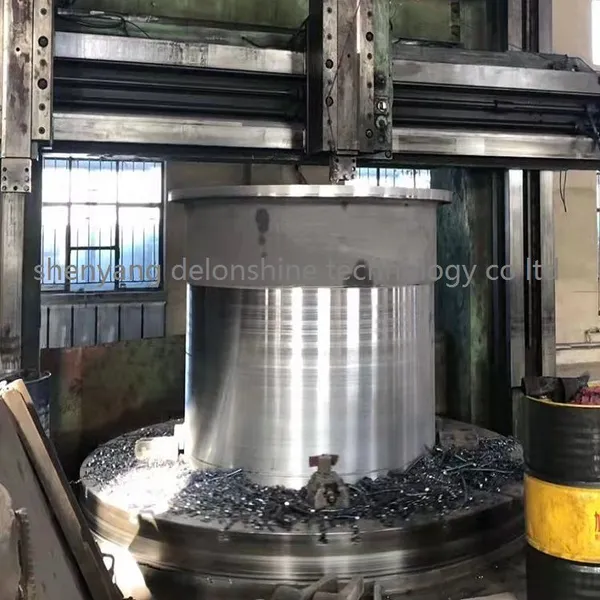 Read More
 -
Ultrasonic and Magnetic Particle Testing on Mining Big Gears
October 7, 2026A mining big gear weighing 20 tonnes and measuring 5 metres across cannot be inspected by looking at it. The defects that end its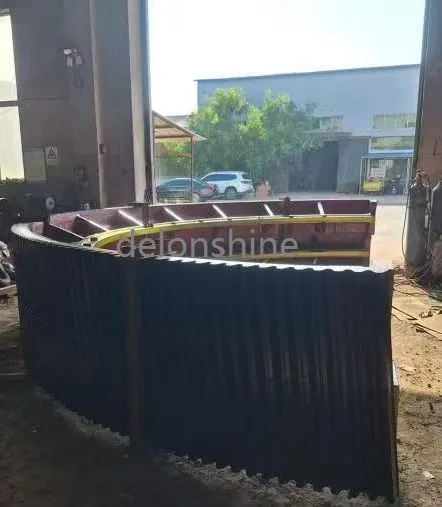 Read More
 -
Jaw Crusher Plates in Hard Rock Quarrying
October 7, 2026A granite quarry asks more of a quarry jaw crusher plate than a river gravel pit does. Rock that is hard, abrasive and blocky puts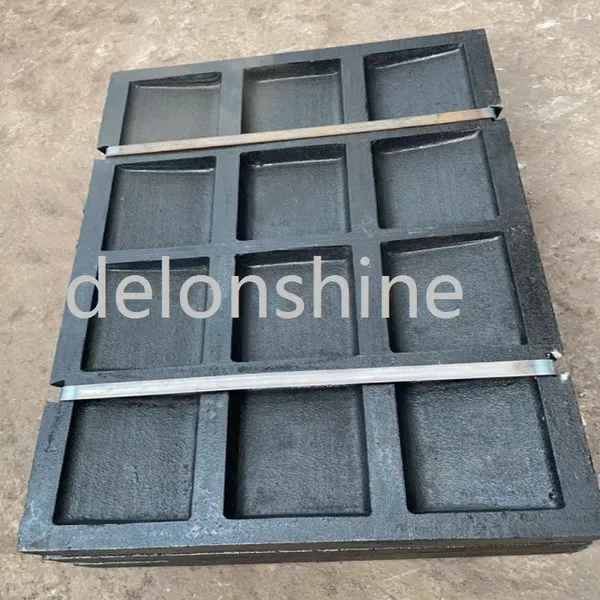 Read More
 -
Jaw Crusher Plate Material Grades: Mn13, Mn18 and Mn22
October 7, 2026Two quotations for the same jaw crusher plate often differ by a wide margin, and the reason is usually the grade written on the dr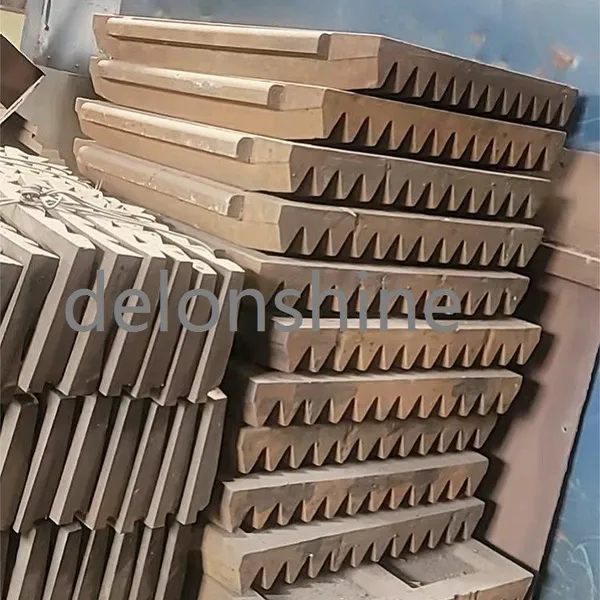 Read More

Contact Us
Recommended Products
-
 Vertical Mill Reducer Planetary Gear AssemblyNegotiableMOQ: 2 Combos
 -
High Precision Mining Equipment End Cover Wear Resistant Crusher End CapNegotiableMOQ: 2 Pieces
-
Heavy Duty Mining Equipment Cast HousingNegotiableMOQ: 2 Pieces
-
Mining Parts Concave MantleNegotiableMOQ: 2 Pieces
-
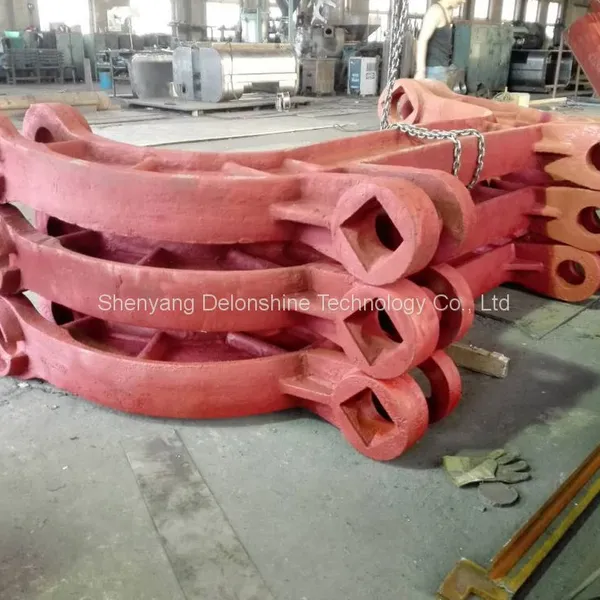
High Strength Cast Steel Crusher Lifting Beam Heavy Load Mining Equipment Spare PartNegotiableMOQ: 2 Pieces
-
OEM Replacement Mining Spare Parts for Stone Crushing PlantNegotiableMOQ: 2 Pieces
-
Cast Steel Ball Mill Head for Mineral ProcessingNegotiableMOQ: 2 Pieces
-
Large Diameter Cast Gear for Ore Grinding MillNegotiableMOQ: 2 Pieces
-
Wear Resistant Mining Spare PartsNegotiableMOQ: 2 Pieces
-
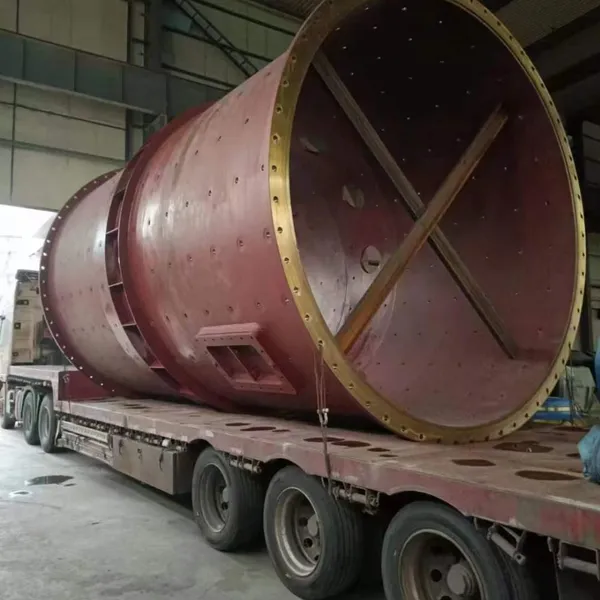
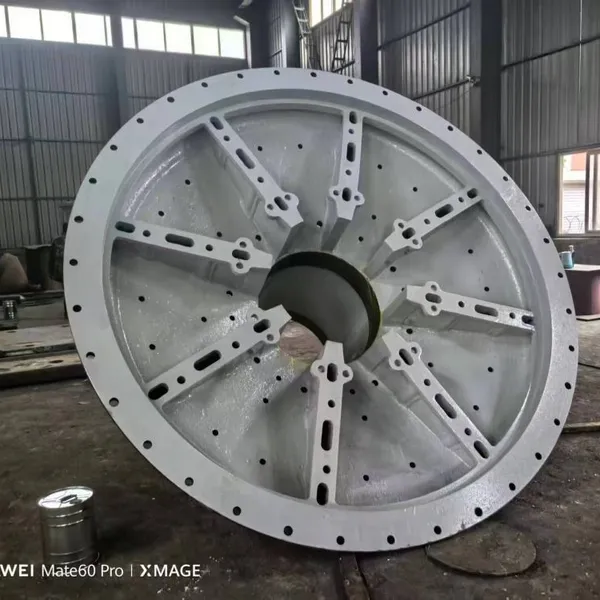
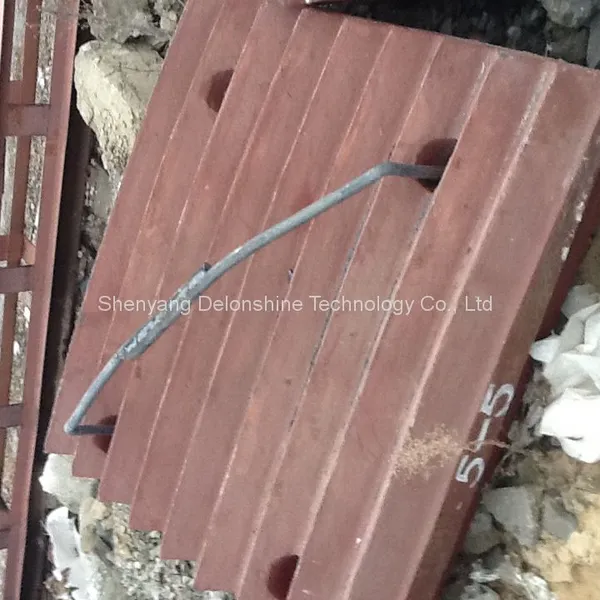
Industrial Wet Dry Ball Mill for Mineral ProcessingNegotiableMOQ: 2 Pieces


-
High Wear Resistant Ball Mill Wear Parts Ball Mill Gear Pinion Liner for Mining Processing PlantNegotiableMOQ: 2 Pieces
-
Heavy Duty Equipment CasingNegotiableMOQ: 2 Pieces
-
Customized Main Shaft for Cone CrusherNegotiableMOQ: 2 Pieces
-
Ball Mill Head With Flange and Bolt HolesNegotiableMOQ: 2 Pieces
-
Heavy Duty Equipment CasingNegotiableMOQ: 2 Pieces


-
Crusher Wear Parts for Mining MachineryNegotiableMOQ: 2 Pieces
-
High Manganese Steel Jaw Crusher Fixed & Swing PlatesNegotiableMOQ: 2 Pieces
-
Cast Steel Safety Toggle Plate for Jaw Crusher Overload ProtectionNegotiableMOQ: 2 Pieces
-
High Manganese Steel Mill LinerNegotiableMOQ: 2 Pieces
-
Main Shaft Steel Sleeve Lock Nut for Cone CrusherNegotiableMOQ: 2 Pieces