
 Business License
Blog Categories

Inside Our Foundry: Manganese Castings for Cone Crusher Liners
A cone liner casting is decided long before it is poured, in the pattern shop and in the melt, and a buyer who understands the sequence can judge a supply partner rather than a quotation.
Shenyang Delonshine Technology has cast wear parts for mining and aggregate customers for more than two decades, and the route a manganese casting foundry follows for a bowl liner or a mantle has stayed recognisable throughout that time.
The equipment has grown, the inspection has become documented, and the tolerance on a machined seat has tightened.
This article walks through the sequence we run for a cone liner casting, from pattern to packed cradle, and explains the checks that matter at each step.
1. Inside a Manganese Casting Foundry in Shenyang
A manganese casting foundry in Shenyang works within easy reach of the heavy industry of northeast China, which is why the city still holds a deep pool of pattern makers, moulders and heat treatment hands.
Shenyang Delonshine Technology operates a workshop of 5,000 to 10,000 square metres with a team of 51 to 100 people, and it has shipped to customers across 13 export regions.
Annual export value sits between US$2.5 million and US$5 million, and parts leave through Dalian, Tianjin, Qingdao and Shanghai depending on the destination.
The material range that comes out of the shop covers four families.
Carbon steel castings for structural items such as end covers and gear blanks.
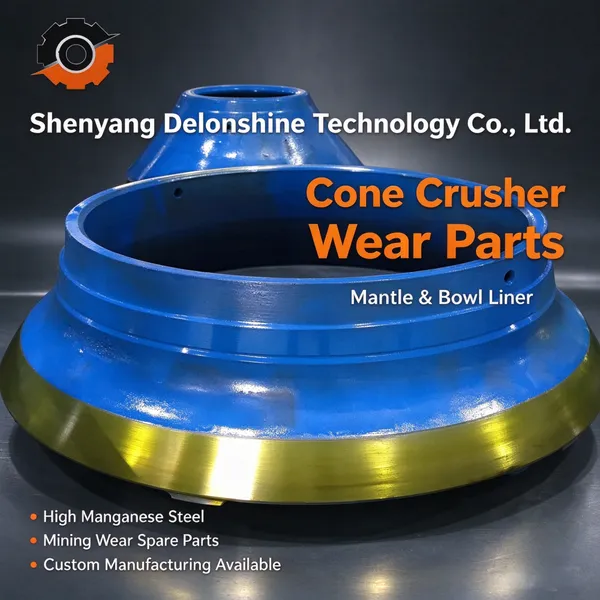
High manganese steel for jaw plates, cone liners and other parts that see impact.
Heat resistant steel for components that run hot, and grey iron for housings and covers where castability and damping matter more than wear resistance.
The melting shop runs a 20 tonne electric arc furnace alongside 7 to 10 tonne medium frequency induction furnaces, and the largest single casting the workshop can pour is 100 tonnes.
That range is what allows the same plant to make a 40 kilogram toggle seat and a mill end cover in one production programme.
2. Pattern and Mould Work for a Cone Liner Casting
A cone liner casting begins with a pattern, and the pattern carries more of the final quality than any operation after it.
Shrinkage allowance is built into the pattern across the whole cavity, and the value is chosen for the alloy rather than for the average of the shop.
Machining stock is added to faces that will be finished and left off faces that will not, which is why a drawing for a cone liner casting shows two different allowances on the same part.
Draft is added so the pattern releases cleanly from the sand, and gating and feeding are arranged so that the last metal to solidify sits in a feeder rather than inside the casting.
The mould is made in sand, and the cavity that forms the crushing chamber is produced by a core whose own support has to be planned.
A core that shifts by 3 millimetres produces a chamber profile that is wrong everywhere without being obviously wrong at any one point.
That is the reason the pattern and the core box are checked against the drawing revision before a production run rather than after the first casting is measured.
For a repeat programme the pattern is retained and its condition is inspected before each use.
A pattern that has been repaired keeps a record of the repair, and the first casting from a repaired pattern goes for a dimensional check before the run continues.
3. Melting and Pouring a Cone Liner Casting
Melting and pouring decide the internal soundness of a cone liner casting, and the window between a good pour and a scrapped one is narrow.
The charge is weighed to a chemistry target rather than to a grade name, and a sample taken from the furnace is analysed before the heat is tapped.
Pouring temperature is held to a range that suits the section: too cold and the metal freezes before the cavity fills, too hot and the sand is burned and the casting picks up defects.
Section thickness is what makes a cone liner harder to pour than a flat plate.
A thick body feeding a relatively thin wear face needs a feeder large enough to hold liquid metal while the thick section solidifies last.
Where the geometry makes a sound casting difficult, chills are placed in the mould to draw heat out of a heavy junction and keep it feeding properly.
A high manganese cone liner casting is poured at the upper end of the range that suits the mould, because manganese steel loses fluidity quickly once it starts to freeze.
Shenyang Delonshine Technology records the heat number against the casting mark, so a question asked later about a specific liner can be answered from the melt record.
4. Heat Treatment in a Manganese Casting Foundry
Heat treatment is the step that separates a manganese casting from a manganese casting that performs, because the alloy as poured is not yet the material the customer is buying.
Manganese steel has to be solution treated and quenched so that the structure becomes austenitic and the surface can work harden under load.
Without that treatment the part is hard and brittle in the wrong way, and it will crack rather than deform when a piece of tramp metal enters the chamber.
The cycle has three variables that matter.
The soak temperature, which has to be high enough and long enough to dissolve the carbides that form as the casting cools.
The soak time, which follows the section rather than the weight of the batch.
And the quench, where the delay between leaving the furnace and entering the water decides how much of the structure is retained.
The result is confirmed by hardness. A manganese casting foundry supplies Mn18 in the region of roughly 180 to 220 HB, and a figure well below that range points to a quench that started late.
The heat treatment chart is kept with the batch, and the curve on it is the one that was recorded rather than the one that was planned.
5. Machining and Fitting Checks on a Cone Liner Casting
Machining on a cone liner casting is limited to the faces that have to fit, and those faces are the ones a buyer never sees once the machine is closed.
The seat face and the register are machined to the drawing, and the backing groove or keyway is cleaned so that a poured compound can fill the cavity.
Flatness on a seat face is measured with a straight edge and a feeler gauge or on a surface plate, because a casting that is out of flat will not support its own load.
Fitting checks follow the machining.
The casting is offered against a gauge or a matching part where the customer has supplied one.
The cavity profile is confirmed against the cavity letter on the order.
The section is read with an ultrasonic gauge at marked points across the throat and the parallel zone.
And the weight is compared with the calculated figure, which is a cheap cross check on a hidden void.
Shenyang Delonshine Technology returns a dimensional report with the casting, so a customer can compare the measured seat and section figures against the drawing before the part is fitted.
6. Inspection Inside a Shenyang Casting Supplier
A Shenyang casting supplier earns repeat business on the inspection record rather than on the price of the first order, because a liner that fails early costs the customer far more than the difference between two quotations.
Inspection at our plant runs from the pattern to the packed case, and each stage has a record attached.
The table below shows the sequence and what each stage proves.
| Stage | What is checked | Record |
|---|---|---|
| Pattern | revision against the drawing | pattern card |
| Melt | chemistry of the heat | analysis sheet |
| Pouring | temperature and time | pour log |
| Heat treatment | soak and quench cycle | treatment chart |
| Machining | seat, register and groove | dimensional report |
| Section | thickness at marked points | gauge record |
| Soundness | penetrant and ultrasonic findings | test report |
| Dispatch | marking and packing | photographs and packing list |
The value of the package is that it can be read by someone who was not in the shop.
A maintenance planner in another country can compare the recorded section figures against the drawing and decide whether to accept a batch without a visit.
7. Why Buyers Work with a Shenyang Casting Supplier
Buyers approach a Shenyang casting supplier for three reasons that have little to do with geography and everything to do with the shape of the work.
Wear parts are heavy, irregular and bought in small quantities, which is a poor fit for a mass production foundry and a good fit for a jobbing shop with its own pattern store.
They are also replaceable, which means the second order matters more than the first, and a supplier who keeps the pattern and the records is easier to reorder from than one who does not.
Three capabilities decide whether a supplier can hold that position.
The ability to work from a sample or a photograph when no drawing exists, which suits machines that have been rebuilt more than once.
The ability to reverse engineer a worn casting and add the lost section back at the right figure.
And the ability to hold a grade and a heat treatment steady across batches, so the tenth liner behaves like the first.
Delonshine Technology was established more than two decades ago and now runs its own pattern shop, melting shop, heat treatment and machining under one roof, which keeps the responsibility for a casting in one place.
8. Export Logistics from a Shenyang Casting Supplier
Export logistics decide whether a well made casting arrives as a usable part, and heavy irregular steel punishes careless packing.
A bowl liner of several tonnes cannot travel on a light pallet, so a cradle or a steel frame is built for the casting and the lifting points are marked clear of the seating faces.
Weight and marks are agreed with the customer before loading, because a port that cannot lift a crate will hold the container until it can.
Our shipments leave through four ports depending on the route.
Dalian handles most northeast production and suits sailings to Japan, Korea and North America.
Tianjin and Qingdao serve routes where a sailing date matters more than the inland haul, and Shanghai is used for consolidated shipments and for customers in Africa and South America.
Documents travel with the goods rather than after them, because a certificate that arrives by post is of little use when a batch is waiting at a port.
Shenyang Delonshine Technology Co Ltd issues the material certificate, the heat treatment chart, the dimensional report and the packing list in English, and keeps a copy against the batch number for later reference.
9. Frequently Asked Questions about Our Manganese Casting Foundry
9.1 What materials does your manganese casting foundry pour?
We pour four families: carbon steel for structural items such as end covers and gear blanks, high manganese steel for jaw plates, cone mantles and bowl liners, heat resistant steel for parts that run hot, and grey iron for housings and covers. The melting shop runs a 20 tonne electric arc furnace with 7 to 10 tonne medium frequency induction furnaces, and the largest single casting we can pour is 100 tonnes. Grade and heat treatment are stated on the quotation for each part.
9.2 Can you produce a cone liner casting from a sample rather than a drawing?
Yes, and on older machines it is the usual route. We measure the sample at points that wear does not affect, such as a bolt circle, a bore or an unmachined register, and where the casting is distorted a three dimensional scan gives a surface model to compare against the surviving features. The recovered geometry is then drawn up with casting and machining allowances added, and the drawing is sent to the customer for approval before a pattern is cut.
9.3 What inspection comes with a casting from a Shenyang casting supplier?
Every batch carries a material certificate naming the grade and the chemistry of the heat, a heat treatment chart showing the cycle that was applied, a dimensional report with measured values against the drawing, non destructive testing results where the part calls for them, and a packing list with weights and marks. Each casting is marked with a batch number that ties it to those records. We also photograph the marking and the packed unit before loading, so the dispatch condition is documented.
9.4 How long does a liner order take, and how is it shipped?
Lead time follows the pattern position rather than the casting alone, because a part with an existing pattern moves into the next production run while a new pattern adds pattern making and a first article check before a batch is committed. We quote both figures. Shipments leave through Dalian, Tianjin, Qingdao or Shanghai depending on the destination, and castings of several tonnes travel in a cradle or a steel frame with the lifting points marked clear of the seating faces. Air freight can be arranged for a single urgent liner, though the cost rarely suits a full set.
Recently Posted
-
Adjustment Ring Specification: What to Put in an Enquiry
November 6, 2026An adjustment ring specification is the document that turns a wear part request into a comparable quotation, and most of the price Read More
-
Adjustment Ring Material: Cast Steel Grades and What They Carry
November 6, 2026The adjustment ring material in a cone crusher is almost always a cast steel, and the grade decides how much load the thread can c Read More
-
Adjustment Ring Function: How a Cone Crusher Sets Its Close Side
November 6, 2026The adjustment ring function in a cone crusher is to convert a rotation into a vertical movement of the bowl, and that movement is
Read More -
From Sample to Delivery: Our Workflow for Wear Parts Projects
November 4, 2026A wear parts project workflow decides whether a replacement part simply arrives or whether it arrives at the right time, in the ri Read More

Contact Us
Recommended Products
-
 Vertical Mill Reducer Planetary Gear AssemblyNegotiableMOQ: 2 Combos
-
Heavy Duty Mining Equipment Cast HousingNegotiableMOQ: 2 Pieces
-
High Strength Cast Steel Crusher Lifting Beam Heavy Load Mining Equipment Spare PartNegotiableMOQ: 2 Pieces
-
OEM Replacement Mining Spare Parts for Stone Crushing PlantNegotiableMOQ: 2 Pieces
-
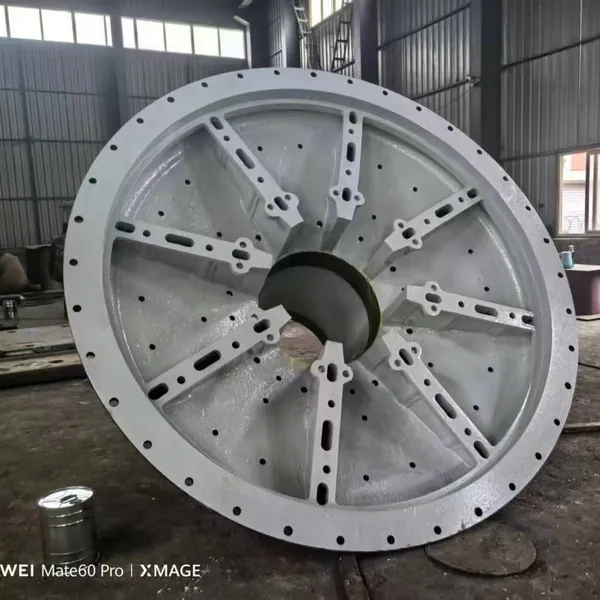
Cast Steel Ball Mill Head for Mineral ProcessingNegotiableMOQ: 2 Pieces
-
Large Diameter Cast Gear for Ore Grinding MillNegotiableMOQ: 2 Pieces
-
Wear Resistant Mining Spare PartsNegotiableMOQ: 2 Pieces
-
Industrial Wet Dry Ball Mill for Mineral ProcessingNegotiableMOQ: 2 Pieces
-
High Wear Resistant Ball Mill Wear Parts Ball Mill Gear Pinion Liner for Mining Processing PlantNegotiableMOQ: 2 Pieces
-
Customized Main Shaft for Cone CrusherNegotiableMOQ: 2 Pieces



-
Ball Mill Head With Flange and Bolt HolesNegotiableMOQ: 2 Pieces
-
Heavy Duty Equipment CasingNegotiableMOQ: 2 Pieces
-
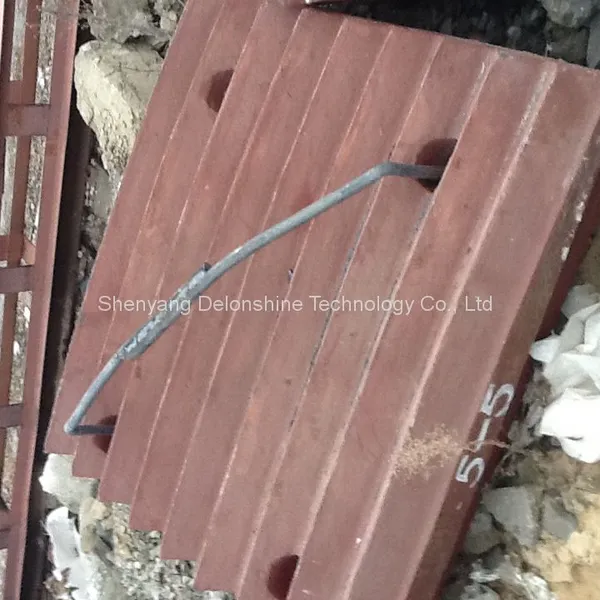
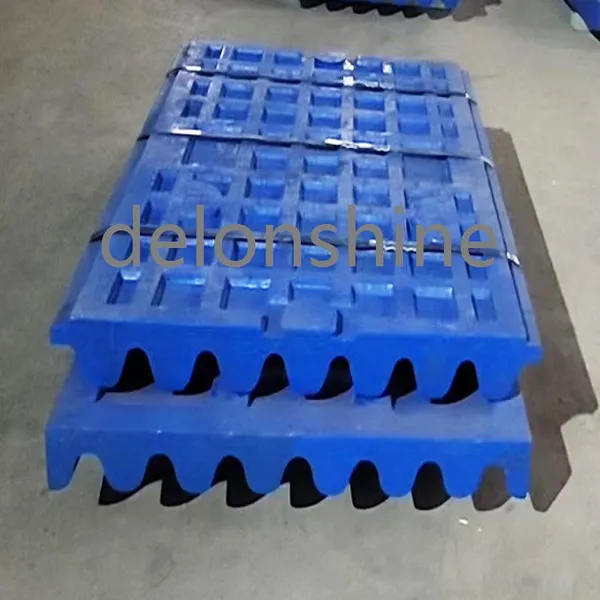
High Manganese Steel Jaw Crusher Fixed & Swing PlatesNegotiableMOQ: 2 Pieces
-
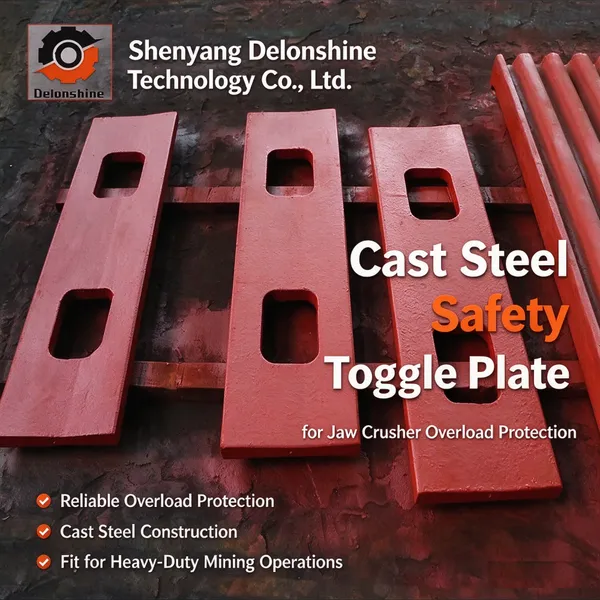
Cast Steel Safety Toggle Plate for Jaw Crusher Overload ProtectionUS$ 10 - 15MOQ: 10 Pieces
-
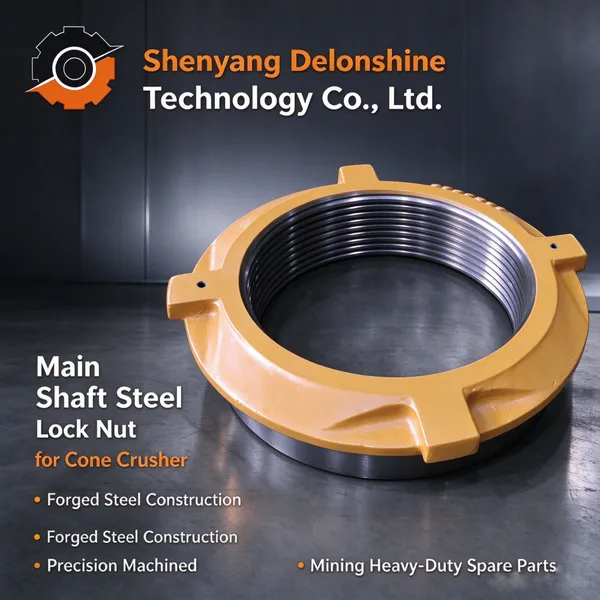
Main Shaft Steel Sleeve Lock Nut for Cone CrusherUS$ 1 - 10MOQ: 1 Piece


-
High Manganese Steel OEM Cone Crusher Bowl Liner According to DrawingsUS$ 10 - 20MOQ: 1 Piece
-
High Precision Mining Equipment End Cover Wear Resistant Crusher End CapUS$ 100 - 26000MOQ: 1 Piece
-
High Manganese Strong Wear and Impact Resistance Steel Alloy RollUS$ 10 - 15MOQ: 1 Piece
-
High Alloy Cast Hammer Head Great Wear & Impact ResistanceUS$ 10 - 15MOQ: 1 Piece
-
Manganese Steel Mining Grate PlateUS$ 10 - 15MOQ: 1 Piece