
 Business License

Bulk Ordering Jaw Crusher Toggle Plates: MOQ, Packing and Lead Time
A jaw crusher toggle plate is a small part by weight, yet plants that run several crushers often buy it in lots rather than one at a time.
Ordering in bulk changes the commercial terms, the packing method and the delivery plan, and it also exposes any gaps in the information a buyer sends.
This article looks at how a jaw crusher toggle plate supplier sets a minimum order quantity, how packing is arranged for a heavy mixed crate, and how toggle plate lead time is built from a production segment and a transport segment.
It is written for maintenance planners and purchasers who want the second order to be simpler than the first.
1. What Changes When You Bulk Order from a Jaw Crusher Toggle Plate Supplier
A single toggle bar order is usually a repair purchase, placed when a bar breaks and the crusher is standing.
A bulk order is a planning purchase, placed before the parts are needed so that a spare sits on the shelf.
The two orders look similar on a quotation, but the supplier treats them differently.
A bulk order lets the foundry plan a heat of metal, group the parts with other castings, and use a pattern that is already mounted on the board.
Three things change for the buyer.
The unit price moves as quantity rises, because pattern cost, setup time and inspection time are spread across more pieces.
The packing changes, since a crate with several bars is arranged and braced as a single unit rather than as a loose bundle.
And the delivery date becomes a range rather than a promise, because the supplier is now scheduling the order rather than reacting to it.
A mine running three primary crushers might hold two bars per machine, a total of six pieces.
That quantity is enough to reach the first price break at most foundries and still fits inside one crate.
Delonshine Technology quotes a single piece and a bulk quantity on the same enquiry, so the buyer can see the difference before deciding.
2. How a Toggle Plate MOQ Is Set
A toggle plate MOQ is set by the production route rather than by a sales policy.
When the part is cast, the minimum follows the smallest economical heat and the cost of mounting a pattern.
A pattern paid for once can serve a batch of 10, 20 or 50 pieces, so a supplier will often ask for a first order large enough to absorb that cost.
Where a pattern already exists for the machine model, the minimum drops sharply and can fall to a handful of pieces.
Fabricated bars work by a different rule.
The minimum is set by the smallest economical quantity of rolled plate and by the time booked on the machining centre.
A fabricator may accept two or three pieces, but the unit price at that quantity is higher than a cast part taken from an existing pattern.
The table below shows how the route affects the toggle plate MOQ in practice.
| Production route | Practical minimum | Main reason |
|---|---|---|
| Cast, new pattern | 10 to 30 pieces | pattern cost recovered across the batch |
| Cast, existing pattern | 2 to 5 pieces | no pattern cost to absorb |
| Cast, sharing a heat | as few as 1 to 2 | runs alongside another customer order |
| Fabricated from rolled plate | 2 to 5 pieces | smallest economical plate and setup |
A buyer who needs one emergency piece should ask what is already scheduled, because a spare slot in an existing heat is the least costly route to a single part.
Shenyang Delonshine Technology keeps common toggle patterns on file and confirms whether a pattern exists before quoting a minimum.
3. Quantity Breaks in Toggle Plate Ordering
Quantity breaks in toggle plate ordering are not evenly spaced, and understanding them helps a buyer size an order.
The first break comes when the order covers the pattern or setup cost.
The second comes when the order fills a production run, so the furnace or the machine is not stopped part way through.
The third comes at a shipping threshold, when the crate weight crosses a band that changes the freight figure.
A buyer chasing a slightly lower unit price can step past the point where the saving stops paying.
Holding stock costs money, and a bar stored for three years before use has tied up working capital for three years.
The sensible quantity covers planned replacements plus one spare, rather than the quantity with the deepest discount.
Wear rate sets the real demand.
A jaw crusher working hard abrasive rock may consume four to six bars a year, while a machine on softer feed may consume one.
Two years of consumption at the measured rate is a reasonable basis for a first bulk order.
A quarry in Eastern Europe ordered 12 bars after measuring consumption at six a year, and half the batch went to stock against two years of planned maintenance. The unit price fell into the second break, and the store holding cost stayed below the saving on the order.
Delonshine will price any quantity a customer names, so the buyer can see where the curve flattens rather than guess at it.
4. What Drives Toggle Plate Lead Time
Toggle plate lead time is the sum of a production segment and a transport segment, and the two behave differently.
The production segment runs from order confirmation to the part passing final inspection.
The transport segment runs from the workshop door to the buyer site, and it includes inland haulage, port handling and the sea voyage.
Production is the shorter and more predictable part for a cast bar with an existing pattern.
Moulding, pouring, cooling, heat treatment and machining may take two to five weeks depending on grade and finishing.
Where a pattern has to be made, add three to five weeks to the front of that sequence.
Where the order waits for a production slot at a busy foundry, add another week or two.
Transport depends on the destination and the sailing schedule.
Sea freight from a Chinese port to North or South America commonly runs four to six weeks, while a route to Southeast Asia may take one to two weeks.
Air freight is far more costly per kilo and is normally reserved for a single emergency piece.
The table below gives a planning frame for a cast toggle bar with an existing pattern.
| Stage | Typical duration | What can shift it |
|---|---|---|
| Order confirmation and material release | 3 to 7 days | clarification of drawing or grade |
| Casting and cooling | 1 to 3 weeks | furnace schedule, part weight |
| Heat treatment and machining | 1 to 2 weeks | grade and tolerance required |
| Inspection and packing | 3 to 5 days | testing scope requested |
| Inland haulage and port handling | 1 to 2 weeks | booking cut off, customs |
| Sea voyage | 1 to 6 weeks | destination and schedule |
A buyer who needs a part by a date should give that date at enquiry stage, since a supplier can sometimes resequence the workshop to meet it.
5. Packing a Toggle Plate Bulk Order for Sea Freight
Packing a toggle plate bulk order is straightforward, but a loose bundle of bars inside a container invites damage.
Each bar is heavy for its size, and an unbraced bar will move against its neighbours through weeks of vibration at sea.
Wooden crates are the standard answer.
Bars are stacked in layers, separated by timber dunnage, and secured so that no piece can shift inside the crate.
A crate built to hold 10 bars will weigh close to a tonne, and the base has to carry that load without racking.
Where a bar is long against its section, a support is placed at the middle to stop it bowing under its own weight.
Protection against moisture matters as much as protection against impact.
A desiccant bag inside a lined crate keeps relative humidity down across a long voyage, and a rust preventive film on machined faces adds a second barrier.
Bare cast surfaces are normally left unpainted, since paint would hide the surface an inspector checks before dispatch.
The table below summarises the packing points that matter most.
| Point | Common practice |
|---|---|
| Layers | timber dunnage between each layer |
| Bracing | no piece able to move inside the crate |
| Lifting | marked lifting points on the crate base |
| Moisture | lined crate with desiccant and rust preventive |
| Marking | part number, quantity and crate weight on the side |
Delonshine packs a mixed order to the heaviest part in the crate, so the crate rating is never set by the lightest item inside.
6. Choosing a Jaw Crusher Toggle Plate Supplier
Choosing a jaw crusher toggle plate supplier comes down to a small set of verifiable points rather than a long list of claims.
The supplier should be able to work from a drawing or a sample, and should ask for the machine model when the drawing is missing.
They should be able to state the grade and the heat treatment they intend to use, in writing, before the order is placed.
Four questions separate a workshop from a trading screen.
Can the supplier describe the overload behaviour the bar was designed for?
Can they provide a material certificate and an inspection record with the shipment?
Can they confirm the pattern in use and the section dimensions against the drawing?
And can they give a realistic lead time with a reason behind it rather than a round number?
A buyer who receives clear answers to those four questions has most of what is needed to place a bulk order with confidence.
Shenyang Delonshine Technology works from customer drawings and samples and confirms grade and treatment in the quotation, so those answers arrive before the order rather than after it.
7. Documentation That Travels with a Toggle Plate Order
Documentation matters more with a bulk order than with a single piece, because the parts may sit in store for months before they are fitted.
When a bar is finally drawn from stock, the paperwork has to say what it is and how it was made.
The core documents are the packing list, the material certificate, the dimensional and hardness record, and the inspection report.
A certificate of origin and an insurance certificate usually travel with the shipment as well.
A batch number on each part ties it to those records, and that link is what makes the file useful years later.
An Australian distributor received a crate of 20 bars without batch marking. Two years later a customer asked for proof of the grade supplied, and although the distributor held the certificate there was no way to match it to the remaining bars, so the parts were treated as unverified. A paint mark and a batch number on each bar would have cost nothing at the time.
Delonshine marks every part in a bulk order with the batch number used in the inspection record, so a certificate can be matched to an individual casting.
8. Staging Deliveries against Toggle Plate Lead Time
Staging deliveries against toggle plate lead time is a way to reduce store space and working capital at the same time.
Instead of one large shipment, the order is split into two or three releases against a written schedule.
The arrangement suits a mine that expects to consume the parts steadily over a year.
The first release covers the next two quarters, and the following releases are called off as consumption becomes clear.
The supplier holds the balance, which keeps the stock where the production capacity already is.
A staged order needs a clear written schedule, since a supplier cannot hold material indefinitely without a call off date.
The usual terms set a release window for each tranche and a validity period for the price.
If the buyer never calls off the balance, most suppliers reserve the right to invoice or to release the material to stock.
A cement plant in South America used a three release schedule for a year of toggle bars. Each release was packed and shipped as a small crate, and the store never held more than one quarter of consumption. The plant avoided a single large outlay and still kept a spare on the shelf.
Delonshine Technology offers staged release on bulk orders where the annual quantity justifies it, with the schedule and the price validity written into the order.
9. Frequently Asked Questions about Bulk Ordering Jaw Crusher Toggle Plates
9.1 What is a typical toggle plate MOQ for a bulk order?
A toggle plate MOQ depends on the production route rather than on a fixed rule. Where a pattern already exists, a foundry will usually accept two to five pieces, and where the order can share a heat with another casting the minimum can fall to a single piece. A new pattern pushes the practical minimum to 10 or 30 pieces, because the pattern cost has to be recovered across the batch. Fabricated bars sit between the two, at roughly two to five pieces cut from rolled plate.
9.2 How long is toggle plate lead time on a bulk order?
Toggle plate lead time on a bulk order is normally three to eight weeks of production plus the sea voyage. An existing pattern keeps the production segment at the short end, while a new pattern adds three to five weeks at the front, and inspection and packing add about a week. Sea freight then runs from one to two weeks for a nearby destination up to four to six weeks for North or South America, so total time commonly sits between five and twelve weeks.
9.3 How should a toggle plate bulk order be packed for sea freight?
A toggle plate bulk order is packed in a timber crate with each layer separated by dunnage and every piece braced against movement. The crate base is designed for the total weight and marked with lifting points, and a support is added where a long bar could bow. A lined crate with desiccant controls humidity across a long voyage, and a rust preventive film protects machined faces. Bare cast surfaces are left unpainted so the pre dispatch inspection stays valid.
9.4 How do I compare a jaw crusher toggle plate supplier before a bulk order?
Comparing a jaw crusher toggle plate supplier is easier when the same questions are asked of each one. Ask whether the supplier works from a drawing or a sample, whether the grade and heat treatment are stated in writing, and whether a material certificate and inspection record travel with the shipment. Ask about the pattern on file and the realistic lead time, including the reason behind it. A supplier who answers all four questions clearly is a lower risk than one who offers a round number and no detail.
Recently Posted
-
Casting Capability: From a 20-Ton Arc Furnace to 100-Ton Castings
October 8, 2026A buyer sourcing a heavy spare part for a grinding mill or a primary crusher is really asking two questions about the supplier. Ca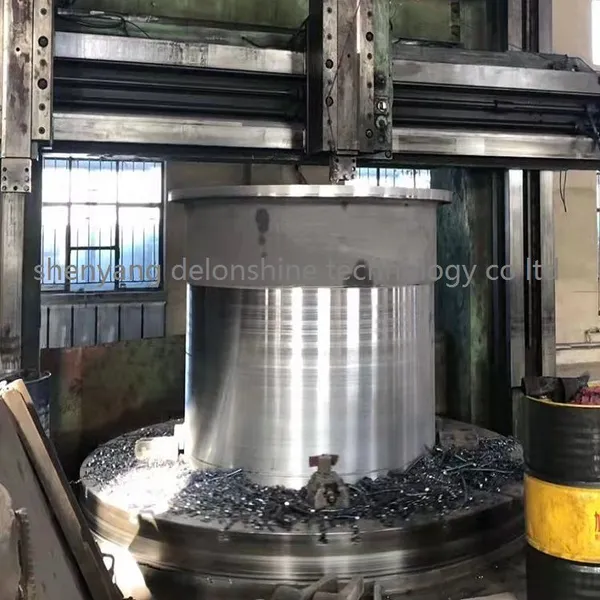 Read More
 -
Ultrasonic and Magnetic Particle Testing on Mining Big Gears
October 7, 2026A mining big gear weighing 20 tonnes and measuring 5 metres across cannot be inspected by looking at it. The defects that end its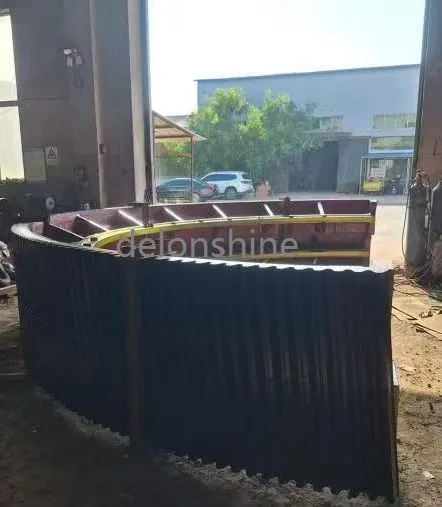 Read More
 -
Jaw Crusher Plates in Hard Rock Quarrying
October 7, 2026A granite quarry asks more of a quarry jaw crusher plate than a river gravel pit does. Rock that is hard, abrasive and blocky puts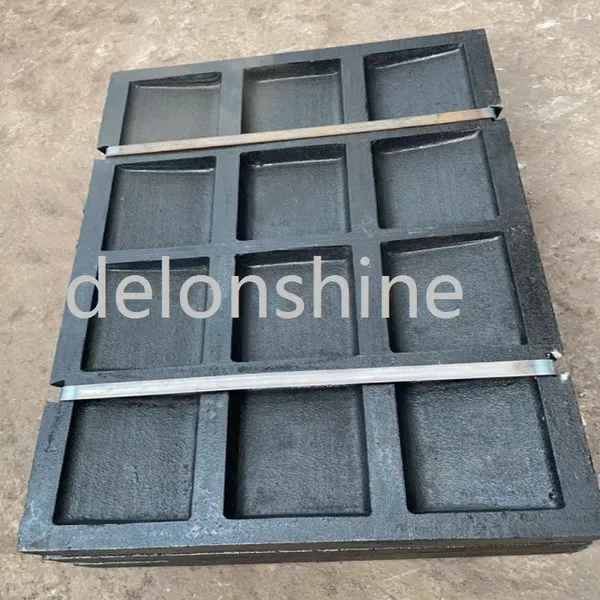 Read More
 -
Jaw Crusher Plate Material Grades: Mn13, Mn18 and Mn22
October 7, 2026Two quotations for the same jaw crusher plate often differ by a wide margin, and the reason is usually the grade written on the dr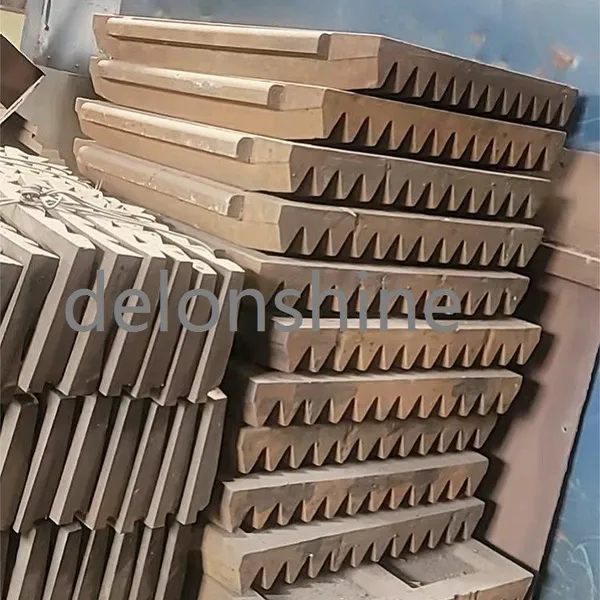 Read More

Contact Us
Recommended Products
-
 Vertical Mill Reducer Planetary Gear AssemblyNegotiableMOQ: 2 Combos
 -
High Precision Mining Equipment End Cover Wear Resistant Crusher End CapNegotiableMOQ: 2 Pieces
-
Heavy Duty Mining Equipment Cast HousingNegotiableMOQ: 2 Pieces
-
Mining Parts Concave MantleNegotiableMOQ: 2 Pieces
-
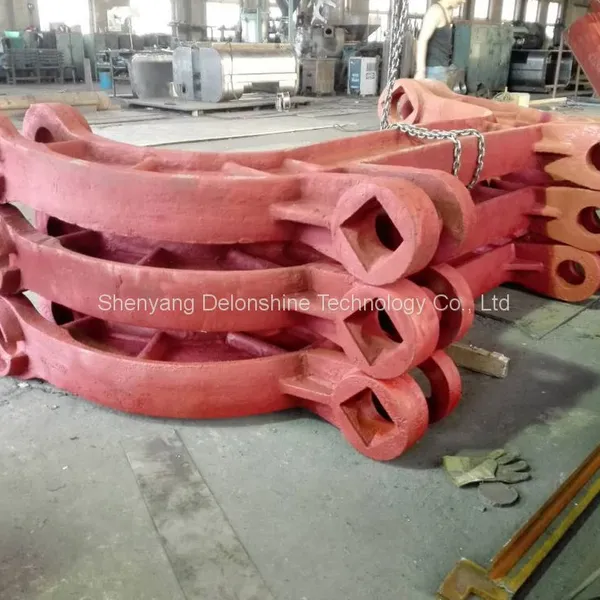
High Strength Cast Steel Crusher Lifting Beam Heavy Load Mining Equipment Spare PartNegotiableMOQ: 2 Pieces
-
OEM Replacement Mining Spare Parts for Stone Crushing PlantNegotiableMOQ: 2 Pieces
-
Cast Steel Ball Mill Head for Mineral ProcessingNegotiableMOQ: 2 Pieces
-
Large Diameter Cast Gear for Ore Grinding MillNegotiableMOQ: 2 Pieces
-
Wear Resistant Mining Spare PartsNegotiableMOQ: 2 Pieces
-
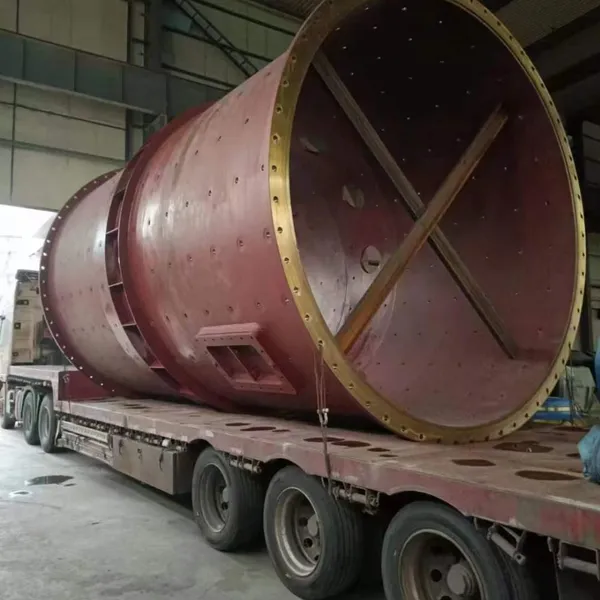
Industrial Wet Dry Ball Mill for Mineral ProcessingNegotiableMOQ: 2 Pieces


-
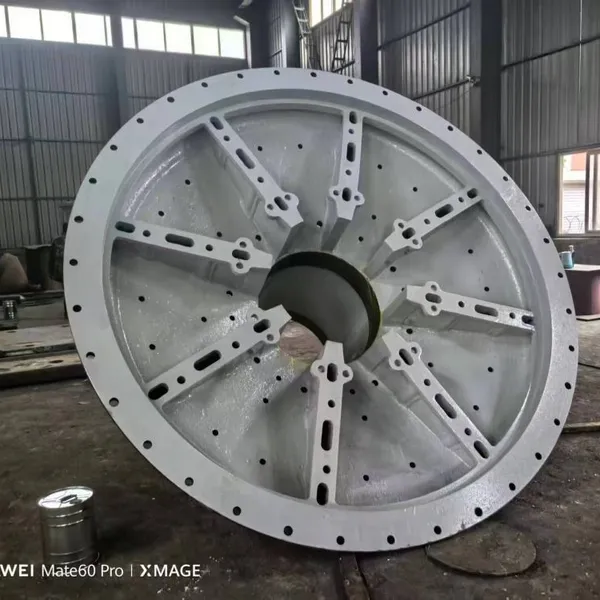
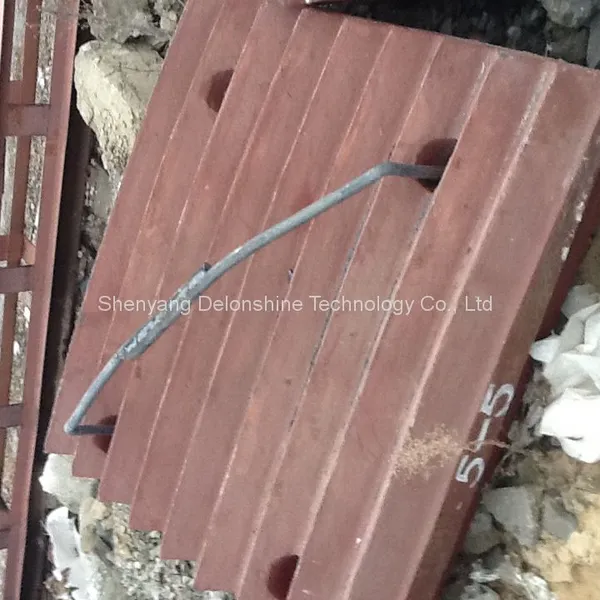
High Wear Resistant Ball Mill Wear Parts Ball Mill Gear Pinion Liner for Mining Processing PlantNegotiableMOQ: 2 Pieces
-
Heavy Duty Equipment CasingNegotiableMOQ: 2 Pieces
-
Customized Main Shaft for Cone CrusherNegotiableMOQ: 2 Pieces
-
Ball Mill Head With Flange and Bolt HolesNegotiableMOQ: 2 Pieces
-
Heavy Duty Equipment CasingNegotiableMOQ: 2 Pieces


-
Crusher Wear Parts for Mining MachineryNegotiableMOQ: 2 Pieces
-
High Manganese Steel Jaw Crusher Fixed & Swing PlatesNegotiableMOQ: 2 Pieces
-
Cast Steel Safety Toggle Plate for Jaw Crusher Overload ProtectionNegotiableMOQ: 2 Pieces
-
High Manganese Steel Mill LinerNegotiableMOQ: 2 Pieces
-
Main Shaft Steel Sleeve Lock Nut for Cone CrusherNegotiableMOQ: 2 Pieces