
 Business License

Ball Mill Spare Parts Map: Every Wear Point in One View
Every ball mill spare parts list looks short until a plant counts the items it actually stocks.
Inside one grinding mill, liners, grates, pulp lifters, trunnion journals, a girth gear and a pinion all wear at rates set by the ore, the media and the running hours.
Ordering them one at a time, with the mill already stopped, is how a grinding circuit loses production days.
A single map of the wear points turns that rush into a planned purchase.
1. What Ball Mill Spare Parts Cover in a Grinding Circuit
A grinding circuit divides its consumables into three groups: parts inside the shell, parts at the two ends, and parts in the drive train.
Inside the shell sit the shell liners, the head liners and the classifying liners that shape the media charge as it tumbles.
At the ends sit the trunnion journals and bearings, the feed chute, the discharge grates and the trommel.
In the drive train sit the girth gear, the pinion, the gear guard and the lubrication system that keeps the two of them alive.
Grouping the items this way helps a buyer because each group fails for a different reason and is ordered at a different rhythm.
A liner is a wear item bought in large batches, a trunnion bearing is a long-lead casting bought rarely, and a pinion sits somewhere between the two.
The table below groups the common items by position and by the material usually supplied for each one.
| Position | Typical items | Common material | Service interval |
|---|---|---|---|
| Shell interior | shell liners, head liners | manganese steel, chrome alloy | 4 to 12 months |
| Feed end | trunnion journal, feed chute liner | carbon steel, alloy steel | 12 to 24 months |
| Discharge end | grates, pulp lifters, trommel | chrome alloy castings | 6 to 18 months |
| Drive train | girth gear, pinion, coupling | hardened alloy steel | 3 to 8 years |
Buying against this map keeps a plant from discovering a worn grate on the day it is needed, and it is the reason the ball mill spare parts list deserves an owner rather than a shelf.
2. Ball Mill Trunnion Parts at the Feed and Discharge Ends
A mill turns on two hollow journals, one at each end of the shell, and these are the ball mill trunnion parts that carry the whole rotating mass.
The journal is a machined forging or casting welded into the mill head, and its diameter and finish are set by the machine drawing.
The bearing that supports it is either a babbitt-lined shell or a large roller bearing on newer machines.
A trunnion assembly works under a combination of steady load and slow misalignment.
The load comes from the shell, the liners and the charge, which together can reach several hundred tonnes on a large mill.
The misalignment comes from thermal growth, foundation settlement and the small elastic deflection of the shell under its own weight.
Seals, oil rings and the bearing housing belong to the same family and fail on their own schedule.
A seal that has hardened lets grit into the oil film, and a scored journal then wears a new bearing far faster than the original did.
The table below lists the ball mill trunnion parts and what each one demands from a maintenance team.
| Part | Function | Typical failure |
|---|---|---|
| Trunnion journal | carries the radial load | scoring, ovality |
| Bearing insert | builds the oil film | wiping, edge wear |
| Oil seal ring | retains oil, excludes dust | leakage, hardening |
| Bearing housing | locates the assembly | fretting, cracking |
| Oil ring and piping | delivers lubricant | blockage, abrasion |
Shenyang Delonshine Technology Co Ltd machines ball mill trunnion parts to the original drawing, because journal diameter and bearing clearance decide how long the assembly runs.
3. Ball Mill Discharge End Parts: Grates, Lifters and the Pulp Path
Slurry leaves the mill through the ball mill discharge end parts, and each of them shapes how quickly the pulp gets out of the chamber.
The discharge grate is a perforated casting that holds the media back while letting the ground pulp pass through its slots.
Pulp lifters stand behind the grate and carry the slurry up to the discharge opening as the shell rotates.
A trommel or a discharge screen fits after the opening to size the product before it reaches the pump.
Flow through this section changes with slot width, pulp density and the level of the charge.
A grate with rounded slots passes coarse material that the circuit then has to grind again in the next stage.
A grate with blocked slots holds pulp in the chamber, and the mill then grinds the same material twice while the throughput falls away.
The table below compares the ball mill discharge end parts and the condition that tells a team to replace each one.
| Part | Duty | Replacement signal |
|---|---|---|
| Discharge grate | retains media, passes pulp | slot widening, broken webs |
| Pulp lifter | lifts slurry to the outlet | worn face, falling flow |
| Discharge cone | guides pulp out of the shell | erosion, cracking |
| Trommel screen | sizes the discharged product | torn panels, blinded mesh |
| Discharge end liner | protects the head casting | through-thickness wear |
A grate that has lost its slot width lets oversize media into the trommel, and the repair bill for the ball mill discharge end parts grows well beyond the cost of the casting itself.
4. Shell, Head and Cylinder Liners Among Ball Mill Spare Parts
Liners make up the largest share of ball mill spare parts by weight and by annual spend, which is why their wear rate is tracked more closely than any other item.
Shell liners line the cylinder, head liners protect the two end walls, and both are supplied in a wave, step or smooth profile.
The profile controls how the charge tumbles, so changing it changes grinding performance as well as wear life.
Liner thickness is measured at every shutdown and written into the mill log, together with the position of each worn plate.
Comparing that reading with the previous one gives a wear rate in millimetres per month, and a forecast the planning office can use.
A plant that replaces liners by calendar month instead of by measurement spends money on plate that still has life in it.
The table below lists the liner types that appear in a typical ball mill parts list.
| Liner | Position | Profile |
|---|---|---|
| Shell liner | cylinder | wave, step, smooth |
| Head liner | feed and discharge walls | radial, sectorial |
| Classifying liner | discharge zone | stepped |
| Grate liner | grate frame | grooved |
Shenyang Delonshine Technology casts liners in manganese steel, chrome alloy and heat resistant grades, and marks each plate with its position on the drawing.
5. Girth Gear and Pinion: The Drive Side of a Ball Mill Parts List
The girth gear is the largest part on most mills, bolted to the shell flange and driven by one or two pinions.
Gear and pinion are normally supplied as a matched set, since a new pinion running against a worn gear wears quickly and runs noisily.
Lubrication, alignment and the condition of the shell flange joint decide how long the pair lasts.
Wear on a gear tooth shows as a band across the working flank, and its width says whether the alignment is correct.
A band that sits toward one end of the tooth points to a pinion that is not parallel to the gear axis.
Inspecting the gear with the mill turned a quarter of a revolution at each visit brings every part of the circle under view.
The table below sets out the drive parts that a mill normally keeps on its list.
| Part | Typical material | Inspection interval |
|---|---|---|
| Girth gear | hardened alloy steel casting | yearly |
| Pinion | hardened alloy steel forging | quarterly |
| Gear guard and spray system | steel with lubricant nozzles | monthly |
| Coupling | steel with flexible elements | quarterly |
| Shell flange bolts | high tensile steel | yearly |
Delonshine Technology supplies a gear and its pinion as a pair when the drawing calls for a set, and records the backlash figure with the certificate.
6. Feed Chute, Trommel and Other Ball Mill Spare Parts Outside the Shell
Parts outside the shell are easy to forget and quick to fail, because most of them sit out of sight between the mill and the next stage of the circuit.
The feed chute takes the impact of ore dropping into the mill and is lined with wear plate or cast blocks.
The trommel screen, the discharge launder and the trunnion seal strip sit in the same group.
Fasteners, gaskets and rubber sealing strip look minor and stop a great deal of unplanned work.
A bolt that has stretched under repeated load lets a liner move, and a moving liner wears its seat as well as its own face.
Keeping a small stock of the common sizes costs little and removes a frequent cause of extended downtime.
The table below lists the peripheral ball mill spare parts and the material normally used for each.
| Part | Material | Wear mechanism |
|---|---|---|
| Feed chute liner | wear resistant plate | impact and sliding |
| Trommel screen | steel or rubber panels | abrasion |
| Discharge launder | lined steel | slurry erosion |
| Trunnion seal strip | rubber, felt | grit and heat |
| Liner bolts and washers | high tensile steel | fatigue, corrosion |
Recording the wear plate thickness at each shutdown gives a plant a forecast rather than a surprise, and Delonshine stocks wear plate and cast blocks in the grades used most often.
7. How Grinding Conditions Wear Ball Mill Trunnion Parts and Liners
Ore hardness, feed size, media size and mill speed work together on the wear rate, and a change in any one of them shows up in the other figures.
Coarse ore and large media bring impact wear, while fine ore and small media bring abrasion.
Slurry that is too thick carries grit into the seals, and the sealing face then wears faster than the journal behind it.
Chrome alloy liners resist abrasion well and tolerate moderate impact, while manganese steel liners work harden under heavy impact and hold their shape.
Choosing between the two families is a question of measuring which mechanism dominates in a particular circuit.
Some plants run the mill slightly underloaded to protect the ball mill trunnion parts, and accept a small loss of throughput in exchange for a quieter bearing.
The table below pairs a change in operating conditions with the part that feels it first.
| Condition change | Part affected first | Observable sign |
|---|---|---|
| Harder ore | shell liners | faster thickness loss |
| Larger media | grate and liners | impact cracking |
| Thicker slurry | trunnion seals | oil contamination |
| Higher mill speed | head liners | accelerated abrasion |
Delonshine advises recording each change and measuring its effect on a fixed schedule, because a single reading says little and a series of readings says a great deal.
8. Inspection Schedule and Wear Limits for Ball Mill Spare Parts
A workable inspection schedule spreads across daily, weekly and shutdown checks, so that no item depends on memory.
Daily checks cover oil level, oil pressure, bearing temperature and unusual noise from the drive.
Weekly checks cover bolt torque, seal leakage and the visible liner surface through the inspection door.
Shutdown checks measure liner thickness, grate slot width, gear backlash and journal ovality.
Action limits turn a reading into a decision, and the limits should be written down before the shutdown begins.
A liner that has lost roughly a third of its original thickness is normally scheduled for replacement at the next available stop.
The table below sets out a practical schedule with action limits for ball mill spare parts.
| Frequency | What is checked | Action limit |
|---|---|---|
| Daily | oil pressure, bearing temperature | outside the manual figure |
| Weekly | bolt torque, seal leakage | any visible leak |
| Shutdown | liner thickness | 30 to 40 percent loss |
| Shutdown | grate slot width | 10 percent growth |
| Yearly | gear backlash, journal ovality | beyond the drawing tolerance |
A plant that keeps readings for two years can plan its ball mill spare parts order to the month instead of reacting to a failure.
9. Frequently Asked Questions about Ball Mill Spare Parts
9.1 How often do ball mill spare parts need replacement?
Replacement follows condition rather than a calendar. Liners in a hard ore circuit are commonly changed every 4 to 8 months, grates every 6 to 12 months, and a girth gear may run for 5 years or more. Trunnion bearings are usually inspected each year and replaced when an oil analysis, a temperature trend or a rise in vibration points to trouble. Keeping thickness and wear rate readings turns those ranges into a figure for a particular mill, and that figure is what a maintenance budget can be built on for the year ahead.
9.2 Which ball mill discharge end parts wear most quickly?
The discharge grate normally leads the list, because it meets the full flow of pulp and media at the highest velocity inside the mill. Slot edges round over, webs crack and the open area grows, while pulp lifters follow with wear at the face where the slurry leaves the casting. A trommel screen comes next when the feed is abrasive. Plants that chart replacement dates for the ball mill discharge end parts usually find the grate moves first and the rest follow within a few months.
9.3 What causes early failure of ball mill trunnion parts?
Contamination and misalignment cause most of it. Grit that passes a worn seal reaches the oil film and scores the journal, while a bearing that is not seated squarely loads one edge of the insert. Over-greasing and blocked oil passages raise the temperature, and a hot bearing can wipe its babbitt within minutes. Regular oil sampling is the least costly way to catch those causes before the ball mill trunnion parts have to be replaced, since a worn journal that is not re-machined will damage a new bearing as well.
9.4 Can liners, grates and gears be ordered together?
They can, and combining them often improves freight. A mill shell holds a large tonnage of liners, so a container filled with liners has room for grates, pulp lifters and small drive parts at little extra cost. Production planning benefits as well, since one order schedule covers the whole shutdown. The practical requirement is to give the supplier a complete list with drawing numbers, quantities and required dates, so that casting, heat treatment and machining can be sequenced across the same batch.
Recently Posted
-
Casting Capability: From a 20-Ton Arc Furnace to 100-Ton Castings
October 8, 2026A buyer sourcing a heavy spare part for a grinding mill or a primary crusher is really asking two questions about the supplier. Ca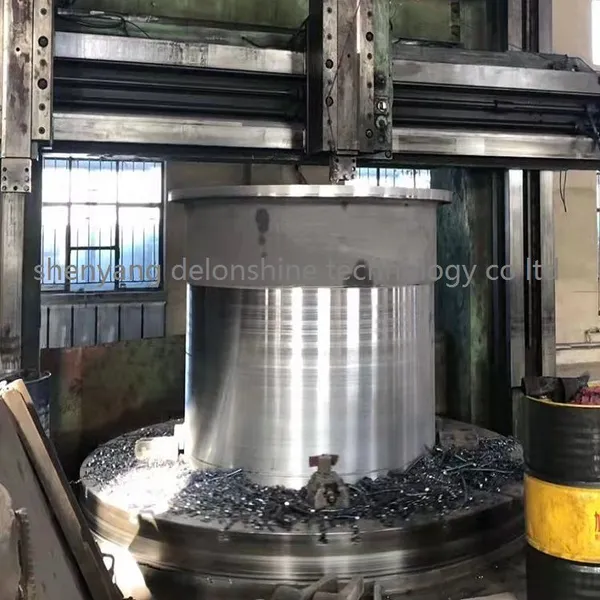 Read More
 -
Ultrasonic and Magnetic Particle Testing on Mining Big Gears
October 7, 2026A mining big gear weighing 20 tonnes and measuring 5 metres across cannot be inspected by looking at it. The defects that end its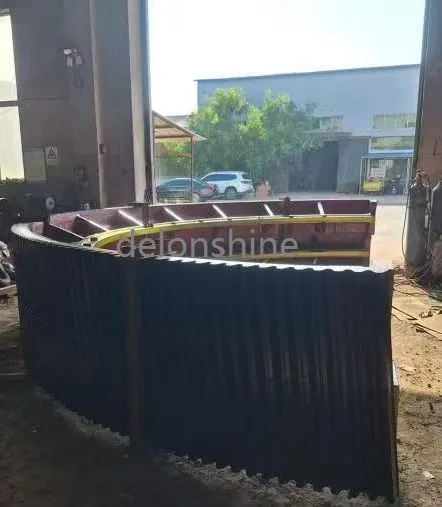 Read More
 -
Jaw Crusher Plates in Hard Rock Quarrying
October 7, 2026A granite quarry asks more of a quarry jaw crusher plate than a river gravel pit does. Rock that is hard, abrasive and blocky puts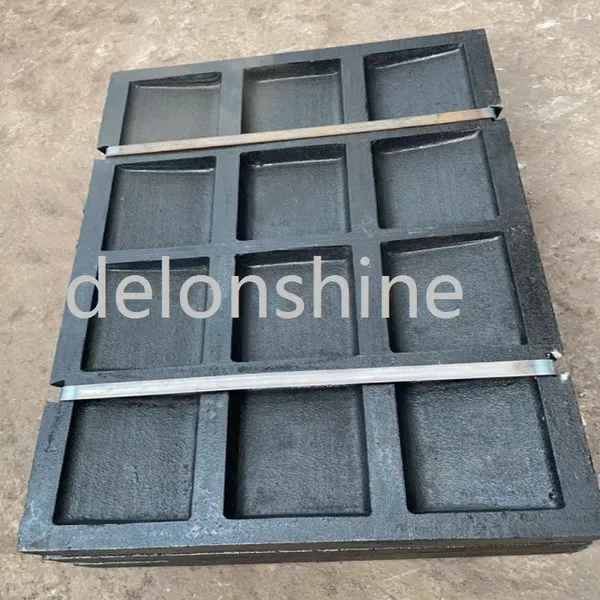 Read More
 -
Jaw Crusher Plate Material Grades: Mn13, Mn18 and Mn22
October 7, 2026Two quotations for the same jaw crusher plate often differ by a wide margin, and the reason is usually the grade written on the dr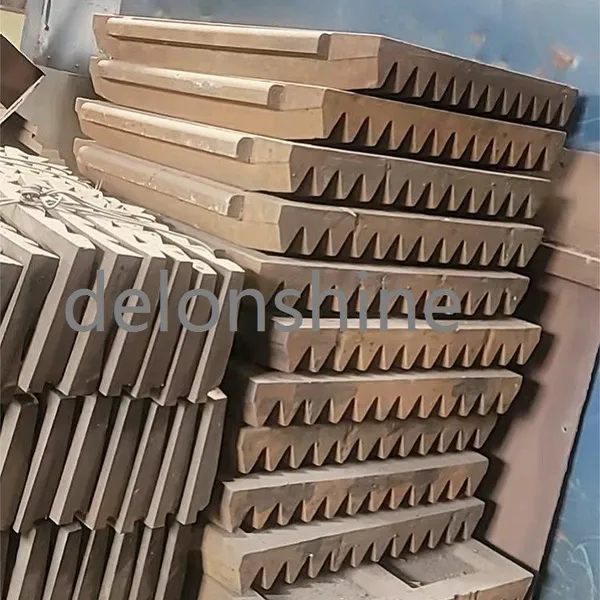 Read More

Contact Us
Recommended Products
-
 Vertical Mill Reducer Planetary Gear AssemblyNegotiableMOQ: 2 Combos
 -
High Precision Mining Equipment End Cover Wear Resistant Crusher End CapNegotiableMOQ: 2 Pieces
-
Heavy Duty Mining Equipment Cast HousingNegotiableMOQ: 2 Pieces
-
Mining Parts Concave MantleNegotiableMOQ: 2 Pieces
-
High Strength Cast Steel Crusher Lifting Beam Heavy Load Mining Equipment Spare PartNegotiableMOQ: 2 Pieces
-
OEM Replacement Mining Spare Parts for Stone Crushing PlantNegotiableMOQ: 2 Pieces
-
Cast Steel Ball Mill Head for Mineral ProcessingNegotiableMOQ: 2 Pieces
-
Large Diameter Cast Gear for Ore Grinding MillNegotiableMOQ: 2 Pieces
-
Wear Resistant Mining Spare PartsNegotiableMOQ: 2 Pieces
-
Industrial Wet Dry Ball Mill for Mineral ProcessingNegotiableMOQ: 2 Pieces


-
High Wear Resistant Ball Mill Wear Parts Ball Mill Gear Pinion Liner for Mining Processing PlantNegotiableMOQ: 2 Pieces
-
Heavy Duty Equipment CasingNegotiableMOQ: 2 Pieces
-
Customized Main Shaft for Cone CrusherNegotiableMOQ: 2 Pieces
-
Ball Mill Head With Flange and Bolt HolesNegotiableMOQ: 2 Pieces
-
Heavy Duty Equipment CasingNegotiableMOQ: 2 Pieces


-
Crusher Wear Parts for Mining MachineryNegotiableMOQ: 2 Pieces
-
High Manganese Steel Jaw Crusher Fixed & Swing PlatesNegotiableMOQ: 2 Pieces
-
Cast Steel Safety Toggle Plate for Jaw Crusher Overload ProtectionNegotiableMOQ: 2 Pieces
-
High Manganese Steel Mill LinerNegotiableMOQ: 2 Pieces
-
Main Shaft Steel Sleeve Lock Nut for Cone CrusherNegotiableMOQ: 2 Pieces