
 Business License

Carbon Steel versus Heat Resistant Steel for Mill Components
Two steel families carry most of the load in a grinding plant, and the choice between them is usually settled by temperature rather than by price.
Carbon steel mill parts are the workhorse of a mill: structural, inexpensive and easy to machine.
Heat resistant steel castings take over where the same component has to hold its shape at temperatures that would soften ordinary carbon steel.
Choosing correctly between the two is one of the most consequential decisions in a mill component steel grade specification.
1. Two Steel Families Used in Mill Components
A mill component is asked to do one of two jobs: carry load at ambient conditions, or survive heat without losing strength.
Carbon steel does the first, and heat resistant alloy steel does the second.
The distinction sounds simple and becomes less so once the actual temperature of a working surface is measured.
Carbon steel covers the low and medium carbon grades, with manganese and silicon as the usual additions and no deliberate alloying for temperature.
Heat resistant grades add chromium, molybdenum or nickel so that the surface resists oxidation and the structure resists creep.
A third family, heat resistant cast iron, fills the middle ground where temperature is moderate and castability matters.
The table below summarises how the two families differ in the properties that matter to a maintenance department.
| Property | Carbon steel | Heat resistant alloy |
|---|---|---|
| Continuous working temperature | up to roughly 400 C | roughly 600 C and above |
| Oxidation resistance | scale forms early | protective oxide layer |
| Strength retained when hot | falls sharply | holds to design figure |
| Relative material cost | lowest of the group | two to five times higher |
| Machining response | straightforward | slower, tool wear higher |
Shenyang Delonshine Technology Co Ltd casts both families in the same foundry, which makes a side by side comparison of cost and delivery straightforward for a buyer.
2. Carbon Steel Mill Parts: Composition and Behaviour
Carbon steel mill parts are made from grades such as 1045 or a cast equivalent, with carbon content usually between 0.2 and 0.5 percent.
They are strong, tough, weldable and predictable, and a plant can repair them in its own workshop.
Those qualities explain why the family covers most structural components in a grinding circuit.
The limits appear as soon as the temperature rises.
Above roughly 400 degrees Celsius the surface begins to scale, and the scale layer spalls away and takes fresh metal with it on each cycle.
Above roughly 500 degrees the yield strength falls far enough that a loaded section may creep slowly out of shape.
The table below lists the common carbon steel mill parts and the reason each one is specified in that material.
| Part | Reason for carbon steel | Working condition |
|---|---|---|
| Mill shell sections | strength and weldability | cool to warm |
| Support base and frames | stiffness at low cost | ambient |
| Trunnion journals | machinability and toughness | warm, oil lubricated |
| Couplings and shafts | fatigue strength | ambient |
| Guards and brackets | fabrication from plate | ambient |
Delonshine Technology supplies carbon steel components with a mill certificate showing the chemical analysis and the mechanical test figures.
3. Heat Resistant Steel Castings: What the Alloy Is Designed For
Heat resistant steel castings are specified where a part must keep its shape while hot and where a scale layer would otherwise consume it.
The chromium content is the main variable, and it rises with the service temperature the customer intends.
A grade with roughly 5 percent chromium suits moderate heat, while a grade above 20 percent chromium and 25 percent nickel suits the hottest zones.
Two mechanisms drive the choice.
Oxidation resistance depends on chromium, because the oxide that forms on the surface is stable and slow growing.
Creep resistance depends on the matrix, which is why molybdenum, nickel and sometimes niobium are added to hold the structure at temperature.
The table below sets out the common heat resistant casting families and the temperature band each one serves.
| Family | Rough alloy content | Service band |
|---|---|---|
| Low alloy heat resistant steel | 1 to 2 percent chromium | up to roughly 500 C |
| Medium chromium steel | 5 to 9 percent chromium | roughly 550 to 650 C |
| High chromium steel | 18 to 28 percent chromium | roughly 700 to 1000 C |
| Nickel chromium austenitic | chromium with 20 percent or more nickel | roughly 900 to 1100 C |
| Heat resistant cast iron | silicon with chromium | roughly 600 to 850 C |
A buyer who states the measured skin temperature of the part rather than the process temperature gets a more accurate recommendation, because the two can differ by hundreds of degrees.
4. Temperature Limits That Decide a Mill Component Steel Grade
The first question in any mill component steel grade discussion is what temperature the metal itself reaches.
Process temperature and metal temperature are different figures, and the gap depends on insulation, airflow and whether the surface faces the heat source directly.
A gas duct carrying material at 800 degrees may keep its outer wall at 250 degrees once the lining is sound.
Three practical limits follow from that.
Below roughly 400 degrees, carbon steel is usually the economical answer.
Between roughly 400 and 600 degrees, an alloy grade with chromium and molybdenum pays for itself by avoiding repeated scaling.
Above roughly 600 degrees, a high chromium or austenitic grade becomes the standard choice.
The table below lists the usual specification inputs a foundry needs before it can fix a grade for heat resistant steel castings.
| Input | Why it changes the grade |
|---|---|
| Measured metal temperature | sets the oxidation and creep demand |
| Continuous or cyclic heating | cycling drives spalling and thermal fatigue |
| Atmosphere inside the vessel | sulphur and chlorine attack the oxide layer |
| Abrasion from the charge | may need hardness as well as heat resistance |
| Load carried while hot | creep limit depends on stress and time |
| Repair expected on site | weldability narrows the choice |
Shenyang Delonshine Technology asks for those six items in writing, because a grade selected on temperature alone often turns out to be the wrong one.
5. Wear, Impact and Corrosion Across Steel Grades for Mill Parts
Heat is not the sole demand on steel grades for mill parts, and a part that resists temperature may still wear out quickly.
Abrasion resistance rises with hardness, and hardness falls as the temperature rises.
That conflict is at the centre of most specification arguments in a grinding circuit, and it is the reason a mill component steel grade cannot be settled from a single property table.
A manganese steel liner holds its surface hardness through work hardening and remains the common choice for impact duty at ambient temperature.
A chrome alloy casting holds hardness at higher temperature and resists sliding abrasion well, though it tolerates less impact.
An austenitic heat resistant grade gives up some wear resistance in exchange for thermal stability and weldability.
The table below compares the three routes against the demands a mill actually imposes.
| Demand | Manganese steel | Chrome alloy | Austenitic heat resistant |
|---|---|---|---|
| Impact | very good | moderate | good |
| Sliding abrasion | moderate | very good | moderate |
| High temperature | limited | moderate | good |
| Weld repair | difficult | difficult | good |
| Relative cost | low | moderate | high |
Delonshine Technology keeps samples of previous failures and compares them with the proposed grade before the order is released, and that step applies to carbon steel mill parts as much as it does to an alloy casting.
6. Casting and Heat Treatment Route for Each Steel Family
The two families follow different routes through a foundry, and the route influences both lead time and final properties.
Carbon steel grades are melted in an electric arc furnace or an induction furnace, poured into sand moulds and normalised.
Heat resistant steel castings usually need a longer heat treatment cycle, and the cooling rate after casting is controlled rather than left to the air.
Heat treatment is where a casting either reaches its specification or misses it.
Solution treatment dissolves the alloying elements and prepares the structure, while a controlled cooling step fixes the properties the design assumes.
Test coupons poured with the casting are machined and pulled so that the figures reach the customer on paper.
The table below compares the two routes on the points a buyer tracks most closely.
| Step | Carbon steel | Heat resistant alloy |
|---|---|---|
| Melting | arc or induction furnace | arc furnace with alloy additions |
| Pouring temperature | moderate control needed | tight control needed |
| Heat treatment cycle | normalise, sometimes stress relieve | solution treat with controlled cooling |
| Machining allowance | standard | larger, material is harder |
| Typical lead time | 3 to 5 weeks | 5 to 9 weeks |
A foundry that handles both families in one plant can schedule a mixed order together, and Delonshine uses that flexibility when a customer orders steel and alloy parts on the same drawing set.
Keeping carbon steel mill parts in the same production programme as alloy castings often shortens the total lead time.
7. Matching Steel Grade to Mill Duty and Service Life
Service life is the figure that decides whether a higher alloy content earns back its cost, and it settles most mill component steel grade questions in the end.
A carbon steel part that lasts two years at a low price can beat an alloy part that lasts four years at three times the price.
The comparison becomes clear once the plant has a measured replacement record rather than an impression.
A simple calculation helps.
Dividing the part cost plus the downtime cost by the months of service gives a cost per month of operation, and the two families can then be ranked on the same basis.
Downtime usually dominates that figure in a high throughput plant, which is why a longer lasting grade often wins even at a higher price.
The table below shows a worked comparison on a generic mill component.
| Option | Service life | Cost per month of service |
|---|---|---|
| Carbon steel part | 18 months | baseline |
| Alloy steel part | 30 months | slightly above baseline |
| Alloy part with planned downtime | 30 months | below baseline |
| Alloy part in a bottleneck unit | 30 months | well below baseline |
Placing the higher grade where the machine is the constraint on plant output gives the largest return, and Shenyang Delonshine Technology helps customers identify that unit.
8. Ordering, Certification and Documentation for Mill Component Parts
Documentation decides whether a delivered mill component can be checked against the specification it was bought to.
A mill certificate should carry the heat number, the chemical analysis, the mechanical test results and the heat treatment record.
Without those figures, a buyer has no way to tell a correct part from a substitute.
The enquiry itself needs four items: the drawing number, the material specification, the quantity and the required date.
Adding the operating temperature and the wear mechanism helps the foundry recommend a better grade if the drawing is silent on the point.
The table below lists what a complete document package contains for mill component parts.
| Document | What it proves |
|---|---|
| Mill certificate | chemistry and mechanical properties |
| Heat treatment record | furnace cycle and temperatures |
| Dimensional report | critical sizes against the drawing |
| Non destructive test report | internal soundness of the casting |
| Packing list and photographs | condition at dispatch |
Delonshine issues that package as standard whether the order covers heat resistant steel castings or a standard carbon grade, and the company keeps a copy of each record against the order number.
9. Frequently Asked Questions about Mill Component Steel Grades
9.1 When should a mill component steel grade be upgraded to an alloy?
The upgrade pays when the metal temperature is above roughly 400 degrees Celsius, when the part scales visibly between shutdowns, or when the same unit is replaced more than once a year. A part that shows a thick oxide layer with fresh metal exposed underneath is telling a maintenance team that a carbon grade has reached its limit. Recording the skin temperature is the simplest way to settle the question, because the figure decides the grade far more often than any other input does.
9.2 Are heat resistant steel castings harder to machine than carbon steel?
They are, and the difference shows up in tool life rather than in finished quality. Alloy grades with chromium and nickel work harden quickly, so a light cut with a worn tool can glaze the surface and make the next pass harder still. Cutting speeds fall and tool changes rise, which is why a foundry usually leaves a larger machining allowance and completes as much work as possible before heat treatment. Machining a heat resistant steel casting well takes sharp tooling, steady feed and patience.
9.3 Can carbon steel mill parts be welded when they crack?
Usually they can, and that is one of the reasons the family remains popular. A cracked bracket or frame member is prepared with a groove, preheated if the section is thick, welded with a matching electrode and cooled slowly under a cover. The repair restores the part at low cost and short notice. Heat resistant alloy parts are harder to weld, since the alloying elements burn out and the heat affected zone loses its high temperature strength, so a weld repair there should be treated as temporary.
9.4 Does a higher steel grade always give a longer service life?
Not always, because life is decided by the mechanism that actually causes the failure. A high chromium part placed in an impact dominated application may crack sooner than a tougher manganese grade would, and an expensive alloy offers nothing extra where the real problem is abrasive slurry that wears any material at the same rate. The reliable approach is to identify the dominant failure mechanism from a worn part, then select the grade that resists that mechanism rather than the grade with the highest nominal figures, and that practice is what settles a mill component steel grade correctly.
Recently Posted
-
Bowl Liner and Mantle: How the Two Cone Crusher Liners Work Together
October 14, 2026A mantle and bowl liner set that is renewed one half at a time usually costs a plant more than a cone liner pair changed as a set,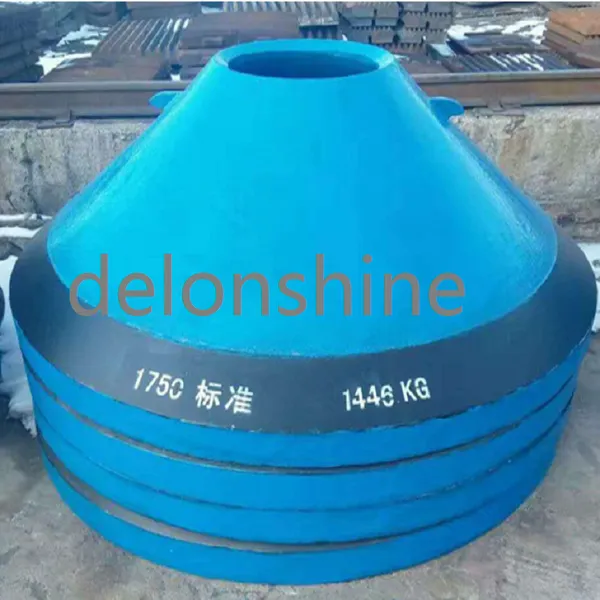 Read More
 -
Bowl Liner Explained: The Stationary Bowl Liner in a Cone Crusher
October 14, 2026An owl liner cone crusher part is the stationary liner that lines the crushing chamber and breaks rock against a moving mantle by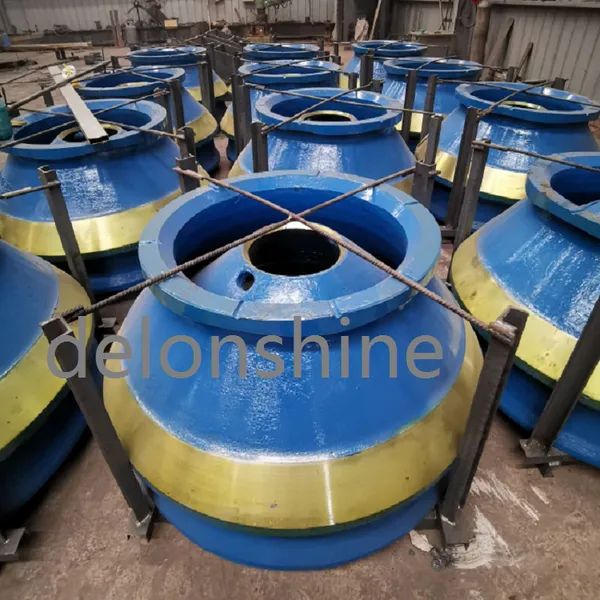 Read More
 -
Bowl Liner and Mantle: How the Two Cone Crusher Liners Work Together
October 13, 2026A mantle and bowl liner set that is renewed one half at a time usually costs a plant more than a cone liner pair changed as a set,
Read More -
Bowl Liner Explained: The Stationary Bowl Liner in a Cone Crusher
October 13, 2026An bowl liner cone crusher part is the stationary liner that lines the crushing chamber and breaks rock against a moving mantle by
Read More

Contact Us
Recommended Products
-
 Vertical Mill Reducer Planetary Gear AssemblyNegotiableMOQ: 2 Combos
 -
High Precision Mining Equipment End Cover Wear Resistant Crusher End CapNegotiableMOQ: 2 Pieces
-
Heavy Duty Mining Equipment Cast HousingNegotiableMOQ: 2 Pieces
-
Mining Parts Concave MantleNegotiableMOQ: 2 Pieces
-
High Strength Cast Steel Crusher Lifting Beam Heavy Load Mining Equipment Spare PartNegotiableMOQ: 2 Pieces
-
OEM Replacement Mining Spare Parts for Stone Crushing PlantNegotiableMOQ: 2 Pieces
-
Cast Steel Ball Mill Head for Mineral ProcessingNegotiableMOQ: 2 Pieces
-
Large Diameter Cast Gear for Ore Grinding MillNegotiableMOQ: 2 Pieces
-
Wear Resistant Mining Spare PartsNegotiableMOQ: 2 Pieces
-
Industrial Wet Dry Ball Mill for Mineral ProcessingNegotiableMOQ: 2 Pieces


-
High Wear Resistant Ball Mill Wear Parts Ball Mill Gear Pinion Liner for Mining Processing PlantNegotiableMOQ: 2 Pieces
-
Heavy Duty Equipment CasingNegotiableMOQ: 2 Pieces
-
Customized Main Shaft for Cone CrusherNegotiableMOQ: 2 Pieces
-
Ball Mill Head With Flange and Bolt HolesNegotiableMOQ: 2 Pieces
-
Heavy Duty Equipment CasingNegotiableMOQ: 2 Pieces


-
Crusher Wear Parts for Mining MachineryNegotiableMOQ: 2 Pieces
-
High Manganese Steel Jaw Crusher Fixed & Swing PlatesNegotiableMOQ: 2 Pieces
-
Cast Steel Safety Toggle Plate for Jaw Crusher Overload ProtectionNegotiableMOQ: 2 Pieces
-
High Manganese Steel Mill LinerNegotiableMOQ: 2 Pieces
-
Main Shaft Steel Sleeve Lock Nut for Cone CrusherNegotiableMOQ: 2 Pieces