
 Business License

Jaw Crusher Toggle Plate: The Overload Protection Part Buyers Overlook
A jaw crusher toggle plate is the one wear part in a primary crusher that a plant quietly hopes will break.
It sits at the rear of the machine between the pitman and the frame, passing the crushing stroke into the swing jaw while also acting as the machine's mechanical fuse.
Because it costs a fraction of what the frame or the eccentric shaft costs, it is often ordered late, specified loosely and stocked without much thought.
That habit is costly, because toggle plate overload protection depends entirely on getting the part right.
1. What a Jaw Crusher Toggle Plate Is and Where It Fits
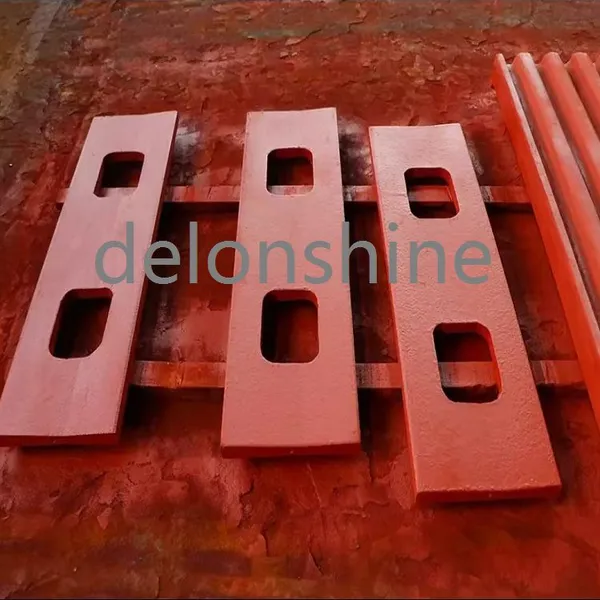
A jaw crusher toggle plate is a flat bar with machined ends that spans the gap between the pitman and the rear frame of the crusher.
One end seats in a recess on the pitman and the other in a matching recess on the frame or on an adjusting block.
The tension rod and spring hold the rear seat closed, so the bar stays under load even when the chamber is empty.
The position of that rear seat sets the closed side setting of the machine.
Moving the seat forward or back changes the discharge gap and therefore the product size.
On many machines a hydraulic wedge or a set of shims does the moving, and the bar travels with it.
Two bars usually work together, an upper and a lower toggle, arranged so the swing jaw is driven through a pair of inclined links.
Their working angle is set at manufacture and typically falls between roughly 15 and 30 degrees off vertical.
Small changes in that angle alter the throw at the discharge end, which is why a worn seat or a wrong-length bar changes product size.
The table below sets out the interfaces a buyer should confirm against the machine drawing.
| Interface | What it controls | Checked by |
|---|---|---|
| Length between the seat centres | closed side setting range | measuring the worn bar |
| End radius and contact face | contact pressure at the seat | seat wear pattern |
| Thickness and width | load capacity and stiffness | machine manual |
| Clamp and bolt arrangement | retention during the stroke | visual inspection |
| Material grade | deformation behaviour under overload | supplier certificate |
Shenyang Delonshine Technology Co Ltd quotes replacement toggles against those five points rather than against a model name alone.
2. Toggle Plate Overload Protection: How the Part Absorbs a Shock
Tramp metal is the event that every primary crusher is designed around.
An excavator tooth, a drill bit or a length of rail enters the chamber, the crushing force climbs past anything the frame was built for, and something has to give.
Toggle plate overload protection is the arrangement that decides what that something is.
The bar is built to deform or fracture before the pitman, the eccentric shaft or the frame takes permanent damage.
When the load passes its limit the bar bends, cracks or shears at one end, and the swing jaw loses its drive.
The machine stops breaking rock, the drive belt may slip, and the operator notices within seconds.
That behaviour is deliberate, which is why the part is sometimes described as a sacrificial link.
A bar that is too strong defeats the purpose, because the next weakest item in the drive train becomes the failure point instead.
A bar that is too weak fails in ordinary duty and stops the plant for no reason.
The balance is set by the section, the material and the heat treatment together.
Shenyang Delonshine Technology supplies toggles to the original section and grade of the machine, because raising strength without a stress calculation simply moves the damage elsewhere.
3. Why a Crusher Safety Toggle Plate Is Built to Fail
A crusher safety toggle plate is engineered so that failure happens in a controlled place and a controlled way.
The crack normally starts at one of the seat ends, where contact pressure is highest and the section changes.
A clean break at the end leaves the pitman, the seats and the frame unmarked, and the machine returns to service after a plate change.
Some designs go further and use a bar with a reduced waist or a machined notch.
The notch concentrates stress at a known point, so the break is predictable and the replacement is quick.
Other machines rely on a ductile iron bar that yields rather than shatters, which keeps fragments out of the crushing chamber.
A bar that shatters into pieces can drop steel into the chamber and mark the jaw plates on the next stroke.
That is why fracture behaviour, and not just fracture load, belongs in the specification for a crusher safety toggle plate.
Both behaviours carry a cost.
A yielding bar may bend far enough to jam its seat, while a brittle bar may need the chamber cleared before the machine restarts.
Knowing which behaviour the machine was designed for takes some guesswork out of a breakdown call.
4. Geometry, Section and Material Grade of the Toggle Plate
Three dimensions decide whether the part will fit and last: the length between the seat centres, the end radius, and the section thickness.
Length is measured on the worn bar rather than taken from a manual, because seats wear and the figure drifts over a machine's life.
End radius must match the seat recess, since a mismatched radius concentrates load on a line instead of spreading it across a face.
Section thickness commonly falls between roughly 40 and 120 millimetres depending on machine size and design load.
Width is usually fixed by the seat and commonly runs between about 80 and 200 millimetres, while material grade carries the rest of the duty.
Cast manganese steel is the common choice for machines that see heavy tramp metal, while ductile iron suits designs where yielding is preferred.
Heat treatment ties the two together.
A manganese casting work hardens under impact, so a bar that sits at moderate stress never develops its full surface hardness.
Ductile iron grades are supplied to a specified tensile strength and elongation, and the elongation figure is what sets toggle plate overload protection for that design.
The table below lists the usual grade options and the behaviour each one brings.
| Grade family | Typical behaviour | Suited duty |
|---|---|---|
| Cast manganese steel | work hardens, resists impact | coarse feed with tramp metal risk |
| Ductile iron | yields before fracture | designs where bending is preferred |
| Cast carbon steel | stiff and strong | light duty, tight setting range |
| Fabricated alloy bar | consistent properties along length | repeatable small and mid sizes |
Delonshine Technology confirms the grade on the mill certificate with the shipment, since a grade name without test figures says little about behaviour in service.
5. How Operating Conditions Stress the Toggle Plate
Stroke rate, feed size and the closed side setting all act at the same time.
A machine running at roughly 250 strokes per minute loads the bar thousands of times an hour, so fatigue rather than single overload is the long-term concern.
The table below shows how the main operating variables shift the stress on a jaw crusher toggle plate.
Each one also reduces the margin left for toggle plate overload protection.
| Variable | Effect on load | Practical response |
|---|---|---|
| Coarse feed near opening size | raises force on every stroke | reduce top size upstream |
| High stroke rate | raises cycle count per hour | keep to the design setting |
| Heavy tramp metal | drives the machine into overload | fit a metal detector on the feed |
| Grit in the seats | tilts the bar and edges the load | grease and clean on schedule |
Feed that is too coarse for the chamber raises the crushing force on every stroke.
When the top size approaches the feed opening, the chamber cannot grip the rock properly and much of the stroke energy passes into the toggle instead of into breaking.
Choke feeding changes the picture again.
A full chamber lets rock grind against rock, which reduces the direct load on the jaw plates and spreads it more evenly through the machine.
Temperature and contamination belong in the same list.
Greasing the seats on the recommended schedule costs minutes and protects both the bar and the frame.
6. Reading Wear and Failure on a Worn Jaw Crusher Toggle Plate
A worn jaw crusher toggle plate reports its history through three features: the seat ends, the mid section and the contact faces.
Reading those features together separates a part that reached the end of its life from one that failed early.
Seat ends show the clearest evidence.
Polished, flattened ends mean the seat has been moving under load, while pitting suggests grit has been working in the recess.
Cracks radiating from the end radius point to repeated peak loads rather than to a single event.
The mid section tells a different story.
A bow along the length indicates yield under overload, and a bar that has yielded should be replaced rather than straightened.
Uniform wear across the section is the normal path, and it is measured as a reduction in thickness against the original figure.
The table below pairs the common patterns with the likely cause.
| Pattern | Where it appears | Likely cause |
|---|---|---|
| Clean break at one end | seat radius | tramp metal overload |
| Bow along the length | mid section | sustained over-pressure |
| Flattened and polished ends | both seats | loose retention, worn seats |
| Crack beside a notch | reduced waist | designed failure point |
| Smooth patch inside the break | fracture face | casting defect at the origin |
Separating a manufacturing defect from a duty problem starts with the fracture face.
A bar that failed at a casting flaw shows a smooth region inside the break, while a bar that failed from overload shows a rough, torn surface across the whole section.
Delonshine keeps fracture photographs with every service enquiry so the two cases can be told apart.
7. Buying and Stocking Jaw Crusher Toggle Plates
Reordering a jaw crusher toggle plate is straightforward when the plant keeps three pieces of information on file.
Machine model and serial number, the measured seat length, and the original drawing number cover most enquiries.
Photographs of the worn bar add context that a part number cannot carry, particularly when a seat has been repaired in the field.
A spare on the shelf is the difference between a two-hour stop and a two-week wait.
Because the part is compact and inexpensive relative to the machine, holding one spare per crusher is common practice in mines and quarries.
The spare should be stored flat, oiled at the machined ends, and checked for rust before it is needed.
Ordering in small batches alongside jaw plates and cheek plates usually improves packing and freight, and adding a light bar to an existing crate of heavy castings costs little.
Delonshine Technology Co Ltd packs toggle bars in timber cases with the machined ends protected against movement in transit.
The table below lists what belongs in a reorder enquiry.
| Item | Why it is needed |
|---|---|
| Machine model and serial number | identifies the seat geometry |
| Measured length between seats | confirms fit after seat wear |
| Original drawing or pattern number | reproduces the section |
| Material grade or certificate | keeps failure behaviour unchanged |
| Photographs of the worn part | shows the duty and the failure mode |
| Quantity and required date | sets casting and machining schedule |
8. Fitting a Replacement Toggle Plate Safely
Fitting is a short job that is easy to rush and easy to get wrong.
The machine is isolated and locked out first, the tension rod is released, and the chamber is cleared of loose rock before any part is removed.
The old bar is lifted out with the correct sling, and the seats are inspected before the new part goes in.
Seat condition decides how the new bar will sit.
A seat that is worn or pitted should be dressed or replaced, because a new bar against a worn recess will tilt and load at one edge.
Checking the seat with a straight edge and a feeler gauge takes a few minutes and prevents a repeat failure.
The new bar goes in dry, with the machined ends clean and lightly oiled.
The tension rod is tightened to the figure in the manual, and the closed side setting is measured and recorded after the first 2 hours of running.
A short run at no load confirms that the bar is seated before the crusher returns to production.
Recording the fitting date, the measured length and the closed side setting builds a service history that turns the next order from a guess into a planned purchase.
9. Frequently Asked Questions about the Jaw Crusher Toggle Plate
9.1 How do you know when a jaw crusher toggle plate needs replacing?
Look for change rather than for a fixed hour count. A bar with a visible bow, a crack that starts at either seat end, or ends that are polished and flattened has passed the point where it can be trusted under load. Thickness measured against the original drawing is the other guide, and most plants set a limit at roughly 10 percent reduction. A part that fails during a planned stop costs far less than one that fails while the chamber is full, so the decision usually follows an inspection rather than a breakdown.
9.2 What causes a toggle plate to break?
Uncrushable material is behind most failures. Tramp metal, drill steel or a digger tooth reaches the chamber and the crushing force climbs until something gives, and the bar is designed to be that something. A second group of failures comes from uneven seating, where a worn or dirty recess tilts the part and loads one edge far above its share. A much smaller group traces back to a casting flaw at the origin of the fracture, which is why the fracture face is worth a photograph before the part is scrapped.
9.3 Can a welded repair be used on a crusher safety toggle plate?
Welding is technically possible and is done in remote sites where no spare is available, and the repair usually involves bevelling the break, welding with a compatible electrode and dressing the ends back to radius. The difficulty is that the heat of welding changes the structure of the casting in the region of the repair, so the sacrificial behaviour of a crusher safety toggle plate is no longer predictable. The deposit also rarely matches the cast material in hardness. Most operators treat a weld repair as an emergency measure and order a replacement immediately.
9.4 Does closing the setting change the load on the part?
It does, and the effect is usually larger than operators expect. Running a machine tighter than its design setting raises the force needed on every stroke, and more of that force reaches the toggle rather than being absorbed by the moving jaw. The gain in product fineness is often small compared with the reduction in service life. A plant that needs a finer product is usually better served by adjusting the crusher selection or the screening circuit than by tightening the closed side setting beyond the figure the manufacturer specifies.
Recently Posted
-
Jaw Crusher Plate Casting Defects and How to Spot Them
September 30, 2026A jaw plate that fails after three weeks instead of three months usually carries the explanation on its surface from the day it wa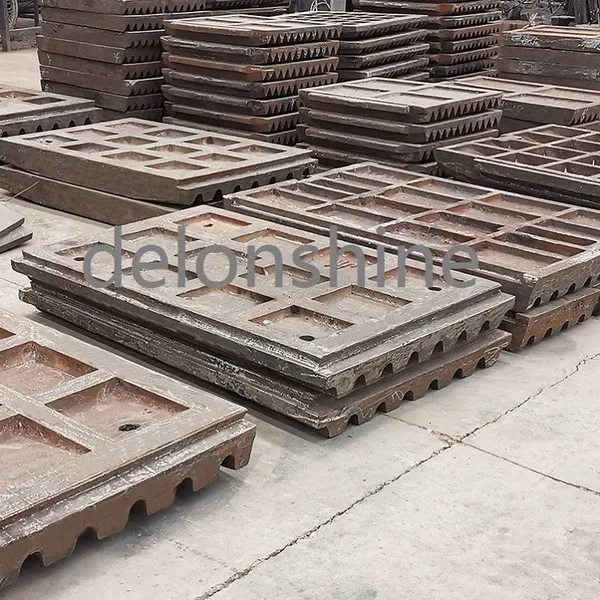 Read More
 -
Regional Buying Practice for Mining Spare Parts Across Export Markets
September 30, 2026A foundry that exports to a dozen regions learns quickly that the same casting is bought in quite different ways from one market t Read More
 -
Heat Treatment Options for Crusher Wear Parts
September 30, 2026Two castings can leave the same foundry with the same chemistry and behave quite differently in service, and the reason is almost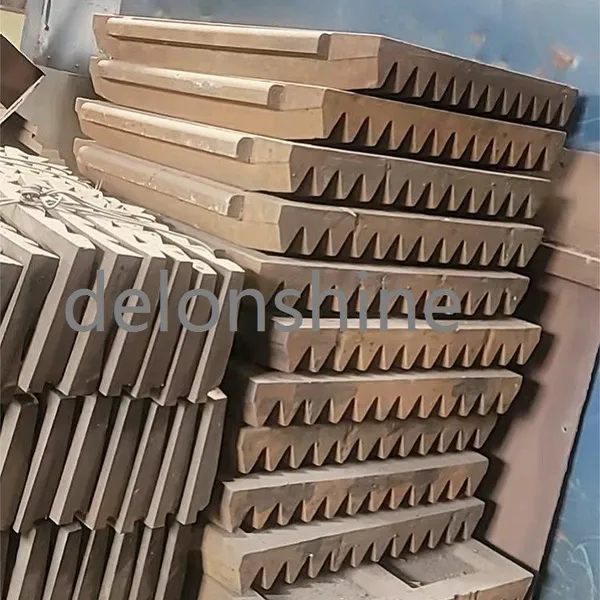 Read More
 -
Crusher Wear Parts Overview: Plates, Liners, Mantles and Toggles
September 29, 2026A plant that budgets for crusher wear parts as a single line item usually discovers later that the parts inside one machine fail a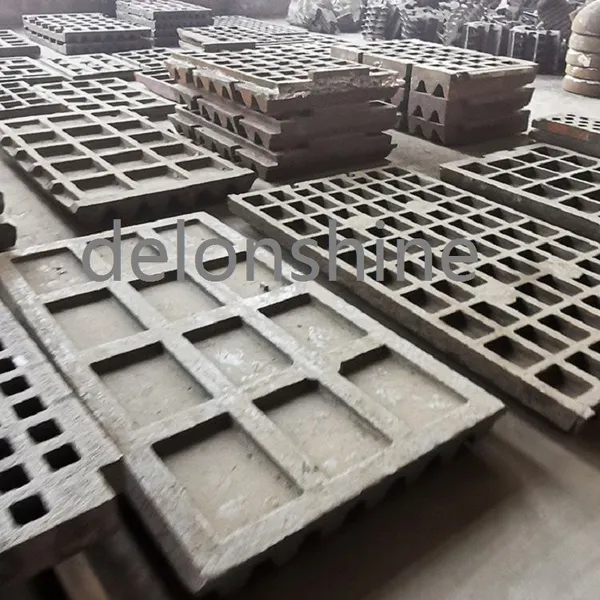 Read More

Contact Us
Recommended Products
-
 Vertical Mill Reducer Planetary Gear AssemblyNegotiableMOQ: 2 Combos
 -
High Precision Mining Equipment End Cover Wear Resistant Crusher End CapNegotiableMOQ: 2 Pieces
-
Heavy Duty Mining Equipment Cast HousingNegotiableMOQ: 2 Pieces
-
Mining Parts Concave MantleNegotiableMOQ: 2 Pieces
-
High Strength Cast Steel Crusher Lifting Beam Heavy Load Mining Equipment Spare PartNegotiableMOQ: 2 Pieces
-
OEM Replacement Mining Spare Parts for Stone Crushing PlantNegotiableMOQ: 2 Pieces
-
Cast Steel Ball Mill Head for Mineral ProcessingNegotiableMOQ: 2 Pieces
-
Large Diameter Cast Gear for Ore Grinding MillNegotiableMOQ: 2 Pieces
-
Wear Resistant Mining Spare PartsNegotiableMOQ: 2 Pieces
-
Industrial Wet Dry Ball Mill for Mineral ProcessingNegotiableMOQ: 2 Pieces


-
High Wear Resistant Ball Mill Wear Parts Ball Mill Gear Pinion Liner for Mining Processing PlantNegotiableMOQ: 2 Pieces
-
Heavy Duty Equipment CasingNegotiableMOQ: 2 Pieces
-
Customized Main Shaft for Cone CrusherNegotiableMOQ: 2 Pieces
-
Ball Mill Head With Flange and Bolt HolesNegotiableMOQ: 2 Pieces
-
Heavy Duty Equipment CasingNegotiableMOQ: 2 Pieces


-
Crusher Wear Parts for Mining MachineryNegotiableMOQ: 2 Pieces
-
High Manganese Steel Jaw Crusher Fixed & Swing PlatesNegotiableMOQ: 2 Pieces
-
Cast Steel Safety Toggle Plate for Jaw Crusher Overload ProtectionNegotiableMOQ: 2 Pieces
-
High Manganese Steel Mill LinerNegotiableMOQ: 2 Pieces
-
Main Shaft Steel Sleeve Lock Nut for Cone CrusherNegotiableMOQ: 2 Pieces