
 Business License

Regional Buying Practice for Mining Spare Parts Across Export Markets
A foundry that exports to a dozen regions learns quickly that the same casting is bought in quite different ways from one market to the next.
The differences come from ore type, mill and crusher size, climate, maintenance routines and the documentation a site is used to receiving.
Southeast Asia mining spare parts orders, for example, tend to be smaller and more frequent than orders placed from a large South American copper operation.
Understanding those patterns helps a buyer plan a purchase that fits the site rather than one that follows a single global template.
1. Why Regional Buying Practice Differs for Mining Spare Parts
Mining spare parts are bought to fit an existing plant, so the buying pattern follows the plant rather than the buyer's preference.
Four variables explain most of the variation between regions: the ore and its abrasiveness, the size of the installed equipment, the local climate, and the depth of spare stock a site is able to hold.
A fifth factor is commercial rather than technical, and that is the documentation a site needs before a purchase order can be released.
Ore type sets the wear rate and therefore the order frequency.
A plant milling a hard, siliceous ore may replace wear parts three times as often as one treating a softer ore on the same equipment.
Climatic conditions then decide how the parts have to be packed and how long they can sit in an open yard before installation.
The table below summarises the patterns that appear most often in export enquiries.
| Region group | Typical drive | Common order pattern |
|---|---|---|
| North America | documentation and traceability | drawing based, third party inspection |
| South America wear parts | large mills, high downtime cost | long life design, campaign size |
| Eastern Europe | legacy machines still in service | reverse engineered parts to old drawings |
| Southeast Asia | heat, humidity and rain season | smaller batches, moisture barrier packing |
| Africa | long sea transit, limited site storage | full campaign stock in one shipment |
| Oceania | hard rock and high crusher load | plate and toggle wear management |
Shenyang Delonshine Technology Co Ltd ships to 13 regions, so the packing and documentation on an order are set by the destination rather than by a single standard.
2. Southeast Asia Mining Spare Parts: Humidity, Rain and Small Batches
Heat and humidity shape the way Southeast Asia mining spare parts are specified and shipped.
A site working through a long rain season needs parts that reach the yard dry and stay dry, which puts the packing specification ahead of the price in the enquiry.
Moisture barrier film, desiccant and a sealed crate cost a small share of the order value and decide whether a machined face is still clean at installation.
Order size follows the storage available on site.
Many plants in the region keep a modest covered store, so a Southeast Asia mining spare parts order is often a mixed pallet of the fast moving items rather than a single heavy casting.
That pattern rewards a supplier who can hold a pattern and repeat a small run without a new tooling charge each time.
Lead time expectations are correspondingly tight.
A short sea transit means a plant can plan on a six to ten week cycle instead of a quarter, and buyers in the region often compare quotations on that basis rather than on unit price. A supplier who quotes a Southeast Asia mining spare parts order with a dated sailing schedule is easier to plan around.
One aggregate producer in the region had repeat corrosion marks on machined seats a while back.
The parts had been shipped in a ventilated crate that let humid air circulate during the voyage and during two months of open yard storage.
Switching to a sealed crate with 1 kilogram of desiccant per cubic metre removed the problem completely.
The unit packing cost rose by roughly 4 percent, and the scrap rate on arrival fell to zero.
3. South America Wear Parts for Large Mills and High Altitude Sites
South America wear parts demand is shaped by the scale of the mills and by the altitude at which many of them operate.
Large copper concentrators in the region run mills of 8 to 12 metres in diameter, and a single liner set for one of those mills can weigh more than the annual consumption of a small plant elsewhere.
At altitude the air is thinner, which reduces the effective capacity of every fan and every diesel engine on site and makes a lost production hour more expensive.
The practical effect on purchasing is a preference for longer wear life over a lower unit price.
A liner that lasts 20 percent longer is worth a great deal on a site where a mill reline takes four to five days of lost throughput.
Buyers in the region often ask for the wear rate in grammes per tonne crushed, which allows two offers to be compared on the same basis. A South America wear parts enquiry that states the tonnage expected between relines is therefore easier to answer precisely.
Freight planning follows the same logic.
Large castings travel as break bulk or in flat racks, and the shipping window is planned around the reline schedule rather than around the supplier's production convenience.
4. Africa Mining Parts Supply: Long Sea Transit and Campaign Stocking
Africa mining parts supply is planned around distance.
A shipment from a Chinese port to an inland site in the region can take eight to twelve weeks door to door once port handling, sea transit and inland road transport are counted.
That transit time changes the order pattern more than any technical factor does, because a part that is not on site is not a spare.
The usual answer is a campaign or seasonal stock.
A plant orders a full year of wear items in one shipment, accepting that capital sits in a warehouse in exchange for certainty of supply.
An Africa mining parts supply plan built this way also has to consider storage conditions, since a humid coastal warehouse and a dry inland store call for different protection. The destination port and the storage type should be named before the packing list is fixed.
Customs and port handling add further uncertainty.
Documentation complete at the time of shipment avoids most delays, and a supplier who provides a packing list that matches the invoice line by line saves a week that no amount of production speed can recover.
One copper operation inland handled this by splitting its annual requirement.
A first shipment carried the parts needed for the first two relines, and a second carried the balance seven months later.
The site held less stock, the supplier kept a pattern ready, and the total freight cost rose by less than 6 percent.
5. Eastern Europe: Mining Parts for Legacy Machines
Eastern Europe has a large population of grinding and crushing equipment that was installed decades ago and is still in daily service.
Mining parts for those machines are frequently required to an old drawing that no longer exists in digital form, or to a worn sample measured on site.
That makes reverse measurement a normal part of the enquiry rather than an exception.
Reverse engineering has its own discipline.
The first step is deciding which surfaces are worn and which are still at nominal size, because a part measured as found will reproduce the wear it suffered.
Good practice is to measure at least three points on every functional surface and to compare the readings against the machine seat rather than against the worn part alone.
A practical detail is worth noting.
Legacy machines often run on imperial dimensions, so a drawing should state the units and the tolerance basis on the face of the document rather than in a note. Delonshine Technology prints both on every reverse engineered drawing it issues.
6. North America and Wear Parts Documentation Expectations
Buyers in North America often place more emphasis on documentation than on any other single requirement.
A purchase order may call for a material certificate per heat, a dimensional report with the measured values rather than a pass statement, and a third party inspection at the foundry before shipment.
That expectation applies to wear parts as much as to structural castings, and a supplier who cannot supply the paperwork is excluded before the price is discussed.
The reason is operational rather than bureaucratic.
A documented part can be approved by the site engineer without a physical visit, and a replacement order can then be placed from the record rather than from a fresh measurement.
Sites that operate several plants across a continent rely on that record to keep the fleet consistent. Shenyang Delonshine Technology files the report pack under the heat number, so a repeat order can be released straight from the record.
South America wear parts enquiries increasingly carry the same documentation requirements, so a foundry that builds the habit for one region can serve both.
7. Oceania, the Middle East and South Asia: Duty Driven Wear Parts
In Oceania the dominant factor is the hardness of the rock, which drives the wear rate on jaw plates and toggles in the primary stage.
Plants in the region typically manage those items with a measured replacement schedule rather than with a fixed calendar.
Wear parts choices there lean toward grades with high work hardening capacity, because the feed is hard and the impact load is high.
In the Middle East and parts of South Asia the constraint is often climate rather than ore.
Dust ingress and high ambient temperature shorten lubricant life and accelerate abrasion on open gearing and on any unprotected sliding surface.
Order patterns in those markets frequently include seals, lubricant specification and filter elements alongside the wear parts themselves.
8. Building a Regional Spare Parts Policy for Mining Spare Parts Orders
A regional policy does not need to be complex, and it usually rests on four decisions.
The first is the stock model, which sets whether a plant orders monthly, quarterly or once a year.
The second is the packing standard, which follows the climate and the length of the voyage.
The third is the documentation pack, which follows what the site can approve internally, and the fourth is the wear grade, which follows the ore. For a South America wear parts programme that fourth decision carries the most weight, because the ore and the mill size are both fixed.
Those four decisions interact more than buyers expect.
A site that chooses annual Africa mining parts supply creates the need for a longer shelf life, which raises the packing standard above the minimum for a short voyage.
A site that orders small and often can accept lighter packing and still keep a clean machined face.
Writing the policy down has one practical benefit.
It turns a repeat purchase into a specification that a new buyer or a new maintenance planner can follow without repeating the learning curve. It also gives a supplier one fixed basis for quoting a Southeast Asia mining spare parts order year after year.
Delonshine Technology asks for the destination, the storage conditions and the annual consumption on a first enquiry, because those three answers set the packing and the order shape for every shipment that follows.
9. Frequently Asked Questions about Regional Mining Parts Supply
9.1 What order size suits Southeast Asia mining spare parts?
Order size should follow the covered storage on site rather than a rule of thumb. Where a plant has a modest store, a mixed batch covering the fast moving items for one or two campaigns works better than a single heavy casting, because the same sea freight carries more of the parts that actually stop production. A supplier able to repeat a small run without a new tooling charge makes that pattern workable, and it keeps working capital lower. Two mixed batches a year generally keeps the store stocked without tying up cash in slow moving items.
9.2 Why do South America wear parts enquiries ask for wear rate data?
Because downtime carries a high cost at a large concentrator, buyers want to compare two offers on the same basis rather than on unit price alone. Wear rate expressed in grammes per tonne crushed or in millimetres per thousand tonnes allows that comparison, and it also feeds the reline schedule. A supplier who can quote a realistic range for a given ore and chamber profile is more useful than one who quotes a price and nothing else. The same data lets a plant plan a reline window months ahead rather than reacting to a failure.
9.3 How should parts be packed for a humid destination?
For a humid destination the packing should seal the part against moist air rather than simply protect it from impact. Moisture barrier film, a sealed crate and roughly 1 kilogram of desiccant per cubic metre of volume are the usual elements. Machined faces and bearing seats deserve a corrosion preventive coating as well. The cost is a small share of the order value, and the return is a part that arrives ready to install rather than one that needs cleaning and re-machining on site.
9.4 How far ahead should an Africa mining parts supply order be placed?
For an inland site, plan on eight to twelve weeks door to door once port handling, sea transit and inland road transport are counted. Production lead time sits in front of that, so a total cycle of four to six months from order to installation is realistic for a large casting. Plants that order once a year place the order early enough to absorb a delay of two to three weeks without affecting the reline schedule. Treating Africa mining parts supply as an annual cycle rather than a series of urgent purchases is what makes that planning possible.
Recently Posted
-
Jaw Crusher Plate Casting Defects and How to Spot Them
September 30, 2026A jaw plate that fails after three weeks instead of three months usually carries the explanation on its surface from the day it wa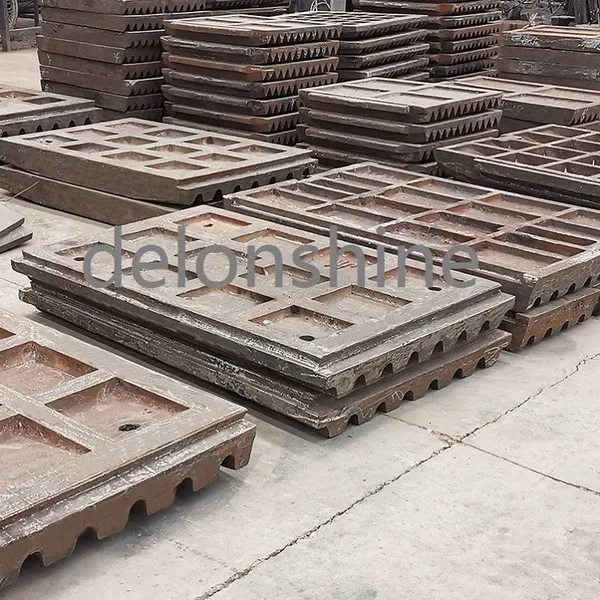 Read More
 -
Heat Treatment Options for Crusher Wear Parts
September 30, 2026Two castings can leave the same foundry with the same chemistry and behave quite differently in service, and the reason is almost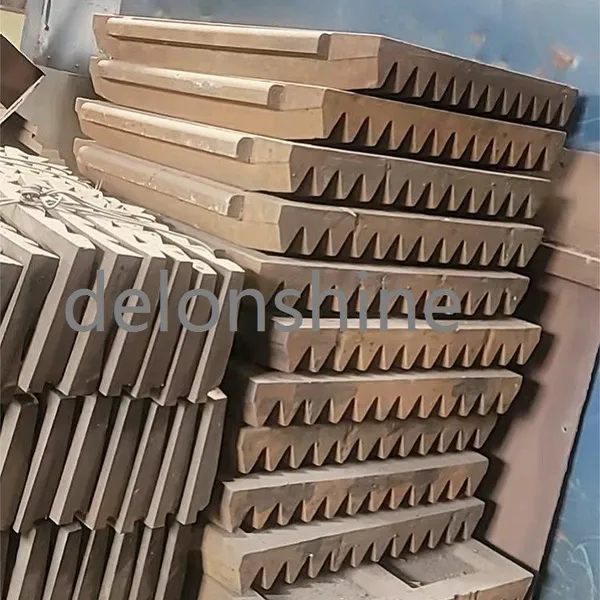 Read More
 -
Crusher Wear Parts Overview: Plates, Liners, Mantles and Toggles
September 29, 2026A plant that budgets for crusher wear parts as a single line item usually discovers later that the parts inside one machine fail a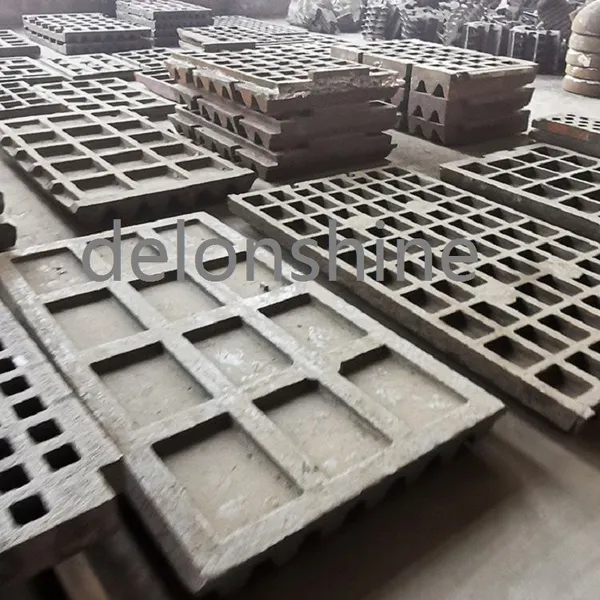 Read More
 -
Wear Resistant Alloy Development in Current Mining Practice
September 29, 2026Wear resistant alloy development is often described in terms of new materials, while the work inside a foundry is more incremental
Read More

Contact Us
Recommended Products
-
 Vertical Mill Reducer Planetary Gear AssemblyNegotiableMOQ: 2 Combos
 -
High Precision Mining Equipment End Cover Wear Resistant Crusher End CapNegotiableMOQ: 2 Pieces
-
Heavy Duty Mining Equipment Cast HousingNegotiableMOQ: 2 Pieces
-
Mining Parts Concave MantleNegotiableMOQ: 2 Pieces
-
High Strength Cast Steel Crusher Lifting Beam Heavy Load Mining Equipment Spare PartNegotiableMOQ: 2 Pieces
-
OEM Replacement Mining Spare Parts for Stone Crushing PlantNegotiableMOQ: 2 Pieces
-
Cast Steel Ball Mill Head for Mineral ProcessingNegotiableMOQ: 2 Pieces
-
Large Diameter Cast Gear for Ore Grinding MillNegotiableMOQ: 2 Pieces
-
Wear Resistant Mining Spare PartsNegotiableMOQ: 2 Pieces
-
Industrial Wet Dry Ball Mill for Mineral ProcessingNegotiableMOQ: 2 Pieces


-
High Wear Resistant Ball Mill Wear Parts Ball Mill Gear Pinion Liner for Mining Processing PlantNegotiableMOQ: 2 Pieces
-
Heavy Duty Equipment CasingNegotiableMOQ: 2 Pieces
-
Customized Main Shaft for Cone CrusherNegotiableMOQ: 2 Pieces
-
Ball Mill Head With Flange and Bolt HolesNegotiableMOQ: 2 Pieces
-
Heavy Duty Equipment CasingNegotiableMOQ: 2 Pieces


-
Crusher Wear Parts for Mining MachineryNegotiableMOQ: 2 Pieces
-
High Manganese Steel Jaw Crusher Fixed & Swing PlatesNegotiableMOQ: 2 Pieces
-
Cast Steel Safety Toggle Plate for Jaw Crusher Overload ProtectionNegotiableMOQ: 2 Pieces
-
High Manganese Steel Mill LinerNegotiableMOQ: 2 Pieces
-
Main Shaft Steel Sleeve Lock Nut for Cone CrusherNegotiableMOQ: 2 Pieces