
 Business License
Repair and Refurbishment of Large Mining Equipment End Covers
A large end cover can weigh several tonnes and cost as much as a small machine, so the decision to replace one deserves more thought than the decision to replace a liner.
Many covers that are condemned in the field could return to service after end cover repair welding, careful machining, or a combination of both.
The judgment rests on where the damage sits, how much sound metal remains, and whether the repair can be carried out under proper control.
This article sets out how to assess a damaged casting, which large casting repair route suits which fault, and how mining part refurbishment is carried out when a bearing seat or a register has worn.
1. When End Cover Repair Welding Is Worth Doing
End cover repair welding is worth doing when the damage is local and the rest of the casting is sound.
A scored bearing seat, a gouged flange face or a short crack in a non critical rib can all be restored at a fraction of the price of a new casting.
Producing a replacement casting can take 8 to 20 weeks, which is why the repair decision deserves a proper analysis.
The economics turn when the damage reaches a load carrying section, because a repair there has to restore strength rather than appearance.
Four conditions make repair the sensible route.
The casting must be free of cracks running through a main load path, and the remaining wall thickness must be adequate after any metal is removed.
The material must be known, since a welding procedure written for cast steel does not transfer to a manganese grade.
And the repair must be possible under controlled conditions, with preheat, interpass control and a post weld treatment if the material calls for one.
The table below summarises the position for common defects.
| Fault found | Usual route | Limiting factor |
|---|---|---|
| Scored or worn bearing seat | bore out and fit a sleeve | wall thickness after boring |
| Damaged flange face | weld build up and remachine | access and flatness achieved |
| Short crack in a rib | grind out, weld, inspect | crack depth after excavation |
| Crack through a main section | replacement casting | strength cannot be restored reliably |
| Oversize bolt holes | weld, rebore or fit a threaded insert | remaining edge distance |
2. Assessing a Casting Before a Large Casting Repair
A large casting repair decision should rest on measurement, and the assessment costs very little against the value of the part.
The first step is to clean the casting and inspect it with magnetic particle or dye penetrant testing, which reveals surface breaking cracks that a visual check misses.
Ultrasonic testing then looks for internal defects and measures the remaining section in the damaged area.
Three further pieces of information complete the picture.
Dimensional measurement against the original drawing shows how far the part has moved, and a distorted casting rarely justifies welding.
The material grade should be confirmed from the certificate or by chemical analysis, because the welding procedure depends on it.
And the service history tells the assessor whether the damage came from an accident or from wear, since the two call for different repairs.
A cement plant sent a mill end cover for assessment after the bearing ran hot over several months. Cleaning and penetrant testing found no cracking, but measurement showed the bearing seat had worn well beyond its drawing tolerance. The repair quote came to roughly a third of the price of a new casting, and the cover was returned to service after machining.
3. Large Casting Repair Options: Weld, Machine or Replace
Three routes are available for a damaged casting, and they are not mutually exclusive.
Welding restores material that has been lost or removes a crack by excavation and refill.
Machining corrects geometry, and it is often the answer on its own when the damage is dimensional rather than structural.
Replacement applies when the repair cannot restore the strength the part needs in service.
The choice usually follows one question: is the fault a loss of material or a loss of geometry.
A worn seat is a geometry problem, and boring and sleeving solves it without welding.
A gouged flange is a material problem, and it needs weld build up before any machining.
A crack is a structural problem, and it should be excavated and inspected before a repair method is chosen.
The table below sets out a rough guide to repair against replacement.
| Damage extent | Suggested route | Reason |
|---|---|---|
| Local scoring, no crack | machine or weld and remachine | geometry restored without strength loss |
| Surface crack in a rib | excavate and weld | load path intact once repaired |
| Deep crack in a flange | weld with full procedure | needs controlled preheat and cooling |
| Crack through a main bore | replace | no dependable way to restore strength |
| Widespread distortion | replace | machining allowance already used up |
Delonshine reviews both the fault and the service history before advising a customer which of the three routes to take.
4. Mining Part Refurbishment of Bearing Seats and Registers
Mining part refurbishment of a bearing seat is the most common repair on an end cover, and it has a well established method.
The seat is bored out to remove the scored metal and to restore roundness, and a sleeve or a liner is then fitted to bring the diameter back to the original figure.
Boring usually removes 2 to 6 millimetres of metal from the seat before a sleeve is fitted.
Sleeve choice depends on the load and on how the cover will be used.
A shrink fitted steel sleeve gives the highest load capacity and is the usual answer for a mill trunnion seat.
A split sleeve is easier to fit where access or heat is limited, and a sprayed coating suits a lightly loaded seat that needs little more than dimensional correction.
In every case the finished bore has to be checked for roundness and taper as well as for diameter.
A register is treated in the same way.
The mating face is machined true to the axis of the bore, because a register that is out of square will hold the mating part at an angle and reopen the alignment problem the repair was meant to solve.
Shenyang Delonshine Technology Co Ltd bores and sleeves end covers on a horizontal boring machine, with the seat alignment checked against the flange register before the work is signed off.
5. Welding Procedure for a Cast Manganese End Cover
A cast manganese end cover is the most demanding item to weld, because the grade that makes the part tough also makes it awkward to repair.
Manganese steel work hardens under impact and has a high thermal expansion, which together produce distortion and a risk of cracking along the weld.
The procedure controls both.
Small diameter electrodes at low current keep the heat input down, and short weld runs with immediate peening reduce the residual stress that starts a crack.
The interpass temperature is kept low, often below 150 degrees Celsius, and the part is allowed to cool between runs rather than being driven to completion.
Post weld heat treatment is avoided on austenitic manganese steel, because holding the part at temperature can precipitate carbides at the grain boundaries and embrittle the material.
An electrode of 3 millimetres diameter at a current of around 120 amperes is a common starting point for a manganese repair.
Alloy and carbon steel castings follow a different rule.
They are preheated before welding, commonly to between 150 and 250 degrees Celsius, and the interpass temperature is maintained throughout.
A post weld heat treatment relieves the residual stress that would otherwise sit in the repaired section.
The two procedures should not be interchanged, and a workshop that applies one to the other will produce a repair that fails in service.
Shenyang Delonshine Technology selects the procedure from the material certificate before any electrode is chosen, so the welding matches the grade that is actually in the casting.
6. Machining after End Cover Repair Welding
Machining after end cover repair welding is what converts a repaired casting back into a usable part, and it is where many repairs are won or lost.
Weld build up leaves a surface that is hard, uneven and stressed, so the first machining pass has to remove enough metal while leaving enough weld behind.
The practical sequence is straightforward.
The welded area is ground back and inspected before the part goes on the machine, since a crack that survives under a weld will propagate through it.
Machining then restores the face, bore or flange to the drawing, with the datum taken from a surface that was not damaged.
Alignment between the bore and the flange register is checked at the end, because that relationship decides how the part fits the machine.
A workshop without a large enough machine cannot complete the job.
An end cover several metres across needs a boring machine or a portable line boring setup that can reach the seat without the part being repositioned, and that equipment is normally found at the casting supplier rather than at the mine.
7. Why Mining Part Refurbishment Usually Returns to a Foundry
Mining part refurbishment returns to a foundry or an authorised workshop for three practical reasons.
The first is heat, since preheat and post weld treatment need a furnace or a controlled heating system that a mine site does not have.
The second is machining capacity, because very few sites can handle a casting of this size to a fine tolerance.
The third is inspection, since the testing that proves a repair is sound calls for equipment and a qualified operator.
Transport cost is the argument against sending a heavy part back, and it is usually outweighed by the outcome.
A repair completed under proper control lasts a normal service life, while a field repair often fails again within months and adds a second shutdown to the first.
A cover weighing 4 tonnes can travel 1,000 kilometres by road for far less than the price of a new casting of the same size.
One mine site attempted a field weld on a cracked end cover flange without preheat and without a written procedure. The weld cracked again within a few weeks of returning to service. The cover was then shipped to the foundry, where the crack was excavated, welded under controlled preheat and inspected before the part was accepted back into the machine.
8. Inspection and Documentation after Large Casting Repair
A large casting repair should leave a document trail, because the next person to open the machine needs to know what was done.
The trail also protects the customer, since it records the condition of the part at the moment it left the workshop.
The table below lists the records that belong with a repaired cover.
| Record | What it shows |
|---|---|
| Assessment report | the fault found and the defects ruled out |
| Material confirmation | the grade the procedure was written for |
| Welding procedure and welder identity | how the repair was made and by whom |
| Heat treatment chart | preheat, interpass and post weld figures |
| Dimensional report | seat diameter, roundness and register squareness |
| Inspection results | penetrant or ultrasonic testing after the repair |
Delonshine Technology issues this record with every refurbished cover and keeps a copy against the casting number, so a future question about the part can be answered from the file.
9. Frequently Asked Questions about End Cover Repair and Refurbishment
9.1 When is end cover repair welding worth doing?
End cover repair welding is worth doing when the damage is local and the surrounding casting is sound. A scored seat, a gouged flange or a short crack in a rib can all be restored at a fraction of the price of a new part. The calculation changes when a crack runs through a main load path or when the remaining wall is too thin after the damaged metal is removed, because a repair there cannot restore the strength the part needs in service.
9.2 When should a large casting repair be chosen instead of a new part?
A large casting repair is the better choice when the fault is dimensional or local and the casting itself is otherwise sound. Worn seats, damaged flange faces and oversize bolt holes fall into that group, and they are normally corrected by machining, sleeving or a combination of weld build up and remachining. Replacement becomes the sensible route when a crack passes through a main section, when distortion has used up the machining allowance, or when the material grade makes a dependable weld impossible.
9.3 How is mining part refurbishment carried out on a worn bearing seat?
A worn bearing seat is usually refurbished by boring it out to restore roundness and then fitting a sleeve to bring the diameter back to the drawing figure. A shrink fitted steel sleeve gives the highest load capacity and suits a mill trunnion seat, while a split sleeve is easier to fit where access or heating is limited. The finished bore is checked for roundness and taper as well as diameter, and the flange register is machined true to the same axis.
9.4 Can a large casting repair be carried out at the mine site?
Part of it can, and the structural part usually cannot. Dressing a scored surface, replacing a stud or fitting a split sleeve are all possible in a workshop at the site. Welding a load carrying section is a different matter, because the grades used in these castings need controlled preheat, interpass temperature and, for alloy steels, a post weld heat treatment that a remote workshop cannot provide. Cracks in a rib or a flange are normally returned to the foundry for repair under controlled conditions.
Recently Posted
-
Cast or Forged: Choosing the Material for a Mining Big Gear
September 24, 2026Two mills of similar size can carry rings made by two different processes, and neither owner is making a mistake. A cast steel big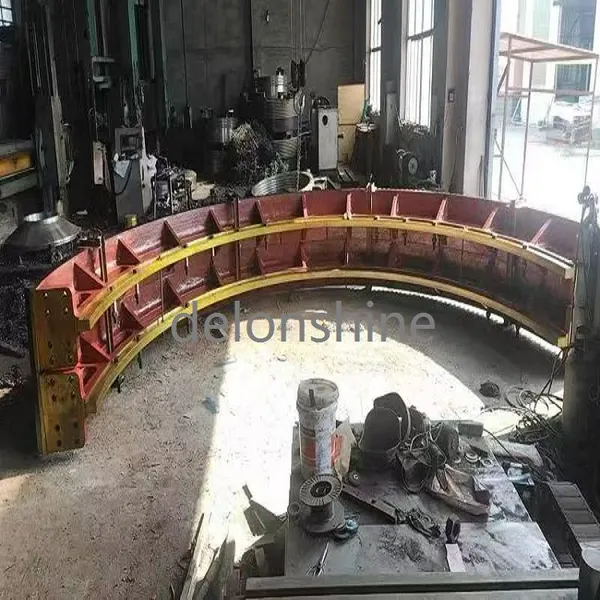 Read More
 -
Mining Big Gear Basics: How a Large Girth Gear Drives a Grinding Mill
September 24, 2026A grinding mill turns because its ring gear turns with it. That ring, bolted around the shell, collects the torque produced by the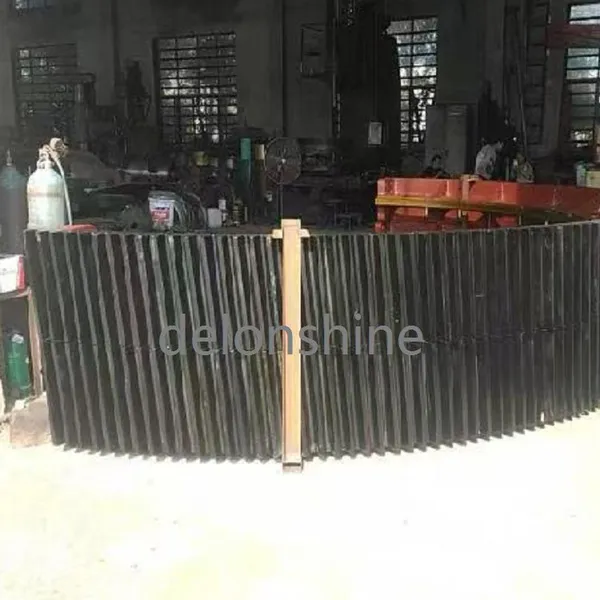 Read More
 -
Lead Time Planning for Jaw Crusher Toggle Plates
September 23, 2026A toggle plate is a small casting against the weight of a jaw crusher, and that is exactly why it is easy to leave out of the purc Read More
 -
Mining Equipment End Covers for Mobile and Semi-Mobile Plants
September 23, 2026A mobile crushing plant moves, and every heavy casting inside it has to survive that movement as well as the duty it was designed Read More

Contact Us
Recommended Products
-
 Vertical Mill Reducer Planetary Gear AssemblyNegotiableMOQ: 2 Combos
 -
High Precision Mining Equipment End Cover Wear Resistant Crusher End CapNegotiableMOQ: 2 Pieces
-
Heavy Duty Mining Equipment Cast HousingNegotiableMOQ: 2 Pieces
-
Mining Parts Concave MantleNegotiableMOQ: 2 Pieces
-
High Strength Cast Steel Crusher Lifting Beam Heavy Load Mining Equipment Spare PartNegotiableMOQ: 2 Pieces
-
OEM Replacement Mining Spare Parts for Stone Crushing PlantNegotiableMOQ: 2 Pieces
-
Cast Steel Ball Mill Head for Mineral ProcessingNegotiableMOQ: 2 Pieces
-
Large Diameter Cast Gear for Ore Grinding MillNegotiableMOQ: 2 Pieces
-
Wear Resistant Mining Spare PartsNegotiableMOQ: 2 Pieces
-
Industrial Wet Dry Ball Mill for Mineral ProcessingNegotiableMOQ: 2 Pieces


-
High Wear Resistant Ball Mill Wear Parts Ball Mill Gear Pinion Liner for Mining Processing PlantNegotiableMOQ: 2 Pieces
-
Heavy Duty Equipment CasingNegotiableMOQ: 2 Pieces
-
Customized Main Shaft for Cone CrusherNegotiableMOQ: 2 Pieces
-
Ball Mill Head With Flange and Bolt HolesNegotiableMOQ: 2 Pieces
-
Heavy Duty Equipment CasingNegotiableMOQ: 2 Pieces


-
Crusher Wear Parts for Mining MachineryNegotiableMOQ: 2 Pieces
-
High Manganese Steel Jaw Crusher Fixed & Swing PlatesNegotiableMOQ: 2 Pieces
-
Cast Steel Safety Toggle Plate for Jaw Crusher Overload ProtectionNegotiableMOQ: 2 Pieces
-
High Manganese Steel Mill LinerNegotiableMOQ: 2 Pieces
-
Main Shaft Steel Sleeve Lock Nut for Cone CrusherNegotiableMOQ: 2 Pieces