
 Business License

Feed Hopper Liners and Wear Plates: Where the Abrasion Happens
A feed hopper liner plate is bought as one item, yet it works inside a structure where several different wear mechanisms run at the same time, and a plate chosen for one of them often fails in another.
At a granite quarry the lining under the dump point was replaced three times in a single year while the wall plates above it lasted four, and the reason sat in the worn plates themselves: the impact face was being gouged, while the walls were being polished by rock sliding across them.
Both surfaces were the same steel and the same thickness, and the difference was the work each one was asked to do.
What follows maps where abrasion actually happens on feed hopper liners and wear plates, why identical material behaves differently in each zone, and how a hopper wear plate and a chute liner plate should be specified once the zones have been measured.
1. Feed Hopper Liners and Wear Plates in the Crushing Circuit
A feed hopper liner is the replaceable surface inside a structure that is meant to last for the life of the plant.
The hopper shell carries the load and the liner takes the abrasion, so the intent is simple: the consumable wears and the structure does not.
A feed hopper liner plate set is rarely one plate, because it is a package of wall plates, an impact zone under the delivery point, a lip or throat detail, and very often the first section of the chute below the discharge.
Treating that package as a single line on a purchase order is where a good deal of premature failure begins, since the plates in the package do different jobs.
A hopper wear plate at the dump point sees rock arriving at speed with a mass behind it, while the same grade on the upper wall sees rock sliding at low pressure and low velocity.
The first position is an impact problem with abrasion attached, and the second is a sliding abrasion problem with very little impact at all.
One grade cannot answer both, and a plate that survives the walls will often crack at the drop point within weeks.
2. Where Abrasion Happens on a Feed Hopper Liner Plate
Abrasion on a feed hopper liner plate is not spread evenly, and it concentrates in four zones that can be identified on almost any primary station.
The impact face sits directly under the delivery system, whether that is a truck tip, a shovel, a front end loader or a conveyor transfer.
The upper walls carry material that has already settled and is moving slowly under its own weight.
The lower walls and the throat carry the same material at higher pressure, because the mass of the column above the outlet increases toward the bottom.
The lip and the first metres of the chute are where the flow changes direction and accelerates, and this is the zone that most often wears through first.
The table below sets out what each zone does and how the lining usually answers it.
| Zone | Motion | Dominant wear | Plate response |
|---|---|---|---|
| Impact face | direct drop | gouging and deformation | tough plate or cast block |
| Upper walls | slow sliding | low stress abrasion | moderate hard plate |
| Lower walls and throat | pressurised sliding | abrasion under load | harder plate, thicker section |
| Lip and chute entry | direction change | abrasion and impact mix | overlay or ceramic |
The table is a starting point rather than a specification, because the split between the zones shifts with the delivery method and the rock.
A station fed by a single large shovel presents a narrow, heavy drop and a small impact face, while a station fed by a wide conveyor spreader presents a broad, shallow impact band across the full width of the hopper.
Measuring the worn plates from the previous set is the most direct way to place the zones correctly for a particular plant.
3. Impact Gouging on a Hopper Wear Plate
A hopper wear plate under the drop point fails in a way that has more in common with a hammer than with sandpaper.
Delonshine Technology quotes the impact zone separately from the wall plates, because the two positions rarely call for the same grade.
A lump of 600 millimetres falling two metres arrives with enough energy to deform the surface, and a plate that cannot absorb that energy will crack rather than wear.
This is why a very hard plate is not automatically the right answer for the impact face, even though hardness is what resists sliding abrasion.
Austenitic manganese steel is used in this position because it work hardens under repeated impact, so the surface strengthens as the service gets rougher.
The trade is that the same grade starts soft and wears quickly where the impact is light, which is why it does not belong on the upper walls.
Where the drop is contained by a rock box, so that material lands on material rather than on steel, the impact face can be reduced or left unlined and the wear shifts to the walls around the box.
A dead bed of 300 to 500 millimetres is normally enough to absorb the energy of a two metre drop, and it costs nothing beyond the discipline to keep it in place.
A rock box that has been allowed to empty during a shutdown will pass the impact straight through to the steel beneath it on the first truck load.
4. Sliding Wear on the Walls of a Hopper Wear Plate
On the walls a hopper wear plate fails by the slow removal of material rather than by any single event, and this is classical low stress abrasion.
Rock slides at a shallow pressure and a modest velocity, and the loss is measured in fractions of a millimetre per thousand tonnes rather than in impacts.
Hardness is the property that resists this kind of wear, so an abrasion resistant steel in the 400 to 500 Brinell band is the normal choice.
Thickness matters as much as grade, because the plate has to survive the interval between two shutdowns rather than the load of a single day.
A wall plate of 12 to 25 millimetres is typical on a primary hopper, with the thicker end reserved for the lower walls where the pressure is highest.
Where the material is wet or sticky, a smoother surface reduces the drag and the build up, but it also raises the sliding velocity, so the two effects are traded rather than solved.
5. Chute Liner Plate at the Hopper Discharge
The chute below the hopper discharge is often treated as a separate item, and it is the one place where a chute liner plate wears faster than the lining above it.
Material leaving the throat has already been accelerated, and the change of direction at the lip concentrates the flow onto a narrow band of plate.
The wear here combines sliding abrasion with a light impact component, because the stream is not yet fully collimated and small lumps still strike the surface.
A chute liner plate in this position is commonly a chromium carbide overlay, since the hard particles in the deposit resist abrasion far better than a plain steel of the same thickness.
Shenyang Delonshine Technology treats the hopper lining and the chute entry as one wear system, so the plate at the joint is specified with the walls rather than after them.
Ceramic tiles suit a steady flow with low impact, because a ceramic fails by cracking rather than by wearing, and a stray lump will break it.
The practical rule is that the chute entry is sized and lined as part of the hopper package rather than after it, so the two wear surfaces are matched at the joint and neither one becomes the weak point.
6. Feed Hopper Liner Plate Thickness and Grade by Zone
Choosing a feed hopper liner plate by zone is the single change that removes most premature failures, because it stops one grade being asked to do four jobs.
The table below sets out the materials that suit each zone and the section range that is usual for hard, dry rock.
| Zone | Usual material | Typical thickness | Reason |
|---|---|---|---|
| Impact face | manganese steel or cast block | 30 to 80 millimetres | work hardening under impact |
| Upper walls | abrasion resistant plate | 12 to 16 millimetres | low pressure sliding |
| Lower walls and throat | harder abrasion resistant plate | 16 to 25 millimetres | sliding under load |
| Lip and chute entry | chromium carbide overlay | 8 to 12 millimetres plus backing | combined sliding and impact |
Those figures suit a hard rock such as granite or basalt, and they move up or down with the rock and the drop height.
A soft limestone at a low drop will outlast a granite at a high one on the same plate, so the tonnage a plant handles is a better guide than the calendar.
Shenyang Delonshine Technology supplies hopper and chute lining in cut plate, formed sections and cast blocks, and it matches the grade to the zone rather than to the purchase order.
7. Reading a Worn Feed Hopper Liner Plate
A worn feed hopper liner plate is a record of what the material has been doing, and reading it is quicker than any test.
Four patterns carry most of the information.
A gouged impact face with deep local craters points to a high drop or an oversize lump, and the answer is a rock box or a tougher grade rather than a harder one.
A polished wall with a shallow, even loss points to steady low stress abrasion, and a harder plate will extend the life directly.
A plate worn thin in one corner while the rest is sound points to a discharge that favours that side, which is a feeding fault rather than a lining fault.
And a plate worn through at the joint rather than in the field points to a fastening or fit problem, since the flow is attacking an edge that should have been protected.
Recording the thickness at the same marked points each time a plate is changed turns those readings into a wear rate, and a wear rate is what a quotation for a heavier section should be based on.
Two readings taken at the same points are worth more than ten photographs, because they show a trend rather than a moment.
8. Specifying a Feed Hopper Liner Plate Set
Specifying a feed hopper liner plate set for a new station is easier than correcting one in service, because the rock and the delivery method can both be described before the steel is cut.
Six inputs settle most of the package.
The rock type and its abrasion index, which set the grade.
The largest lump and the drop height, which set the impact face.
The tonnage per hour, which sets the thickness for a target life.
The moisture and the fines content, which set the wall angle and the surface finish.
The delivery method, which sets the width and the position of the impact zone.
And the maintenance access, since a lined wall that cannot be reached for inspection will be repaired after a failure rather than before one.
Shenyang Delonshine Technology Co Ltd works from the site dimensions and the crusher drawing, and it supplies a feed hopper liner plate set cut and drilled to suit the structure as built.
Where a plant is replacing a set for the second time, the worn plates are measured and the thin zones are given a heavier section in the new quotation, which is the most economical point at which to buy extra life.
9. Frequently Asked Questions about Feed Hopper Liner Plate and Hopper Wear Plate
9.1 What is a feed hopper liner plate?
A feed hopper liner plate is the replaceable abrasion resistant surface fitted inside a hopper to protect the structural shell from the rock passing through it. The plate is a consumable and the shell is part of the plant, so the lining is designed to wear out and be replaced while the structure underneath stays sound. A full set usually includes wall plates, a heavier impact zone under the delivery point, a lined lip at the discharge, and often the first section of the chute below it. Because those positions see different loads, the plates in one set are not normally all the same grade or the same thickness.
9.2 Why does a hopper wear plate fail sooner at the drop point?
A hopper wear plate fails sooner at the drop point because that is the one position where the rock arrives with kinetic energy rather than sliding past. A lump falling two metres lands with enough force to deform the surface, and a plate that is very hard but not tough will crack under that load instead of wearing gradually. Manganese steel is used there because it work hardens under repeated impact, so the surface strengthens as the service gets rougher. Moving the same grade onto the walls, where the impact is light, usually shortens its life rather than extending it.
9.3 When should a chute liner plate use an overlay instead of plain steel?
A chute liner plate should use a chromium carbide overlay where the abrasion is steady and the impact is moderate, which describes most hopper discharge chutes. The overlay carries hard carbide particles in the top fraction of its depth, so it resists sliding abrasion far better than a plain steel plate of the same weight. The limit appears where the impact is heavy or the material temperature is high, because the brittle deposit can crack and spall under a direct hit. Where the flow is irregular and stray lumps are common, a tougher steel or a thicker plain plate is the safer choice.
9.4 How is plate thickness chosen for a feed hopper liner plate?
Plate thickness for a feed hopper liner plate is chosen from a target life rather than from the load alone, because the plate has to last between two scheduled shutdowns. A plant that knows its tonnage per hour and its abrasion rate can estimate how many millimetres are lost per thousand tonnes, and then set the section so that the plate reaches the end of the interval with steel to spare. The lower walls and the throat take a heavier section than the upper walls because the sliding pressure rises toward the outlet. Where access for replacement is difficult, the section is increased further so that fewer interventions are needed.
Recently Posted
-
Bowl Liner and Mantle: How the Two Cone Crusher Liners Work Together
October 13, 2026A mantle and bowl liner set that is renewed one half at a time usually costs a plant more than a cone liner pair changed as a set,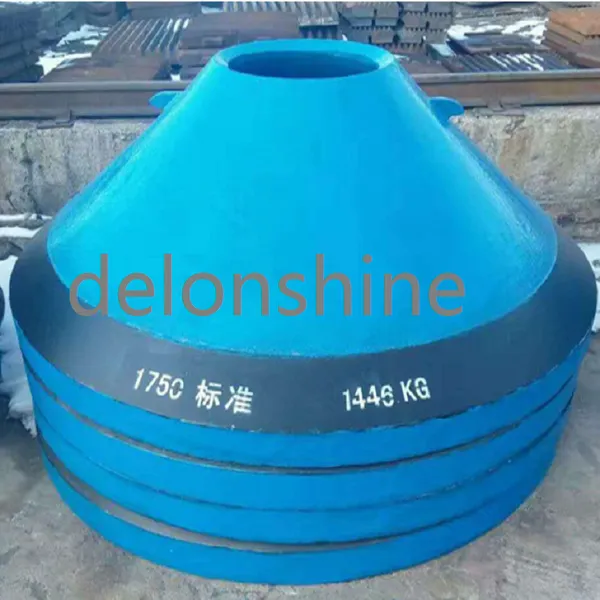 Read More
 -
Bowl Liner Explained: The Stationary Bowl Liner in a Cone Crusher
October 13, 2026An bowl liner cone crusher part is the stationary liner that lines the crushing chamber and breaks rock against a moving mantle by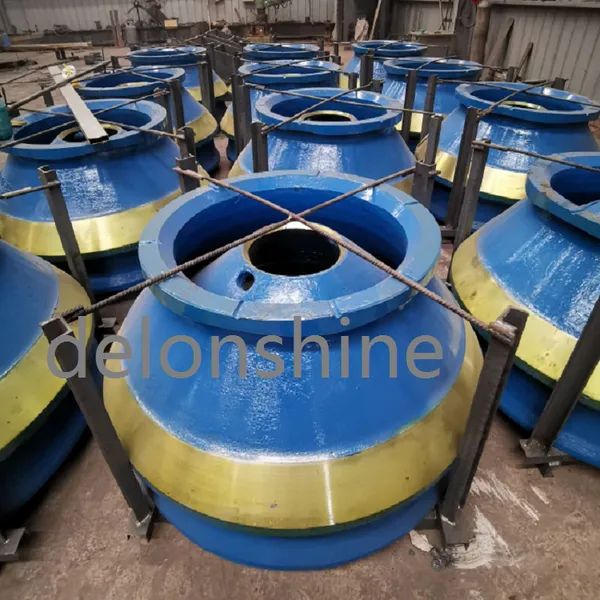 Read More
 -
Manganese Grade Selection for Cone Crusher Bowl Liners
October 13, 2026An Mn18 bowl liner and an Mn22 cone liner are the two grades that most cone crusher chambers are supplied in, and the choice between them decides how the part behaves when the chamber meets tramp metal. The manganese cone liner grade is not a quality label; it is a statement about how much manganese sits in the steel, and that figure changes the balance between hardness and toughness. This article sets out the chemistry behinRead More -
Cone Crusher Wear Parts Map: Mantle, Bowl Liner and Lock Nut
October 13, 2026A cone crusher wear parts map is a single drawing that shows where every wearing part sits inside the machine, so a plant orders against a position rather than against a description of a shape. Requests for a cone crusher wear parts map often arrive as a photograph of a worn ring on a bench, with no indication of which of the four or five similar rings in the machine it came from. A cone crusher head assembly carries the mantRead More

Contact Us
Recommended Products
-
 Vertical Mill Reducer Planetary Gear AssemblyNegotiableMOQ: 2 Combos
 -
High Precision Mining Equipment End Cover Wear Resistant Crusher End CapNegotiableMOQ: 2 Pieces
-
Heavy Duty Mining Equipment Cast HousingNegotiableMOQ: 2 Pieces
-
Mining Parts Concave MantleNegotiableMOQ: 2 Pieces
-
High Strength Cast Steel Crusher Lifting Beam Heavy Load Mining Equipment Spare PartNegotiableMOQ: 2 Pieces
-
OEM Replacement Mining Spare Parts for Stone Crushing PlantNegotiableMOQ: 2 Pieces
-
Cast Steel Ball Mill Head for Mineral ProcessingNegotiableMOQ: 2 Pieces
-
Large Diameter Cast Gear for Ore Grinding MillNegotiableMOQ: 2 Pieces
-
Wear Resistant Mining Spare PartsNegotiableMOQ: 2 Pieces
-
Industrial Wet Dry Ball Mill for Mineral ProcessingNegotiableMOQ: 2 Pieces


-
High Wear Resistant Ball Mill Wear Parts Ball Mill Gear Pinion Liner for Mining Processing PlantNegotiableMOQ: 2 Pieces
-
Heavy Duty Equipment CasingNegotiableMOQ: 2 Pieces
-
Customized Main Shaft for Cone CrusherNegotiableMOQ: 2 Pieces
-
Ball Mill Head With Flange and Bolt HolesNegotiableMOQ: 2 Pieces
-
Heavy Duty Equipment CasingNegotiableMOQ: 2 Pieces


-
Crusher Wear Parts for Mining MachineryNegotiableMOQ: 2 Pieces
-
High Manganese Steel Jaw Crusher Fixed & Swing PlatesNegotiableMOQ: 2 Pieces
-
Cast Steel Safety Toggle Plate for Jaw Crusher Overload ProtectionNegotiableMOQ: 2 Pieces
-
High Manganese Steel Mill LinerNegotiableMOQ: 2 Pieces
-
Main Shaft Steel Sleeve Lock Nut for Cone CrusherNegotiableMOQ: 2 Pieces