
 Business License

Feed Hopper: What It Does Before Material Reaches the Crusher
A crusher feed hopper is treated as a steel box that happens to sit above the machine, and that assumption is behind a large share of the throughput problems reported as crusher faults.
At a quarry plant the jaw dies were replaced twice in one season in an attempt to lift capacity, while the real fault sat one level above: the hopper delivered material in surges, so the chamber was alternately choked and starved.
Throughput stayed below the design figure, the new dies wore unevenly, and the cost of both changes came out of the maintenance budget.
This article explains what the feed hopper function actually is, where a primary crusher hopper liner sits in the structure, and why the part above the crusher decides how well the machine below it performs.
1. What a Crusher Feed Hopper Does in the Circuit
A crusher feed hopper receives material from the delivery system and presents it to the crusher in a form the machine can accept.
It is the first item in the crushing circuit that controls rather than transports, and it is the one item that holds a stock of material above the machine.
That stock is what makes a steady feed possible when trucks arrive in batches or a shovel pauses to reposition.
Three duties follow from holding that stock.
It absorbs the surge from each delivery, so the crusher sees an even flow rather than a series of peaks.
It directs material to the feed opening, using walls and a feeder to place rock where the chamber can take it.
And it protects the machine below, by scalping fines, holding back oversize and stopping the impact of a direct dump from reaching the chamber.
A hopper that does those three jobs well is invisible in the production report, and one that does them badly shows up as a crusher that will not hold its setting.
2. Feed Hopper Function: Receiving, Buffering and Metering
The feed hopper function divides into receiving, buffering and metering, and each one has a different influence on the machine underneath.
Receiving is about geometry: the opening has to take the largest lump the delivery system will present without the operator having to break it.
Buffering is about volume: the live capacity has to cover the gap between two deliveries or the pause between two cycles.
Metering is about control: the discharge has to be adjustable, so the feed rate can be matched to what the chamber can actually crush.
The table below sets out what each element needs and what it affects downstream.
| Element | What it needs | Effect on the crusher |
|---|---|---|
| Receiving | opening sized to the largest lump | fewer stoppages for oversize breaking |
| Buffering | live volume matched to the delivery cycle | steady chamber loading |
| Metering | adjustable discharge under the hopper | feed rate held within the chamber limit |
| Scalping | grizzly or screen ahead of the chamber | higher capacity for the same power |
| Protection | lined walls and a controlled drop | less impact damage to the chamber |
When a plant reports that a crusher will not hold its closed side setting, the cause is often in this table rather than in the crusher.
A feed rate that runs above the chamber limit forces the setting to open, because the machine has no alternative but to pass unbroken rock to protect itself.
A hopper fed by 90 tonne trucks and holding two to three loads of live volume carries roughly 180 to 270 tonnes of buffer, which is what covers the pause between one delivery and the next.
3. The Feed Hopper Function at a Transfer Point
The feed hopper function changes with position, and a hopper at a transfer point works differently from one at the head of a crushing line.
At a primary station the hopper is fed by trucks and holds a stock measured in hundreds of tonnes.
At an intermediate transfer point it is fed by a conveyor, holds far less, and exists mainly to manage the transition between two conveyors or between a conveyor and a screen.
A transfer point hopper that is sized like a primary station wastes steel and creates a plugging risk, because the drop and the wall angle do not suit the material arriving on a belt.
Three signs show that the feed hopper function at a transfer point is being asked to do more than it was built for.
Material builds up at one end of the hopper and has to be dug out on a shutdown.
The discharge belt carries an uneven load, so the belt tracks to one side and the skirt rubbers wear on one edge.
And the chute below the hopper wears through in one zone while the rest of the plate is still sound.
4. Crusher Feed Hopper Shape and Material Flow
The shape of a crusher feed hopper decides how material moves inside it, and the shape is chosen from the rock rather than from the available space.
Blocky, dry rock flows on a moderately steep wall, while wet or clay bearing material needs a steeper wall and a smoother face to move at all.
A rectangular hopper with a long narrow throat feeds a jaw crusher well, because the material arrives as a curtain across the full width of the opening.
A cone crusher prefers a compact hopper with a central discharge, so the chamber is loaded evenly around its circumference.
Two features do most of the work in shaping the flow.
The wall angle, which has to stay above the angle at which the material will slide rather than sit, including an allowance for the thickness of the liner plates.
And the discharge arrangement, whether it is a straight throat, an apron feeder, a pan feeder or a vibrating unit, since each one presents material to the crusher in a different pattern.
A hopper with a dead zone in one corner loses live volume without looking wrong on a drawing, and the loss shows up when the plant cannot keep up during a peak.
Delonshine Technology cuts and forms hopper liner plate to suit the wall geometry a site actually has, including the allowance for plate thickness on a sloping face.
5. Where a Primary Crusher Hopper Liner Sits
A primary crusher hopper liner is the wear surface on the inside of the structure, and it protects the plate that carries the load.
The liner is a consumable, while the hopper shell is part of the plant, so the design intent is that the liner wears and the shell does not.
Liners are supplied as flat plate cut to size, as formed sections to match a curved wall, or as cast blocks where the impact is concentrated.
Four zones carry most of the wear on a primary crusher hopper liner.
The impact face where the delivery system discharges, which takes the drop and the direct hit of each load.
The upper walls, where material slides at moderate pressure.
The lower walls and the throat, where the sliding pressure rises as the mass above increases.
And the floor and lip around the discharge, where the flow changes direction and accelerates.
Fastening is as much a part of the liner as the plate.
Countersunk bolts keep the head below the wear face, while a bolt that stands proud is worn away and then the plate lifts.
On some designs the plates are welded at the edges instead, which removes the bolt heads from the wear path but makes replacement slower.
Countersunk bolts between M16 and M24 are normal on hopper walls, and the plate behind them is usually 12 to 25 millimetres thick.
6. Primary Crusher Hopper Liner and the Feeder Interface
The joint between a primary crusher hopper liner and the feeder below it is where two wear systems meet, and it is a common source of early failure in both.
The feeder carries the full weight of the column standing above it, so the load on the feeder deck is set by the hopper level rather than by the feeder rating.
A feeder that is asked to start under a full column may stall, and repeated stalls damage the drive before they damage the plate.
Three details keep the interface working.
The gap between the hopper lip and the feeder deck is sealed with a skirt or a flexible rubber, which stops material from escaping onto the structure.
The lip itself is lined, because material passing the lip changes direction and scours the edge.
And the feeder width matches the hopper throat, so material cannot fall outside the deck and build up at the sides.
A skirt gap of 10 to 20 millimetres at the interface is enough to let the feeder move without letting material escape onto the structure.
Shenyang Delonshine Technology supplies hopper liner plate and cast wear blocks, and it asks where a plate sits in the structure before proposing a thickness.
7. Signs the Feed Hopper Function Is Being Compromised
The feed hopper function is compromised long before a hopper fails, and the early signs usually appear in the crusher's performance record rather than in the hopper itself.
A plant that reads those signs can correct a feeding problem without touching the machine.
Four symptoms point upward rather than to the crusher.
Capacity falls while the setting and the power draw stay inside the normal band, which suggests the chamber is being fed unevenly.
Product grading drifts toward the coarse end at a fixed setting, which points to surges that push unbroken rock through.
One side of the chamber wears faster than the other, which follows from a discharge that favours that side.
And the crusher stops on an overload that cannot be explained by the rock being processed.
A feed hopper that is kept at a working level also wears less, because material then slides over material rather than over steel.
Shenyang Delonshine Technology reviews a feeding complaint against the crusher record before proposing a wear part change, since the machine is often reporting a problem that started above it.
8. Specifying a Crusher Feed Hopper for a New Station
Specifying a crusher feed hopper for a new station is easier than correcting one in service, because the rock and the delivery method can both be described from the start.
The specification follows from the material and the machine rather than from a standard drawing.
Five inputs settle most of the design.
The largest lump the pit will deliver, which sets the opening and the throat.
The tonnage per hour and the delivery cycle, which set the live volume and therefore the buffer.
The rock type and its moisture history, which set the wall angle and the surface finish.
The crusher model and its feed opening, which set the shape and the position of the discharge.
And the maintenance access, since a hopper that cannot be entered for inspection will be inspected from the outside and repaired after a failure.
Shenyang Delonshine Technology Co Ltd works from the site dimensions and the crusher drawing, and it supplies the liner set cut and drilled to suit the structure as built.
9. Frequently Asked Questions about the Crusher Feed Hopper
9.1 What is the main purpose of a crusher feed hopper?
The crusher feed hopper does three jobs, and each one protects the machine below it. It buffers the surge from each delivery so the chamber sees an even flow instead of peaks, it directs material to the feed opening in a pattern the chamber can accept, and it holds back oversize while letting fines through where a grizzly is fitted. A hopper that performs all three keeps the crusher inside its rated power and its designed setting, which is why a feeding problem so often looks like a crusher fault.
9.2 How does the feed hopper function affect crusher capacity?
The feed hopper function governs how evenly the crushing chamber is loaded, and an uneven load costs capacity in two ways. A surge fills the chamber beyond its limit, and the machine has to open the setting to pass material that has not been broken. A starved chamber runs below its rated power, so the tonnage per hour falls even though the machine is capable of more. Feeding at a steady rate within the chamber limit is normally the most economical capacity improvement available at a plant.
9.3 What is a primary crusher hopper liner made from?
A primary crusher hopper liner is most often cut from abrasion resistant steel plate, with the grade and thickness chosen for the zone it occupies. An impact face under a direct dump usually takes a heavier plate or a cast block, while upper walls can use a thinner section because the sliding pressure there is lower. Where the impact is severe, a chromium carbide overlay plate or a cast wear block is fitted instead of plain plate, and the fastening is chosen so that no bolt head stands above the wear face.
9.4 Can a crusher feed hopper be modified after the plant is built?
A crusher feed hopper can be modified, and most stations that have been in service for years have already been altered. Common changes are a raised wall to increase live volume, a steeper lower wall to improve flow, and a reworked throat to suit a larger crusher. Each change alters the load path into the structure, so the modification is checked against the steel rather than applied to the liner alone. A modification that adds volume also adds weight, and the supporting steel has to be assessed for it.
Recently Posted
-
Bowl Liner and Mantle: How the Two Cone Crusher Liners Work Together
October 14, 2026A mantle and bowl liner set that is renewed one half at a time usually costs a plant more than a cone liner pair changed as a set,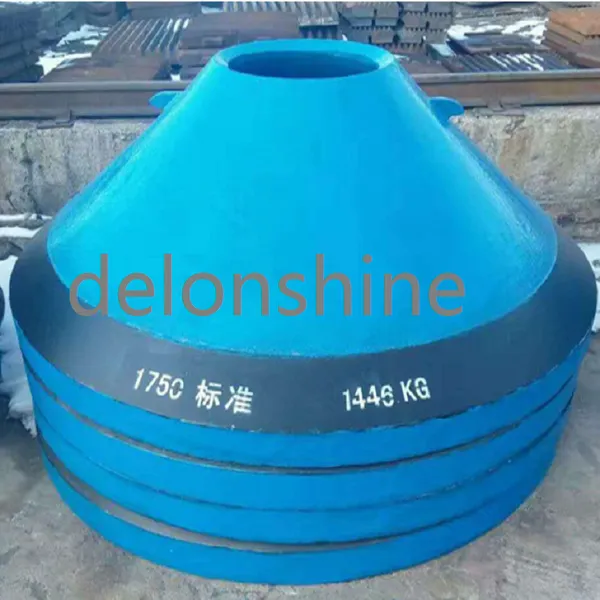 Read More
 -
Bowl Liner Explained: The Stationary Bowl Liner in a Cone Crusher
October 14, 2026An owl liner cone crusher part is the stationary liner that lines the crushing chamber and breaks rock against a moving mantle by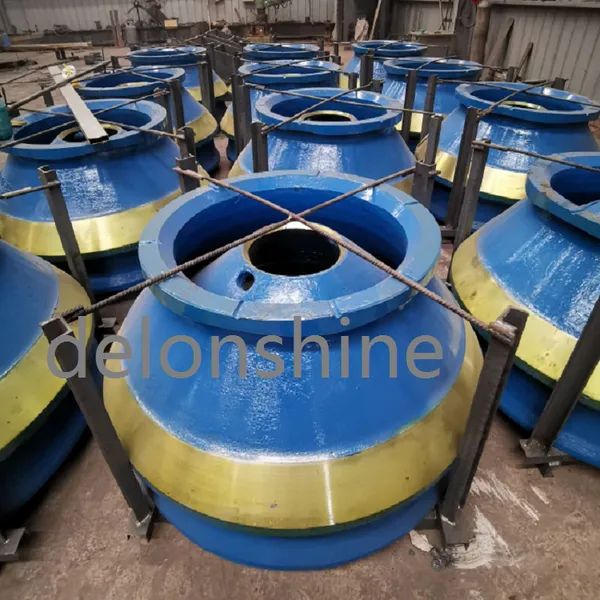 Read More
 -
Bowl Liner and Mantle: How the Two Cone Crusher Liners Work Together
October 13, 2026A mantle and bowl liner set that is renewed one half at a time usually costs a plant more than a cone liner pair changed as a set,
Read More -
Bowl Liner Explained: The Stationary Bowl Liner in a Cone Crusher
October 13, 2026An bowl liner cone crusher part is the stationary liner that lines the crushing chamber and breaks rock against a moving mantle by
Read More

Contact Us
Recommended Products
-
 Vertical Mill Reducer Planetary Gear AssemblyNegotiableMOQ: 2 Combos
 -
High Precision Mining Equipment End Cover Wear Resistant Crusher End CapNegotiableMOQ: 2 Pieces
-
Heavy Duty Mining Equipment Cast HousingNegotiableMOQ: 2 Pieces
-
Mining Parts Concave MantleNegotiableMOQ: 2 Pieces
-
High Strength Cast Steel Crusher Lifting Beam Heavy Load Mining Equipment Spare PartNegotiableMOQ: 2 Pieces
-
OEM Replacement Mining Spare Parts for Stone Crushing PlantNegotiableMOQ: 2 Pieces
-
Cast Steel Ball Mill Head for Mineral ProcessingNegotiableMOQ: 2 Pieces
-
Large Diameter Cast Gear for Ore Grinding MillNegotiableMOQ: 2 Pieces
-
Wear Resistant Mining Spare PartsNegotiableMOQ: 2 Pieces
-
Industrial Wet Dry Ball Mill for Mineral ProcessingNegotiableMOQ: 2 Pieces


-
High Wear Resistant Ball Mill Wear Parts Ball Mill Gear Pinion Liner for Mining Processing PlantNegotiableMOQ: 2 Pieces
-
Heavy Duty Equipment CasingNegotiableMOQ: 2 Pieces
-
Customized Main Shaft for Cone CrusherNegotiableMOQ: 2 Pieces
-
Ball Mill Head With Flange and Bolt HolesNegotiableMOQ: 2 Pieces
-
Heavy Duty Equipment CasingNegotiableMOQ: 2 Pieces


-
Crusher Wear Parts for Mining MachineryNegotiableMOQ: 2 Pieces
-
High Manganese Steel Jaw Crusher Fixed & Swing PlatesNegotiableMOQ: 2 Pieces
-
Cast Steel Safety Toggle Plate for Jaw Crusher Overload ProtectionNegotiableMOQ: 2 Pieces
-
High Manganese Steel Mill LinerNegotiableMOQ: 2 Pieces
-
Main Shaft Steel Sleeve Lock Nut for Cone CrusherNegotiableMOQ: 2 Pieces