
 Business License

Wear Resistant Alloy Development in Current Mining Practice
Wear resistant alloy development is often described in terms of new materials, while the work inside a foundry is more incremental than that.
It involves adjusting composition, heat treatment and section design to shift the balance between hardness and toughness for a specific duty.
The aim is a part that wears evenly and fails predictably, rather than a part that sets a laboratory record.
This article looks at what is in use today and how those choices are made.
1. What Wear Resistant Alloy Development Means in Practice
Wear resistant alloy development is not a single project, but a continuing adjustment of three variables.
Composition sets the starting structure of a casting, heat treatment decides how that structure is finished, and section design controls how load is distributed through the part.
Change one of the three and the other two usually need attention as well.
Field feedback closes the loop.
Measured wear on returned parts is what tells a foundry whether a change helped, and it is the reason suppliers ask for photographs and figures from worn castings.
A specification that is never checked against service is a guess that has been written down.
The table below shows how the three variables interact on a typical heavy part.
| Variable | What it controls | Typical adjustment |
|---|---|---|
| Composition | carbide form and matrix | carbon, chromium and manganese balance |
| Heat treatment | final hardness and toughness | soak time, quench rate and tempering |
| Section design | load distribution and cooling | ribs, fillets and wall thickness |
2. The Main Mining Wear Part Alloys in Service Today
Mining wear part alloys in current use fall into four families, each suiting a different balance of impact and abrasion.
Austenitic manganese steel dominates crushing chambers, where impact is high and the surface can work harden in service.
Quenched and tempered alloy steel covers parts that need hardness with predictable toughness, while high chrome white iron takes the most abrasive duties where impact is low.
Ductile iron fills applications where castability and cost matter more than abrasion resistance.
Shenyang Delonshine Technology Co Ltd works with all four families, so a recommendation follows the duty rather than a narrow product range.
The table below summarises the four families and where each one belongs.
| Family | Hardness in service | Impact resistance | Suited application |
|---|---|---|---|
| Austenitic manganese steel | rises from about 200 HB under impact | high | jaw, cone and gyratory wear surfaces |
| Quenched and tempered alloy steel | commonly 280 to 350 HB | moderate to high | mill liners and heavy bars |
| High chrome white iron | commonly 550 to 650 HB | low | chutes, hoppers and fine abrasion duty |
| Ductile iron | commonly 170 to 250 HB | moderate | covers, housings and closure castings |
Hardness figures are guides rather than targets, because one family can be supplied in several grades and conditions.
3. Manganese Steel as a Wear Resistant Alloy
Manganese steel is the workhorse wear resistant alloy of the crushing circuit.
Its useful property is not its hardness as cast but its ability to harden at the surface under repeated impact while the core stays tough.
That combination lets a jaw plate or a mantle absorb impact without cracking, while the working face resists abrasion once it has been worked.
Manganese content is the main variable within the family.
Standard grades sit around 12 to 14 percent manganese, and higher manganese grades are used for thicker sections that need more time to reach a stable structure.
Carbon level is adjusted alongside manganese, because the two together decide how much carbide forms and how the material behaves under load.
Higher manganese content is not automatically better.
A very high manganese grade in a thin section may fail to work harden enough to justify its cost, while a standard grade in a very thick section may not develop its properties evenly.
Matching the grade to the section is part of sound specification practice.
4. Abrasion Resistant Casting Grades for High Stress Grinding
Abrasion resistant casting grades are chosen when the dominant wear mechanism is scratching rather than impact.
Fine ore, cement clinker and slurry particles cut material away steadily, and hardness is what resists that process.
High chrome white iron is the common answer, with chromium content usually between 15 and 26 percent and molybdenum added to stabilise the carbide structure.
The limitation of that family is toughness.
A white iron part resists abrasion well and tolerates impact poorly, so it belongs where the feed is controlled and small.
Putting a very hard grade into a chamber that receives uncrushable material usually ends in a broken casting rather than a long-lived one.
The table below sets out the trade a specifier makes between the two properties.
| Grade family | Wear resistance | Impact resistance | Where it fits |
|---|---|---|---|
| Austenitic manganese | moderate until hardened | high | primary crushing surfaces |
| High chrome white iron | high | low | fine abrasion with controlled feed |
| Chromium molybdenum steel | moderate to high | moderate | mill liners and heavy bars |
| Bimetal composite | high at the working face | moderate | chutes and hoppers |
The choice is a trade rather than a ranking, and each extreme has duties where it is the wrong answer.
5. High Chrome Castings Among the Abrasion Resistant Grades
A high chrome casting is produced in much the same way as any other iron casting, but the cooling and heat treatment that follow are more demanding.
Chromium and carbon combine into hard carbides, and how those carbides are distributed decides whether the part wears evenly or crumbles at the edges.
A slow, uncontrolled cool can leave a network of carbides that cracks early, so the heat treatment schedule becomes part of the specification rather than a follow-on step.
Composition control matters more in this family than in most.
Carbon, chromium and molybdenum are usually held within narrow bands, and a spectrochemical analysis on every heat is the normal way to confirm that the melt matches the grade before pouring.
Where a plant has asked for abrasion resistant casting grades by name, that analysis is also the evidence that the order was met.
Delonshine Technology files the analysis with the heat certificate so the record can be produced long after the shipment has left.
Machining follows the drawing, but white iron is hard enough to limit what can be cut.
Most high chrome parts are designed so that wear surfaces arrive as cast, and machining is confined to mounting features.
That is why pattern accuracy matters so much for this family, and why a drawing revision is treated as a serious event.
6. How Alloy Choice Affects Mining Wear Part Life
Two identical machines can report very different part life because of alloy choice and the duty behind it.
A manganese plate in a hard rock quarry works hardens quickly and lasts, while the same plate in a soft sticky feed may never harden and wear faster than a quenched alloy part would.
Selecting mining wear part alloys from the duty backwards is what avoids that outcome.
Three inputs drive the choice.
Feed abrasiveness measured by silica content, impact energy implied by lump size and drop height, and the consequence of an unplanned stop.
Where the cost of downtime is high, a shorter wearing part that can be replaced quickly may be the better trade.
Life is also affected by geometry.
Tooth profile, plate thickness and the way a part is supported all change the stress at the surface and the rate at which material is lost.
A sound alloy in a poorly supported casting still fails early, which is one reason mining wear part alloys are chosen together with the drawing rather than before it.
7. Heat Treatment Control for Wear Resistant Castings
Heat treatment is where a wear resistant casting gains the properties that the composition promised.
It is also where most variability enters a production line, because furnace loading, soak time and cooling rate all shift the result.
Controlling those three variables is what makes a grade repeatable rather than approximate.
Two cycles cover most of the work.
A solution treatment raises the casting to a high temperature, holds it long enough for the structure to become uniform, and quenches it to retain that structure.
A quench and temper cycle hardens a part and then tempers it back toward the toughness the application needs.
Recording is part of the process.
A furnace chart with time and temperature for each load lets a foundry trace any later problem back to the treatment that part received.
Delonshine Technology keeps those charts with the heat number and the test results for each production batch.
The link to abrasion resistant casting grades is direct, because a grade is defined by the structure it reaches after treatment, not by the melt alone.
8. Testing and Specification for Mining Wear Part Alloys
Specification and testing are how a buyer turns an alloy name into a part that can be accepted or rejected.
An enquiry that names a family on its own leaves the foundry free to choose the condition, and the condition is what decides performance.
Writing the required figures into the order removes that freedom in a useful way.
Three tests cover most requirements.
A chemical analysis confirms the composition, a hardness survey checks the finished condition, and an impact test on a cast test bar gives a figure for toughness.
For critical parts, ultrasonic or magnetic particle testing adds confidence about internal soundness.
Shenyang Delonshine Technology arranges those tests at the foundry rather than after dispatch, so a concern is answered before the part is packed.
The table below lists what to specify against each requirement.
| Requirement | Test | Typical evidence |
|---|---|---|
| Composition | spectrochemical analysis | heat certificate |
| Hardness | hardness survey | readings taken on the part |
| Toughness | impact test on a test bar | test report with figures |
| Soundness | ultrasonic or magnetic particle test | inspection report |
Wear resistant alloy development reaches the shop floor when those figures are written into the order instead of being assumed.
As of mid-2026, buyers increasingly ask for measured results rather than a grade name, and a foundry that can supply them consistently wins more repeat business.
9. Frequently Asked Questions about Wear Resistant Alloy Development
9.1 Which alloy suits a primary crusher chamber?
The default answer for a primary chamber is austenitic manganese steel, because impact is high and the material work hardens under repeated blows while the core stays tough enough to absorb them. Manganese and carbon levels are then adjusted to the section thickness of the casting, since a thick section needs more time and more alloy to reach a stable structure. Where the feed is softer and wear is dominated by scratching rather than impact, a harder grade may last longer. The duty should be measured before the alloy is fixed.
9.2 Is a harder casting always more abrasion resistant?
Not always. Hardness resists scratching, and highly abrasive fine material rewards a hard structure, which is why high chrome white iron performs well in chute liners and fine grinding duties. Toughness resists impact and cracking, and a very hard casting in a chamber that receives uncrushable material can break rather than wear out. Any wear resistant alloy development programme therefore balances the two properties against the duty instead of chasing a hardness figure, because hardness describes resistance to one wear mechanism and says little about the other.
9.3 How does section thickness affect abrasion resistant casting grades?
Section thickness changes how quickly a casting cools and how evenly it develops its structure. In a thick section cooling is slower, so abrasion resistant casting grades are usually adjusted with more alloy or a modified heat treatment to keep hardness and toughness balanced through the depth of the part. A grade that performs well at 40 millimetres may behave quite differently at 150 millimetres. Quoting the section thickness with the enquiry lets the foundry choose a treatment rather than assume one.
9.4 Can an existing part be upgraded to a different alloy?
It can, and the change is usually made for a reason recorded at the last failure. Moving to a harder grade makes sense where wear is the limiting factor and the feed is controlled. Changing the alloy to solve a cracking problem usually makes it worse, because a harder part is also less tolerant of impact, and in that case the better move is to change the section, the support or the feed preparation. Mining wear part alloys are changed one variable at a time so the effect can be measured.
Recently Posted
-
Jaw Crusher Plate Casting Defects and How to Spot Them
September 30, 2026A jaw plate that fails after three weeks instead of three months usually carries the explanation on its surface from the day it wa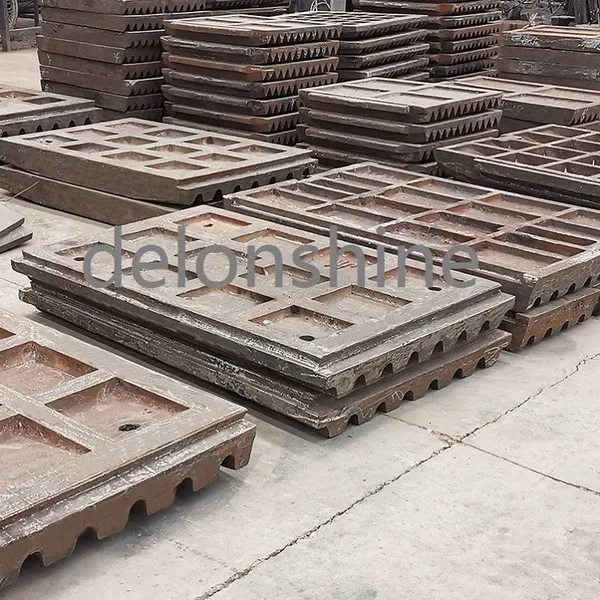 Read More
 -
Regional Buying Practice for Mining Spare Parts Across Export Markets
September 30, 2026A foundry that exports to a dozen regions learns quickly that the same casting is bought in quite different ways from one market t Read More
 -
Heat Treatment Options for Crusher Wear Parts
September 30, 2026Two castings can leave the same foundry with the same chemistry and behave quite differently in service, and the reason is almost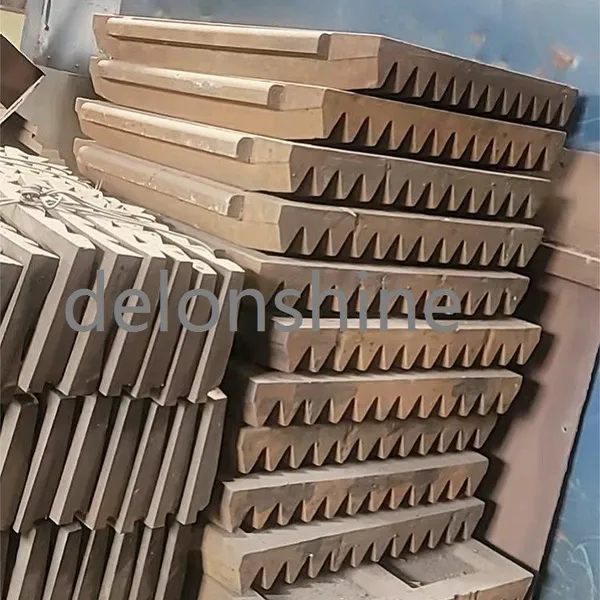 Read More
 -
Crusher Wear Parts Overview: Plates, Liners, Mantles and Toggles
September 29, 2026A plant that budgets for crusher wear parts as a single line item usually discovers later that the parts inside one machine fail a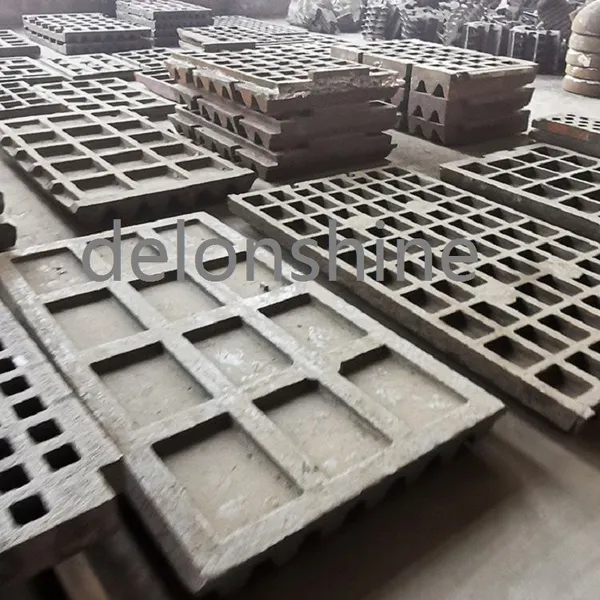 Read More

Contact Us
Recommended Products
-
 Vertical Mill Reducer Planetary Gear AssemblyNegotiableMOQ: 2 Combos
 -
High Precision Mining Equipment End Cover Wear Resistant Crusher End CapNegotiableMOQ: 2 Pieces
-
Heavy Duty Mining Equipment Cast HousingNegotiableMOQ: 2 Pieces
-
Mining Parts Concave MantleNegotiableMOQ: 2 Pieces
-
High Strength Cast Steel Crusher Lifting Beam Heavy Load Mining Equipment Spare PartNegotiableMOQ: 2 Pieces
-
OEM Replacement Mining Spare Parts for Stone Crushing PlantNegotiableMOQ: 2 Pieces
-
Cast Steel Ball Mill Head for Mineral ProcessingNegotiableMOQ: 2 Pieces
-
Large Diameter Cast Gear for Ore Grinding MillNegotiableMOQ: 2 Pieces
-
Wear Resistant Mining Spare PartsNegotiableMOQ: 2 Pieces
-
Industrial Wet Dry Ball Mill for Mineral ProcessingNegotiableMOQ: 2 Pieces


-
High Wear Resistant Ball Mill Wear Parts Ball Mill Gear Pinion Liner for Mining Processing PlantNegotiableMOQ: 2 Pieces
-
Heavy Duty Equipment CasingNegotiableMOQ: 2 Pieces
-
Customized Main Shaft for Cone CrusherNegotiableMOQ: 2 Pieces
-
Ball Mill Head With Flange and Bolt HolesNegotiableMOQ: 2 Pieces
-
Heavy Duty Equipment CasingNegotiableMOQ: 2 Pieces


-
Crusher Wear Parts for Mining MachineryNegotiableMOQ: 2 Pieces
-
High Manganese Steel Jaw Crusher Fixed & Swing PlatesNegotiableMOQ: 2 Pieces
-
Cast Steel Safety Toggle Plate for Jaw Crusher Overload ProtectionNegotiableMOQ: 2 Pieces
-
High Manganese Steel Mill LinerNegotiableMOQ: 2 Pieces
-
Main Shaft Steel Sleeve Lock Nut for Cone CrusherNegotiableMOQ: 2 Pieces