
 Business License

Sourcing Mining Equipment End Covers: Five Checks Before Ordering
Ordering an end cover looks simple until the wrong bolt circle reaches a site several thousand kilometres from the foundry.
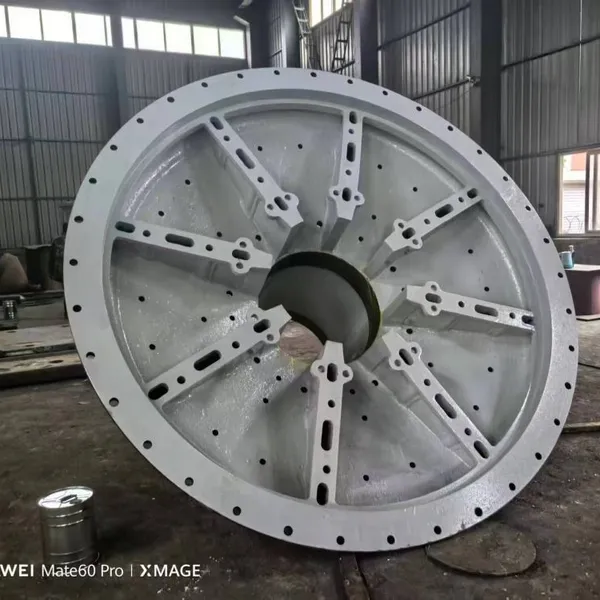
The part is a heavy casting that closes the end of a mill or crusher housing, carries the bearing seat or trunnion, and holds alignment for the rotating assembly inside.
Because it is large and slow to replace, the choice of a mining equipment end cover supplier deserves more attention than the price list receives.
Five checks, applied before the purchase order is issued, prevent most of them.
1. What a Mining Equipment End Cover Does in the Machine
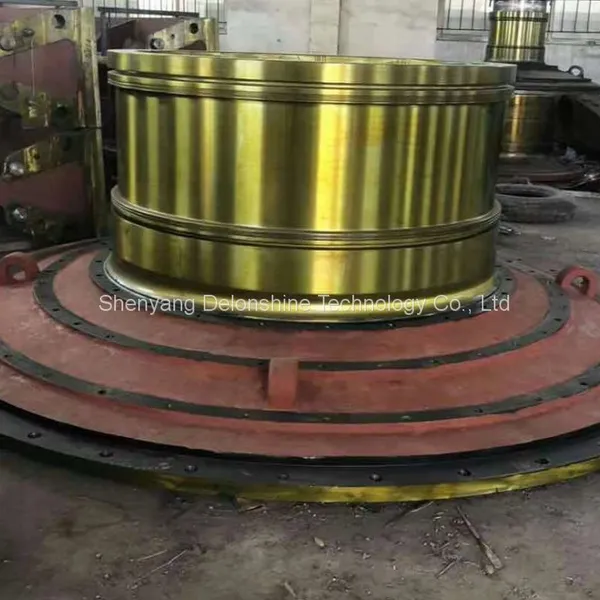
A mining equipment end cover is the closure casting that caps the end of a mill shell, a crusher frame or a gearbox housing.
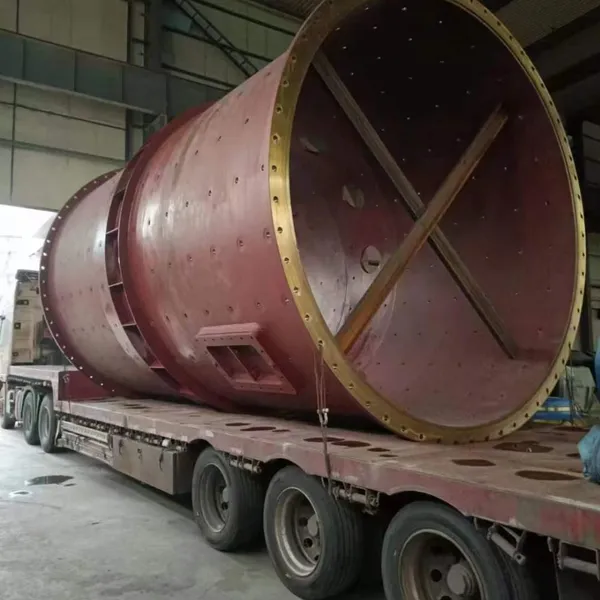
On a mill 4 to 6 metres in diameter the casting can weigh several tonnes, and it carries the bearing seat or trunnion that supports the rotating assembly while closing the housing against dust and water.
Its position makes it a structural part as well as a closure, because it passes radial and axial loads through to the foundation.
Three duties arrive at the same casting.
It locates the bearing at the correct centre height, it transmits load into the housing bolts, and it keeps lubricant in and the environment out.
Any loss of concentricity or flatness shows up as vibration, oil loss or short bearing life.
The part is normally supplied as a casting and then machined.
Bolt holes, the bore and the mating face are produced or finished after casting, and those machined features decide whether the part fits.
The table below lists the features that matter at assembly.
| Feature | Function | Consequence of error |
|---|---|---|
| Bore diameter and roundness | locating the bearing | vibration and short bearing life |
| Bolt circle and hole size | clamping the cover to the housing | bolt shear and oil leakage |
| Mating face flatness | sealing against the housing | leaks and fretting |
| Centre height | alignment with the shaft | misalignment and heat |
| Wall thickness at the flange | load transfer | cracking at the bolts |
2. Check One: Confirm the Drawings and Dimensions of the End Cover
The first check is the drawing, and it begins with the number the customer already holds.
An original drawing or a pattern number removes most of the risk, because it defines the geometry rather than describing it.
Where no drawing exists, the worn part has to be measured at a fixed set of positions and photographed before it leaves the site.
Four dimensions decide the fit on most covers.
The bore diameter and its tolerance, the bolt circle diameter, the bolt hole size and count, and the distance from the mating face to the bearing shoulder.
A mismatch of 0.5 millimetres in the bore or the bolt circle can be enough to stop assembly.
On a large mill cover, bore tolerance is commonly held within 0.1 millimetres and bolt circle position within 0.5 millimetres.
Measured values should be recorded with the instrument used and the date.
Two sets of figures taken by different fitters will not agree unless the method is the same.
Delonshine Technology asks for photographs of the worn cover together with the measured figures, because those two records resolve most ambiguity before a pattern is touched.
Once confirmed, those figures become the first section of the end cover purchase checklist.
3. Check Two: Get the Cast End Cover Order Specification Right
A cast end cover order has to state the material, the heat treatment and the machining standard.
A grade name on its own is not a specification, because the same grade can be delivered in different conditions.
Writing the required figures into the enquiry turns a vague request into a part that can be inspected on arrival.
Material choice follows the duty.
Cast carbon steel suits most general covers, ductile iron suits larger sections where damping and castability matter, and low alloy steel is used where the cover also carries high load.
Heat treatment is specified with the figures that matter, such as tensile strength and elongation, rather than by a trade name.
Machining tolerances follow the drawing.
Bore tolerance, bolt circle position, face flatness and surface finish should all appear, together with the inspection method that will confirm them.
Stating the method avoids a dispute later, because a result measured with a different instrument may not be comparable.
The table below shows what a complete specification contains.
| Item | What to state |
|---|---|
| Grade | material family and standard |
| Heat treatment | required strength and elongation |
| Bore | diameter with tolerance |
| Bolt circle | diameter, hole size and hole count |
| Faces | flatness and surface finish |
| Inspection | method and acceptance figures |
A cast end cover order placed without those six lines leaves the acceptance decision to the supplier's own standard.
4. Check Three: How to Assess a Mining Equipment End Cover Supplier
Supplier assessment is the check most buyers shorten, and it is the one that decides what happens when something goes wrong.
Three questions separate a capable mining equipment end cover supplier from a trading desk.
Can the foundry cast the section, can it machine the bore and bolt circle to tolerance, and can it produce records that match the shipment.
Foundry capability is visible in the equipment.
An electric arc furnace that can pour 20 tonnes, or a medium frequency induction furnace in the 7 to 10 tonne range, sets the maximum pour weight, and the heat treatment furnace sets the largest section that can be normalised or quenched.
A supplier who cannot state those figures is unlikely to control them either.
Machining capability comes next.
A vertical boring mill or a large horizontal borer decides the maximum diameter and the achievable roundness on the bore.
For heavy covers, the ability to machine in one setting is worth more than a tight tolerance claim on paper.
Records close the assessment.
A mining equipment end cover supplier who can share a material certificate, a dimensional report and, where required, an ultrasonic or magnetic particle report before the order is placed is describing a process rather than a promise.
Shenyang Delonshine Technology Co Ltd provides sample reports at the enquiry stage so the customer can judge the documentation before committing.
5. Check Four: Build an End Cover Purchase Checklist for Documents
An end cover purchase checklist should list the documents that travel with the part, not just the part itself.
Documents matter because a casting that arrives without records cannot be accepted into a maintenance system with confidence.
The table below is a working list that can be trimmed to suit the application.
| Document | Purpose |
|---|---|
| Material certificate | confirms grade and heat number |
| Heat treatment record | confirms the condition of the casting |
| Dimensional inspection report | confirms the machined features |
| Non-destructive test report | confirms internal soundness where required |
| Packing list | matches the crate contents to the order |
| Photographs before packing | shows the finished part and its markings |
The end cover purchase checklist should be agreed before the order, not requested after shipment.
A foundry that knows the document set in advance builds it into the production route rather than assembling it at the end.
Delonshine confirms the document list in the quotation so both sides work to the same expectation.
6. Check Five: Packing and Delivery for the Cast End Cover Order
Packing decides whether a machined face arrives flat.
Heavy covers are shipped in timber cases, with machined faces protected and the casting blocked so it cannot shift in transit.
Bare machined bores are covered and greased, and bolt holes are protected against deformation.
Marking matters for receiving.
The case should carry the part number, the quantity, the order reference and the gross weight, so the receiving team can check it against the packing list without opening the crate.
Small parts that belong with the cover should travel in the same case rather than in a separate consignment.
Delivery dates follow the production route.
Pattern making, casting, cooling, heat treatment, machining and inspection each take time, and the cooling stage cannot be shortened.
Buyers who need a date rather than a hope should ask for the milestone plan inside the quotation.
For a cast end cover order, the practical sequence is to confirm the drawing, agree the specification, check the supplier, fix the documents and settle the packing.
Shenyang Delonshine Technology puts each of those stages on one page so the customer can see where the order stands.
7. How to Compare Quotes for a Cast End Cover Order
Quotes for the same part rarely describe the same scope.
One may include pattern making, heat treatment and a dimensional report, while another covers casting and machining alone.
Comparing the headline figure without comparing the scope is the most common reason for a disagreement later.
A like-for-like comparison needs four lines.
The material and its certificate, the machining operations included, the inspection documents included, and the packing standard.
Lead time and the shipping term complete the picture.
The table below lists the items that should appear on both quotations before they are compared.
| Line | Why it changes the price |
|---|---|
| Pattern and tooling | charged once when no pattern exists |
| Heat treatment | adds furnace time and records |
| Machining scope | bore, bolt circle and face work |
| Inspection documents | certificates, reports and photographs |
| Packing | case type and internal blocking |
| Freight term | who pays and who carries the risk |
Asking a supplier to re-quote on the same scope usually produces a clearer answer than asking for a discount on an unclear one, and a cast end cover order benefits from that clarity more than most parts do.
A spread of 8 to 12 percent between quotations on identical scope is common, and it usually reflects scope rather than margin.
8. Building a Repeat Order Routine Around the End Cover
A repeat order should be quicker than the first, and it will be if the records exist.
Four pieces of information make a second order almost clerical: the pattern number, the approved drawing revision, the material specification and the inspection report from the last shipment.
Keeping them together turns a technical enquiry into a short confirmation.
A mining equipment end cover supplier who holds those records can quote from them, and that is worth more than a small difference in unit price.
Two habits protect the routine as well.
Recording measured dimensions from the worn part each time shows whether the housing itself has moved, which matters on older mills, and photographing the failed part before it is scrapped keeps the failure history available for the next review.
The end cover purchase checklist shortens with each order, because fewer questions remain open.
Delonshine stores pattern numbers, drawing revisions and as-built dimensions for repeat customers, so a later order arrives with the same critical dimensions as the previous one.
9. Frequently Asked Questions about Sourcing a Mining Equipment End Cover
9.1 What should be sent to a mining equipment end cover supplier for a quote?
Send the drawing or pattern number if one exists, the machine model, the measured bore and bolt circle, the material and heat treatment required, the quantity and the required date. Where no drawing exists, photographs of the worn cover together with measured figures at fixed positions give a supplier enough to quote and to make a pattern. The more of those items are present, the shorter the technical exchange becomes. A supplier who asks for measurements before quoting is usually one who intends to make the part correctly.
9.2 How long does a cast end cover order take?
Lead time depends on whether a pattern exists. With a pattern available, the route is casting, cooling, heat treatment, machining and inspection, and the cooling stage sets a floor that cannot be compressed, whatever the delivery pressure. Without a pattern, add pattern making to the front of that sequence. A large cover with heavy machining can take several weeks from pattern approval, so buyers planning a shutdown should place the order against the shutdown date rather than against the shipping date.
9.3 Is a cast cover always better than a welded fabrication?
Not always, and the answer depends on the section and the duty. A cast part gives a smoother load path and a shape that would be expensive to fabricate, while a welded fabrication can suit a one-off repair or an unusual size. The deciding factors are the thickness of the section, the inspection requirements and the time available. Where a housing has been modified on site, a welded cover may be measured and made faster than a pattern can be produced.
9.4 What should be checked when the cover arrives?
Check the case against the packing list first, then check the part against the drawing, measuring the bore, the bolt circle, the hole count and the distance from the mating face to the bearing shoulder, and comparing the figures with the inspection report. Confirm that the material certificate and heat treatment record match the markings on the casting. Any damage to a machined face should be photographed before the crate is unpacked further, because that record supports a claim if one is needed.
Recently Posted
-
Jaw Crusher Plate Casting Defects and How to Spot Them
September 30, 2026A jaw plate that fails after three weeks instead of three months usually carries the explanation on its surface from the day it wa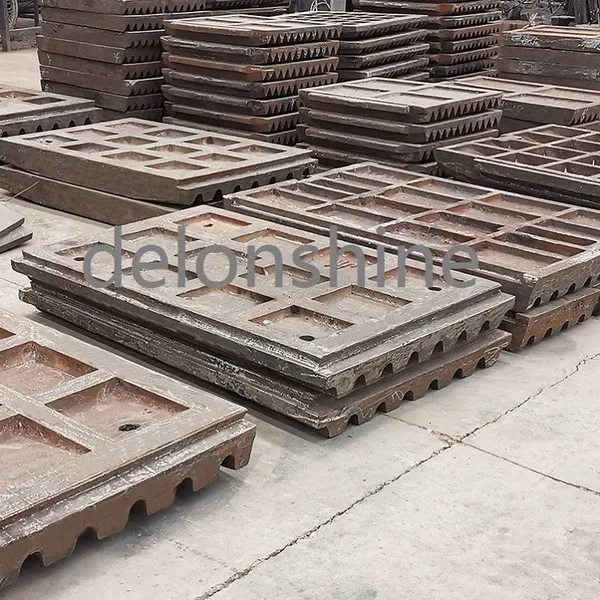 Read More
 -
Regional Buying Practice for Mining Spare Parts Across Export Markets
September 30, 2026A foundry that exports to a dozen regions learns quickly that the same casting is bought in quite different ways from one market t Read More
 -
Heat Treatment Options for Crusher Wear Parts
September 30, 2026Two castings can leave the same foundry with the same chemistry and behave quite differently in service, and the reason is almost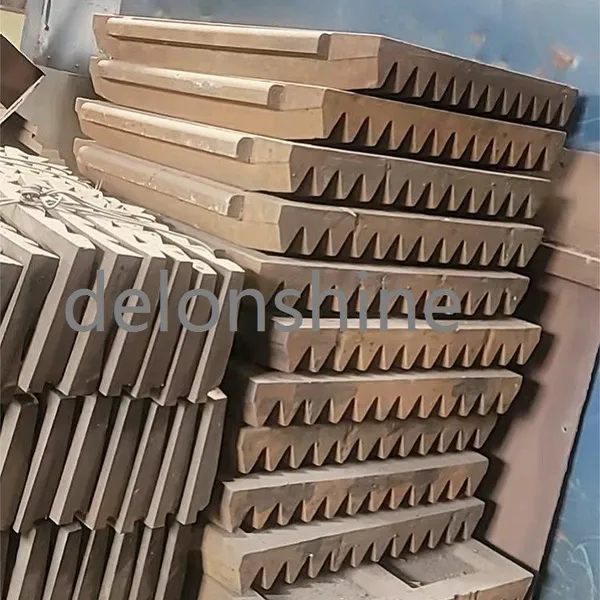 Read More
 -
Crusher Wear Parts Overview: Plates, Liners, Mantles and Toggles
September 29, 2026A plant that budgets for crusher wear parts as a single line item usually discovers later that the parts inside one machine fail a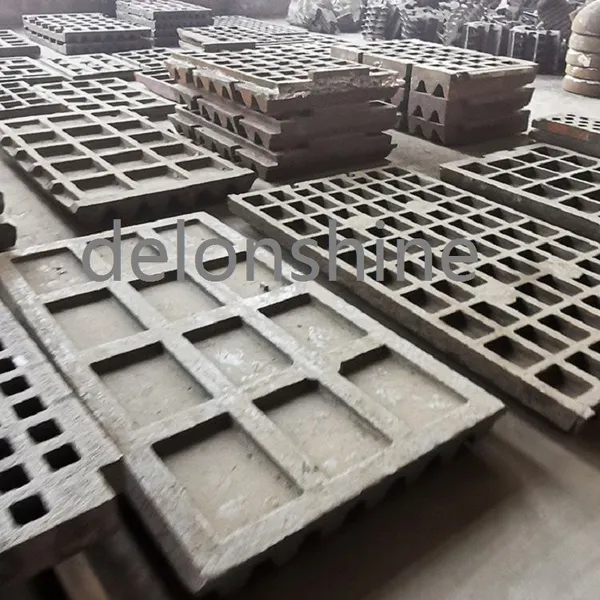 Read More

Contact Us
Recommended Products
-
 Vertical Mill Reducer Planetary Gear AssemblyNegotiableMOQ: 2 Combos
 -
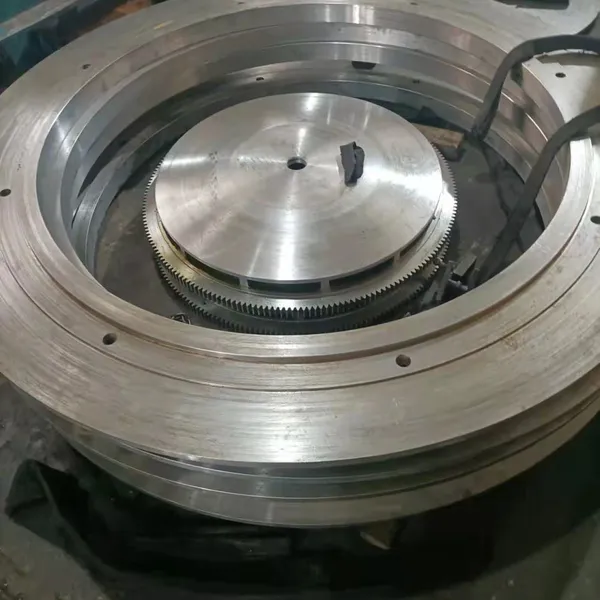
High Precision Mining Equipment End Cover Wear Resistant Crusher End CapNegotiableMOQ: 2 Pieces
-
Heavy Duty Mining Equipment Cast HousingNegotiableMOQ: 2 Pieces
-
Mining Parts Concave MantleNegotiableMOQ: 2 Pieces
-
High Strength Cast Steel Crusher Lifting Beam Heavy Load Mining Equipment Spare PartNegotiableMOQ: 2 Pieces
-
OEM Replacement Mining Spare Parts for Stone Crushing PlantNegotiableMOQ: 2 Pieces
-
Cast Steel Ball Mill Head for Mineral ProcessingNegotiableMOQ: 2 Pieces
-
Large Diameter Cast Gear for Ore Grinding MillNegotiableMOQ: 2 Pieces
-
Wear Resistant Mining Spare PartsNegotiableMOQ: 2 Pieces
-
Industrial Wet Dry Ball Mill for Mineral ProcessingNegotiableMOQ: 2 Pieces


-
High Wear Resistant Ball Mill Wear Parts Ball Mill Gear Pinion Liner for Mining Processing PlantNegotiableMOQ: 2 Pieces
-
Heavy Duty Equipment CasingNegotiableMOQ: 2 Pieces
-
Customized Main Shaft for Cone CrusherNegotiableMOQ: 2 Pieces
-
Ball Mill Head With Flange and Bolt HolesNegotiableMOQ: 2 Pieces
-
Heavy Duty Equipment CasingNegotiableMOQ: 2 Pieces


-
Crusher Wear Parts for Mining MachineryNegotiableMOQ: 2 Pieces
-
High Manganese Steel Jaw Crusher Fixed & Swing PlatesNegotiableMOQ: 2 Pieces
-
Cast Steel Safety Toggle Plate for Jaw Crusher Overload ProtectionNegotiableMOQ: 2 Pieces
-
High Manganese Steel Mill LinerNegotiableMOQ: 2 Pieces
-
Main Shaft Steel Sleeve Lock Nut for Cone CrusherNegotiableMOQ: 2 Pieces