
 Business License
Steel Selection for Lock Nuts and Sleeves in Crusher Assemblies
A 42CrMo lock nut and a plain carbon nut can look identical from the outside, and the difference shows up after a few hundred tightening cycles in a crusher frame.
At a limestone plant a batch of sleeve nuts sheared at the thread within a season, and the replacement set from a different material lasted four times as long on the same shafts.
The geometry had not changed and neither had the torque, so the one variable left was the steel and the way it had been treated.
This article compares the steels used for a lock nut steel grade and for a crusher sleeve material, and it explains what the alloy does, what the heat treatment adds, and where a cheaper grade is still the right answer.
1. Lock Nut Steel Grade: What the Material Has to Do
A lock nut steel grade has to deliver four properties at the same time, and a grade chosen for one of them will usually be short on another.
It has to be strong enough to carry the preload without yielding, because a nut that stretches loses the setting it holds.
It has to be tough enough to survive the impact that reaches it through the assembly, since a very strong but brittle steel will crack at a thread root.
It has to resist wear on the thread, because the nut is tightened and released many times over its life.
And it has to be machinable, since a sleeve nut is a turned part with a long thread and a shoulder.
Two of those properties pull against each other.
Strength rises with carbon and with alloy content, while toughness falls as hardness increases.
That trade is what makes the selection a matter of the duty rather than of the strongest available steel.
2. 42CrMo Lock Nut Properties and Limits
A 42CrMo lock nut is made from a medium carbon chromium molybdenum steel, and the alloying elements are what give it its position in this class of part.
The carbon content, at around 0.42 per cent, sets the hardness that can be developed through heat treatment.
Chromium adds hardenability, so a thick section hardens through rather than at the surface alone.
And molybdenum raises the temperature at which the steel softens, which matters where the part runs warm.
Three properties follow from that combination.
A tensile strength above about 1000 megapascals in the quenched and tempered condition.
A hardness that normally sits between 28 and 34 on the Rockwell C scale.
And an impact toughness that is high enough to absorb the vibration of a crusher frame without cracking.
The limits of a 42CrMo lock nut appear in two situations.
In a heavily corroded environment, where the alloy offers no advantage over a plain steel because the loss is chemical rather than mechanical.
And where the part is welded, since a large sleeve nut is normally a turned part and welding it changes the heat treatment in the affected zone.
3. Crusher Sleeve Material and Wear Resistance
A crusher sleeve material is chosen for a different duty from a nut, because a sleeve wears rather than being tightened.
The sleeve sits between the load and the shaft, so it takes the abrasion, the fretting and the corrosion that would otherwise reach the component it protects.
Wear resistance therefore leads the selection, and hardness is the property that most directly delivers it.
Strength still matters, because a sleeve that deforms under load will lose the fit that keeps it in place.
The table below contrasts the materials used in the two positions.
| Part | Property that leads | Common material | Treatment |
|---|---|---|---|
| Lock nut | strength with toughness | 42CrMo alloy steel | quench and temper |
| Sleeve | wear resistance | hardened carbon or alloy steel | case or through harden |
| Corrosive duty | corrosion resistance | stainless steel | solution anneal |
A plant that uses one material for both positions is choosing a compromise rather than an answer, because the two duties pull in different directions.
Delonshine Technology holds both the nut and the sleeve in a small range of standard grades, so a plant can match the material to the duty without adding a special heat to every order.
4. Choosing a Lock Nut Steel Grade for a Crusher
Choosing a lock nut steel grade for a crusher comes down to the load, the section and the environment, in that order.
A large nut on a cone crusher head carries a high preload and needs the alloy grade, because a carbon steel of the same section would yield before the figure was reached.
A small nut on a guard or a cover carries almost nothing and a carbon steel is sufficient.
And a nut in a wash down area needs the corrosion resistance more than the strength, which is where a stainless grade earns its cost.
Three questions settle most cases.
What figure will the nut be tightened to, and does the grade carry it without yielding.
How many tightening cycles will the part see in its life, since that sets the wear requirement on the thread.
And what will attack the part between services, since corrosion is the failure that a strength calculation never predicts.
Delonshine Technology quotes a lock nut steel grade against the tightening figure and the environment, rather than against a single strength target.
5. Heat Treatment Behind a 42CrMo Lock Nut
The heat treatment behind a 42CrMo lock nut decides more of its performance than the alloy content does.
Quenching and tempering produces a uniform structure with a controlled balance between strength and toughness.
A tempering temperature that is too low leaves the part hard and brittle, and a thread root in that condition cracks under the first heavy load.
A temperature that is too high leaves the part soft, and the thread deforms instead of holding the preload.
The treatment is therefore specified as a hardness range with an impact requirement, rather than as a hardness figure alone.
Two practical points follow.
The certificate should record the tempering temperature and the resulting hardness, since the two together tell a buyer more than either one alone. A typical tempering range for this grade sits between 550 and 650 degrees Celsius.
And a part that has been repaired with local heat should be re-treated or replaced, because a localized hot spot leaves the structure uneven.
6. Crusher Sleeve Material in a Wet, Abrasive Circuit
A crusher sleeve material in a wet, abrasive circuit is chosen against corrosion and abrasion together, and the two act on each other.
An abrasive slurry removes the protective oxide layer that would otherwise slow the corrosion.
With the layer gone, fresh metal is exposed, and the corrosion rate rises as the abrasion continues.
That combination wears a sleeve faster than either mechanism would on its own.
Three options answer it.
A higher hardness through the section, which resists the cutting action of the particles.
A corrosion resistant grade, where the chemical attack is the larger share of the loss.
And a sacrificial sleeve sized thicker from the start, which accepts a higher wear rate and reduces the interval between changes by its added section alone.
Shenyang Delonshine Technology asks for the slurry condition before proposing a crusher sleeve material, since a grade chosen for dry abrasion is often the wrong answer in a wet circuit.
7. Cost and Availability of a Lock Nut Steel Grade
The cost of a lock nut steel grade is driven by the alloy content and by the treatment, and the treatment is usually the larger share on a small part.
A 42CrMo grade costs more than a plain carbon steel at the mill, and that difference is small beside the cost of quenching, tempering and testing.
Availability matters as much as price where a plant holds spares, because a grade that has to be ordered in a special heat adds lead time to every replacement.
A standard alloy grade that is stocked by the supplier is therefore often cheaper across a year than a lower priced grade that arrives late.
Two considerations belong in the comparison.
The life of the part, since a grade that lasts twice as long can cost more per kilogram and still be the lower cost per year.
And the risk of a failure, because a sheared head nut on a cone crusher costs far more in downtime than the price difference between two steels.
8. Testing a 42CrMo Lock Nut and a Crusher Sleeve Material
Testing a 42CrMo lock nut and a crusher sleeve material confirms that the grade and the treatment reached the part that was delivered.
Five checks cover the usual requirements.
A material certificate that names the heat and the grade, traced to the batch.
A hardness reading on the part itself, since a certificate can describe the heat rather than the finished item.
An impact test where toughness is specified, because a hard part can still be brittle.
A dimensional check on the thread and the sleeve length, which confirms the machining as well as the material.
And a magnetic particle or dye penetrant check on a large sleeve, to catch a crack that a visual inspection would miss.
Shenyang Delonshine Technology Co Ltd records the heat, the treatment and the hardness against each batch, so a query on a delivered part can be traced to the material it came from.
A test report on a sample that is not identified to the batch is of little value, which is why the traceability step is listed with the tests rather than after them.
9. Frequently Asked Questions about 42CrMo Lock Nut and Crusher Sleeve Material
9.1 Why is 42CrMo steel used for lock nuts?
A 42CrMo lock nut is used where a threaded part has to carry a high preload and still absorb the vibration of a crusher frame. The carbon content of about 0.42 per cent allows a useful hardness to be developed, while the chromium and molybdenum raise hardenability and the temperature at which the steel softens. Quenched and tempered, the grade reaches a tensile strength above roughly 1000 megapascals with enough toughness to resist cracking at a thread root. A plain carbon steel of the same section would yield before the required figure was applied.
9.2 How is a lock nut steel grade selected?
A lock nut steel grade is selected from the tightening figure, the section and the environment rather than from a single strength target. The grade has to carry the preload without yielding, so a large nut on a crusher head needs the alloy grade while a small cover nut does not. The number of tightening cycles over the life of the part sets the wear requirement on the thread. And the environment decides whether corrosion resistance matters more than strength, which is where a stainless grade becomes the right answer.
9.3 What crusher sleeve material suits an abrasive circuit?
A crusher sleeve material for an abrasive circuit is chosen against abrasion and corrosion together, because the two reinforce each other in a slurry. Abrasion removes the protective oxide layer, and the freshly exposed metal then corrodes faster than it would if the surface were left alone. A higher through hardness resists the cutting action of the particles, while a corrosion resistant grade addresses the chemical share of the loss. Where the wear is severe, a thicker sacrificial sleeve is often the most practical answer.
9.4 Does heat treatment change the performance of a lock nut steel grade?
Heat treatment changes the performance of a lock nut steel grade more than the alloy content does, because the same steel can be made hard and brittle or softer and tougher. Quenching and tempering produces a uniform structure with a controlled balance between the two. A tempering temperature that is too low leaves a thread root that cracks under the first heavy load, and one that is too high allows the thread to deform instead of holding its figure. That is why a hardness range and an impact requirement are specified together.
Recently Posted
-
Work Hardening in Manganese Jaw Crusher Plates
October 19, 2026Work hardening jaw plate behaviour is the reason a manganese casting can arrive soft from the foundry and end up among the hardest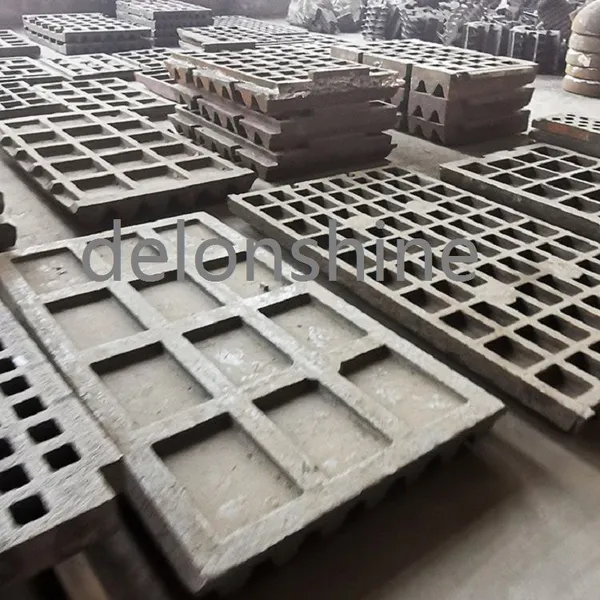 Read More
-
Through Hardening versus Case Hardening for Crusher Lock Nuts
October 19, 2026A through hardened lock nut and a case hardened nut can look identical on the shelf and behave very differently on the machine, an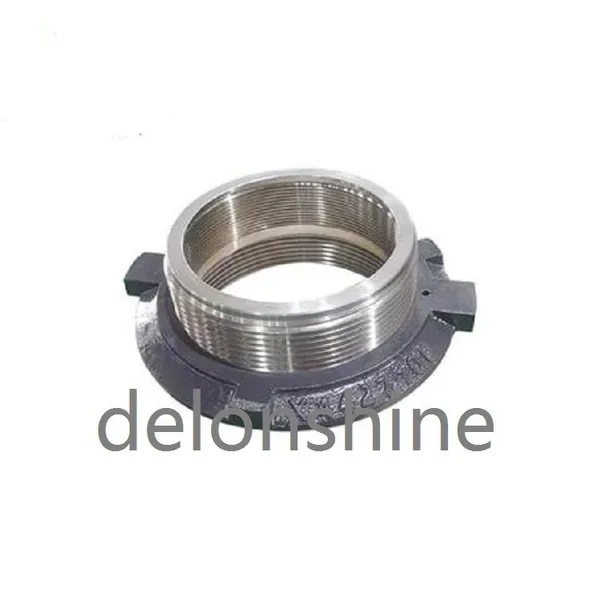 Read More
-
Bolt-On versus Welded Wear Liners for Feed Hoppers
October 16, 2026A bolt on hopper liner and a welded wear plate liner do the same job on the same wall, and the choice between them is decided by t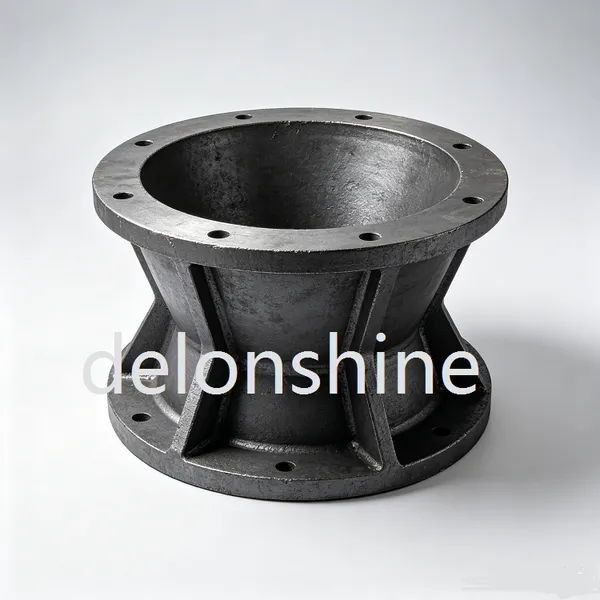 Read More
-
Wear Plate Materials for Feed Hoppers and Chutes
October 16, 2026Choosing between wear plate materials is a decision about the failure mode rather than about hardness, and a plate that wins on a Read More

Contact Us
Recommended Products
-
 Vertical Mill Reducer Planetary Gear AssemblyNegotiableMOQ: 2 Combos
-
High Precision Mining Equipment End Cover Wear Resistant Crusher End CapNegotiableMOQ: 2 Pieces
-
Heavy Duty Mining Equipment Cast HousingNegotiableMOQ: 2 Pieces
-
Mining Parts Concave MantleNegotiableMOQ: 2 Pieces
-
High Strength Cast Steel Crusher Lifting Beam Heavy Load Mining Equipment Spare PartNegotiableMOQ: 2 Pieces
-
OEM Replacement Mining Spare Parts for Stone Crushing PlantNegotiableMOQ: 2 Pieces
-
Cast Steel Ball Mill Head for Mineral ProcessingNegotiableMOQ: 2 Pieces
-
Large Diameter Cast Gear for Ore Grinding MillNegotiableMOQ: 2 Pieces
-
Wear Resistant Mining Spare PartsNegotiableMOQ: 2 Pieces
-
Industrial Wet Dry Ball Mill for Mineral ProcessingNegotiableMOQ: 2 Pieces


-
High Wear Resistant Ball Mill Wear Parts Ball Mill Gear Pinion Liner for Mining Processing PlantNegotiableMOQ: 2 Pieces
-
Heavy Duty Equipment CasingNegotiableMOQ: 2 Pieces
-
Customized Main Shaft for Cone CrusherNegotiableMOQ: 2 Pieces
-
Ball Mill Head With Flange and Bolt HolesNegotiableMOQ: 2 Pieces
-
Heavy Duty Equipment CasingNegotiableMOQ: 2 Pieces


-
Crusher Wear Parts for Mining MachineryNegotiableMOQ: 2 Pieces
-
High Manganese Steel Jaw Crusher Fixed & Swing PlatesNegotiableMOQ: 2 Pieces
-
Cast Steel Safety Toggle Plate for Jaw Crusher Overload ProtectionNegotiableMOQ: 2 Pieces
-
High Manganese Steel Mill LinerNegotiableMOQ: 2 Pieces
-
Main Shaft Steel Sleeve Lock Nut for Cone CrusherNegotiableMOQ: 2 Pieces