
 Business License

Jaw Crusher Plate Geometry: Tooth Profile and Plate Thickness
The geometry of a jaw plate decides how a machine grips rock, how the product sizes out, and how long the plate lasts.
Two dimensions carry most of that influence: the jaw crusher plate tooth profile on the working face and the thickness of the plate behind it.
A plant choosing between a corrugated jaw plate and a smooth one, or between two plate thicknesses, is choosing between a coarse and a fine grip and between a short and a long wear life.
This article explains the profiles in common use, how jaw plate thickness specification is set, and how to read a plate drawing before an order is placed.
1. Jaw Crusher Plate Geometry: The Two Dimensions That Matter
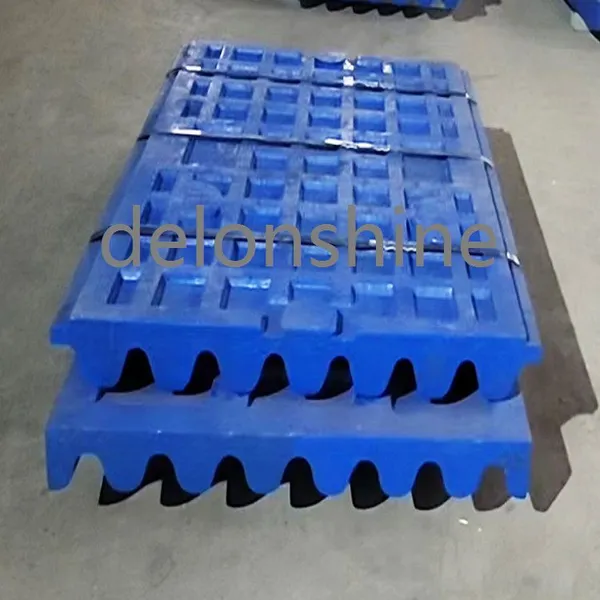
A jaw crusher plate is defined by its thickness and by the jaw crusher plate tooth profile formed on its working face.
The thickness sets the wear allowance, since the plate can be used until the tooth form disappears or until the remaining section becomes unsafe.
The tooth section governs the grip, because a jaw breaks rock by compressing it between two surfaces and by restraining it long enough for the crack to run.
The two dimensions are not independent.
A deep tooth on a thin plate leaves little metal behind the tooth root, and that is where cracks begin.
A shallow tooth on a heavy plate gives a strong part but a poor grip on coarse feed, so the crusher produces more fines and less shaped product.
The table below lists the main geometric features and what each one controls.
| Feature | Typical range | What it controls |
|---|---|---|
| Plate thickness | 40 to 150 millimetres | wear allowance and part weight |
| Tooth pitch | 30 to 80 millimetres | grip on coarse feed |
| Tooth depth | 20 to 50 millimetres | how long the profile keeps its edge |
| Tooth angle | 60 to 110 degrees | nipping behaviour and slip |
| Root radius | 5 to 15 millimetres | resistance to root cracking |
2. Jaw Crusher Plate Tooth Profile Types
Four jaw crusher plate tooth profile families cover most machines in service, and each suits a particular feed.
A sharp or tall tooth bites deeply into large lumpy rock and is common on primary crushers handling blasted material.
A corrugated profile alternates ridges and grooves across the face and gives a balanced grip that works across a wide range of feed sizes.
A flat or plain face suits fine and sticky material, and a rounded tooth reduces the risk of packing on wet feed.
The profile also changes the way the plate wears.
A sharp tooth loses its advantage as soon as the tip flattens, and the product coarsens quickly at that point.
A corrugated face wears more evenly because the ridges take the load first and the grooves continue to grip after the crests have worn.
Matching the profile to the feed is the decision that matters most, and it usually matters more than the grade of steel behind it.
Shenyang Delonshine Technology Co Ltd reviews the feed size distribution with a customer before recommending a profile, because the same machine can call for two different profiles on two different sites.
3. Corrugated Jaw Plate versus Smooth Plate
A corrugated jaw plate and a smooth plate behave differently enough that the choice changes daily output rather than wear life alone.
The corrugated face holds material between the ridges and prevents it from rising out of the chamber, which raises the proportion of rock that is broken by compression rather than by attrition.
A smooth face lets material slip upward more readily, and it clears sticky feed better than a ridged face does.
The trade is straightforward.
Corrugated faces give better grip and a more consistent product on hard abrasive rock, and they are the common choice for primary crushing of granite, basalt and hard limestone.
Smooth faces give a cleaner discharge on wet or clay bearing feed, where bridging at the feed opening would otherwise reduce throughput.
The table below sets the two profiles side by side.
| Behaviour | Corrugated face | Smooth face |
|---|---|---|
| Grip on coarse rock | strong | moderate |
| Product shape | more cubical | more slabby |
| Sticky feed | can bridge | clears well |
| Wear pattern | even along the face | concentrated at the discharge end |
| Reversible | often yes when symmetric | usually yes |
4. Jaw Plate Thickness Specification and Where It Comes From
A jaw plate thickness specification is set by the machine manufacturer and is written on the original drawing as a nominal figure with a tolerance.
The nominal thickness provides the wear allowance, and the tolerance allows the foundry to cast and machine the plate within a band that will still fit the seat.
Deviating from the nominal figure is possible, and it should be a deliberate decision rather than a convenience.
A thicker plate carries more metal behind the tooth root and lasts longer, and it also weighs more.
A thinner plate suits a machine with a low lifting capacity or a plant that wants to reduce freight cost per set.
The saving is real, and so is the shorter interval between changes.
A quarry processing granite found that a plate ordered to the original thickness of 60 millimetres lasted about seven months, while a plate supplied 10 millimetres thinner reached its wear limit in five. The thinner plate had been chosen to reduce weight on a machine with a modest lifting capacity. Recording the tonnage between changes showed that the saving in handling cost was smaller than the loss in service life, and the plant returned to the heavier section at the next order.
5. Tooth Pitch, Depth and Angle in Jaw Crusher Plate Design
Tooth pitch is the distance from one crest to the next, and it should be matched to the feed rather than chosen from a catalogue default.
A pitch that is too wide lets fine material pass without being gripped, and a pitch that is too narrow packs with fines and loses the grip it was meant to provide.
As a working guide, the pitch should be roughly half the top size of the feed for primary crushing.
Tooth depth behaves in a similar way.
A deep tooth keeps its profile longer, because there is more metal to wear away before the face goes flat.
A shallow tooth on a hard feed may lose its profile within a few months, even though the plate thickness is still substantial.
Tooth angle decides whether rock is nipped or pushed upward.
Too steep an angle and material rides out of the chamber, too shallow an angle and the bite is weak; the design range sits between 60 and 110 degrees for most machines.
The root radius matters as much as the angle, since a generous radius spreads the bending stress that a sharp corner would concentrate.
Delonshine Technology reviews both figures with a customer whenever a new profile is drawn for a machine.
6. How Plate Thickness Affects Weight and Handling
Plate weight rises directly with thickness, and that affects more than the crane capacity of a maintenance bay.
A jaw plate 1,200 millimetres long, 900 millimetres wide and 100 millimetres thick weighs roughly 850 kilograms in manganese steel, and the same plate at 140 millimetres comes close to 1,200 kilograms.
Those figures decide the handling method on site.
The lighter plate can be lifted by the workshop crane and positioned by two fitters, while the heavier one needs a proper lifting fixture, a designated lifting point on the plate and a longer fitting window.
Freight cost follows the same curve, and a plant ordering a matched set of plates pays for weight twice, once in the ocean container and once in the maintenance labour.
The plate drawing should therefore record the jaw plate thickness specification and the lifting provision together.
Lifting lugs, tapped holes and a marked centre of gravity each reduce the time that a change takes and the risk of an injury.
7. Corrugated Jaw Plate Selection by Feed Size
A corrugated jaw plate suits a plant that wants one profile to cover a changing feed, and it is the safest default when the ore is variable.
The ridges grip coarse lumps and the grooves continue to hold smaller material after the crests wear, so the plate keeps working through the range.
Where the feed is closely sized, a sharper or flatter profile can be chosen to fit it more precisely.
The table below links the feed condition to a suggested profile.
| Feed condition | Suggested profile | Reason |
|---|---|---|
| Blasted hard rock, large top size | tall sharp tooth | deep bite on coarse lumps |
| Mixed sizes, hard and abrasive | corrugated | grip across the size range |
| Fine or friable material | flat or rounded | reduces fines and packing |
| Wet or clay bearing feed | smooth | clears bridging at the opening |
One limestone operation with a sticky, clay bearing feed changed from a corrugated jaw plate to a smooth profile and reduced bridging at the feed opening. The smooth profile cleared the material more readily, and the plant accepted a somewhat shorter wear life in exchange for steadier throughput.
Shenyang Delonshine Technology casts both profiles and can advise on the choice from the feed data alone.
8. Reading a Jaw Plate Drawing Before Ordering
A jaw plate drawing carries more information than the outside dimensions, and each figure on it has a purpose at the fitting stage.
Confirming the drawing before the order is placed prevents a casting that fits the machine poorly and cannot be corrected afterwards.
Checking the jaw plate thickness specification against the seat depth belongs in that same review.
The table below lists the entries that a plant should check line by line.
| Drawing entry | Why it matters |
|---|---|
| Length, width, thickness with tolerance | fit in the seat and wear allowance |
| Tooth pitch, depth and angle | grip and product sizing |
| Bolt hole diameter and circle | attachment to the jaw stock |
| Counterbore depth | bolt head clearance as the plate wears |
| Root radius and fillet notes | fatigue resistance at the tooth base |
| Material grade and hardness | wear life and toughness balance |
| Weight and lifting provision | safe handling during the change |
Shenyang Delonshine Technology checks a drawing against the mould before casting and raises any mismatch with the customer rather than filling the gap with an assumption.
9. Frequently Asked Questions about Jaw Crusher Plate Geometry
9.1 Which jaw crusher plate tooth profile gives the longest wear life?
A profile with a deeper tooth and a generous root radius generally lasts longest, because there is more metal to wear away and the stress at the base is spread over a wider area. A corrugated face also tends to wear more evenly than a sharp tooth, which loses its advantage as soon as the tips flatten. The grade of steel behind the profile matters too, and a deep tooth cast in a soft grade can outperform a shallow tooth cast in a hard one.
9.2 How is jaw plate thickness specification decided?
The thickness specification normally comes from the crusher manufacturer and is written on the original drawing as a nominal figure with a machining tolerance. It reflects the wear allowance the machine was designed around, so a plate 20 percent thinner than the nominal figure will reach its limit sooner by roughly that proportion. Where a plant wants to change the thickness for handling or freight reasons, the decision should be recorded against the tonnage figures for the previous set. That record is what allows the next order to be judged on measured data rather than on impression.
9.3 When should a plant choose a corrugated jaw plate?
A corrugated jaw plate is the sound choice when the feed varies in size and the rock is hard and abrasive. The ridges grip coarse lumps, and the grooves keep holding smaller material after the crests have worn, so the plate stays effective across a wide size range. It is the common default for primary crushing of granite and basalt, and it is also reversible on many symmetric designs, which adds a period of service. A plant that draws feed from several pits will find that advantage worth more than a small gain in wear life.
9.4 Can a jaw plate be reversed to extend its life?
Reversing works on a symmetric profile with an even face, because the worn end then moves to the discharge side and the sharper end takes the feed. It adds a period of service at a coarser grip, since the rebuilt profile is less defined than the original. The practice is not possible on a tooth form that is asymmetric, or on a plate that carries lifting lugs or a wear step on one face. Measuring the wear at both ends before and after the reversal shows how much the second period adds in practice.
Recently Posted
-
Lead Time Planning for Jaw Crusher Toggle Plates
September 23, 2026A toggle plate is a small casting against the weight of a jaw crusher, and that is exactly why it is easy to leave out of the purc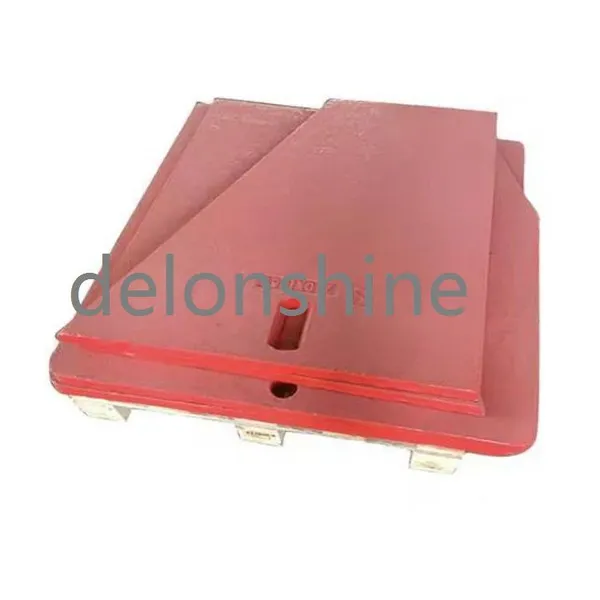 Read More
 -
Mining Equipment End Covers for Mobile and Semi-Mobile Plants
September 23, 2026A mobile crushing plant moves, and every heavy casting inside it has to survive that movement as well as the duty it was designed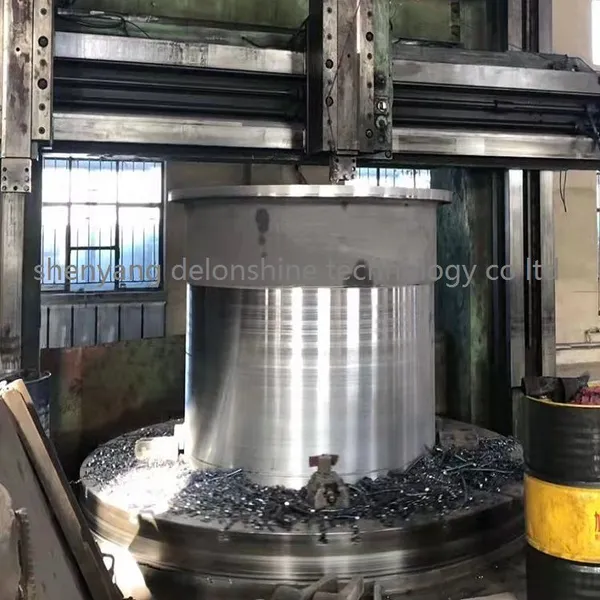 Read More
 -
Jaw Crusher Plate Replacement Planning and Reorder Points
September 22, 2026A jaw crusher rarely stops because the machine itself has failed. It stops because a consumable part reached the end of its workin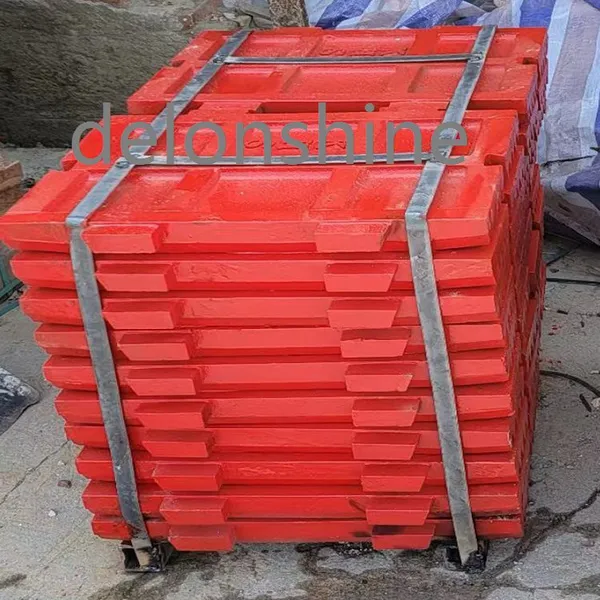 Read More
 -
Mining Equipment End Covers in Iron Ore Crushing Lines
September 22, 2026An iron ore plant in Western Australia ran a three stage crushing line for six years before a structural casting failed. The circu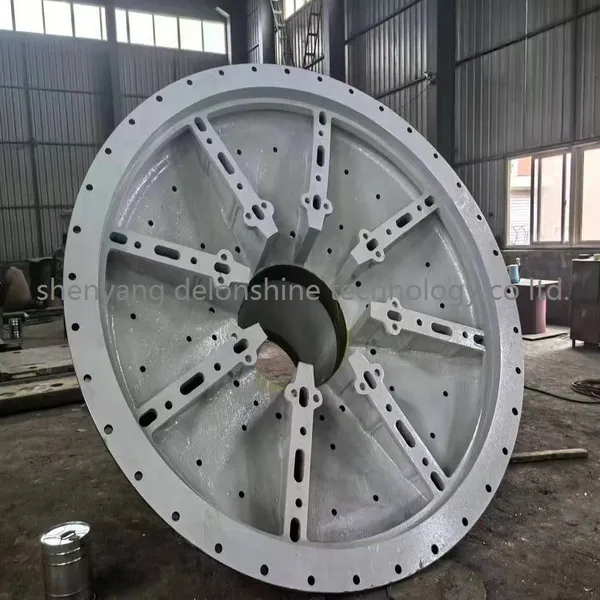 Read More

Contact Us
Recommended Products
-
 Vertical Mill Reducer Planetary Gear AssemblyNegotiableMOQ: 2 Combos
 -
High Precision Mining Equipment End Cover Wear Resistant Crusher End CapNegotiableMOQ: 2 Pieces
-
Heavy Duty Mining Equipment Cast HousingNegotiableMOQ: 2 Pieces
-
Mining Parts Concave MantleNegotiableMOQ: 2 Pieces
-
High Strength Cast Steel Crusher Lifting Beam Heavy Load Mining Equipment Spare PartNegotiableMOQ: 2 Pieces
-
OEM Replacement Mining Spare Parts for Stone Crushing PlantNegotiableMOQ: 2 Pieces
-
Cast Steel Ball Mill Head for Mineral ProcessingNegotiableMOQ: 2 Pieces
-
Large Diameter Cast Gear for Ore Grinding MillNegotiableMOQ: 2 Pieces
-
Wear Resistant Mining Spare PartsNegotiableMOQ: 2 Pieces
-
Industrial Wet Dry Ball Mill for Mineral ProcessingNegotiableMOQ: 2 Pieces


-
High Wear Resistant Ball Mill Wear Parts Ball Mill Gear Pinion Liner for Mining Processing PlantNegotiableMOQ: 2 Pieces
-
Heavy Duty Equipment CasingNegotiableMOQ: 2 Pieces
-
Customized Main Shaft for Cone CrusherNegotiableMOQ: 2 Pieces
-
Ball Mill Head With Flange and Bolt HolesNegotiableMOQ: 2 Pieces
-
Heavy Duty Equipment CasingNegotiableMOQ: 2 Pieces


-
Crusher Wear Parts for Mining MachineryNegotiableMOQ: 2 Pieces
-
High Manganese Steel Jaw Crusher Fixed & Swing PlatesNegotiableMOQ: 2 Pieces
-
Cast Steel Safety Toggle Plate for Jaw Crusher Overload ProtectionNegotiableMOQ: 2 Pieces
-
High Manganese Steel Mill LinerNegotiableMOQ: 2 Pieces
-
Main Shaft Steel Sleeve Lock Nut for Cone CrusherNegotiableMOQ: 2 Pieces