
 Business License

Jaw Crusher Toggle Plate Failure Modes: Bend, Crack or Shatter
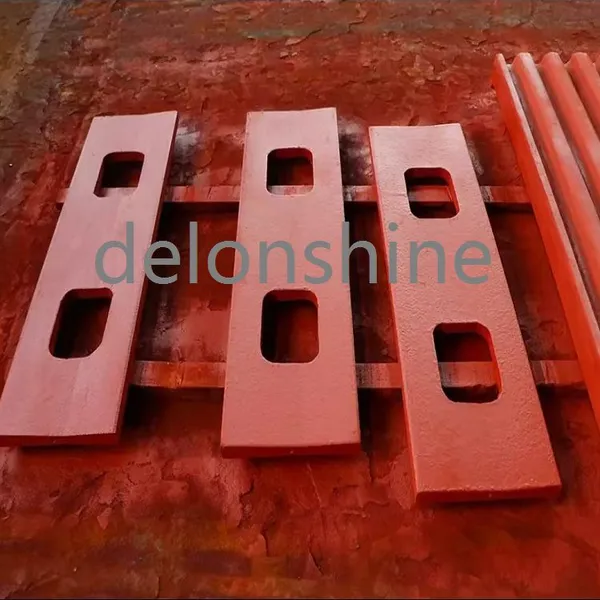
A jaw crusher toggle plate failure is a designed event rather than an accident, because the plate is the part that is meant to give way before anything stronger around it does.
A quarry lost a shift when a toggle plate shattered, and the replacement was fitted before anyone had asked why the plate that came out had been bowed.
The bow was the clue, since the plate had yielded slowly over several weeks before the last load finished it.
Toggle plate bending and toggle plate cracking sit at either end of one story about overload, and the way a plate fails tells a plant what its chamber has been asked to do.
This article sets out how a toggle plate is loaded, what each jaw crusher toggle plate failure mode looks like on an outgoing part, and what a maintenance team should record when a plate is replaced.
1. Jaw Crusher Toggle Plate Failure: The Link That Gives Way First
A jaw crusher toggle plate failure is a maintenance signal rather than a fault in its own right, because the plate is cast to be the weakest link in the load path.
The plate sits between the pitman and the rear frame, and it carries the full crushing force of the machine on every stroke.
It is made from a material that is deliberately softer than the frame, so that an unbreakable load bends or breaks the plate instead of the structure holding it.
A plant that treats a bent plate as a nuisance will keep feeding the machine the same way and will keep replacing the same part.
Reading a jaw crusher toggle plate failure correctly starts from the idea that the plate is reporting a load the chamber could not break.
Three things decide how the plate behaves under that load.
The force the chamber generates, which rises with the size of the rock and falls as the discharge setting opens.
The material of the plate itself, since a cast iron plate and a mild steel plate reach their limit at different loads.
And the way the plate is seated, because a plate that does not sit flat carries the load on one edge rather than across its face.
On a 1100 by 850 millimetre machine the toggle plate is often 60 to 90 millimetres thick, and the two seating faces are machined flat to within about 0.1 millimetres of each other.
2. What the Toggle Plate Does Under Load
The toggle plate is the link that closes the crushing cycle, and its geometry sets how hard the swing jaw pushes against the rock.
On each revolution of the eccentric shaft, the pitman moves forward and the plate transmits that movement to the swing jaw.
The plate is loaded in compression along its length, and the force it carries commonly falls between 100 and 300 tonnes on a large machine.
Because the load is compressive, the failure of the plate is decided by buckling rather than by tensile strength.
A plate that buckles has already been overloaded, while a plate that cracks has been loaded many times near its limit.
Those two paths are what separate toggle plate bending from toggle plate cracking in service.
3. Toggle Plate Bending: The Slow Overload
Toggle plate bending develops over a period rather than in a single stroke, and it is the more forgiving of the two gradual modes.
The plate starts to bow out of line when the chamber is repeatedly fed material it cannot break within the force it was designed to carry.
The bow may be a few millimetres at first and is often missed, because the machine continues to run and the product stays on grade.
By the time the bow is visible from the walkway, the plate has usually taken several overload events.
A plate that has bowed is shorter along its loaded axis, so the discharge setting opens and the product drifts coarse without an adjustment being made.
Four conditions produce that slow overload.
A discharge setting that is tighter than the chamber can hold, which raises the force on every stroke.
A feed that carries lumps above the size the opening was set for.
A feeder that is not spreading material across the full width of the chamber.
And a drive running faster than the machine was designed for, which increases the number of overloaded strokes per hour.
Measuring the bow against a straight edge takes a minute and is the quickest check available at the machine.
A plate out of line by more than about 3 millimetres is normally replaced rather than straightened and returned.
4. Toggle Plate Cracking: The Fatigue Path
Toggle plate cracking begins at a stress raiser and grows a little with every stroke until the remaining section can no longer carry the load.
The usual starting points are a casting defect, a sharp corner at the seating face, or a nick left by a handling accident.
A crack of 2 to 5 millimetres can sit unnoticed on the edge of the plate for months, because the machine gives no warning while the section is still sound.
Once a crack reaches roughly a third of the width of the plate, the remaining life is short and hard to predict.
That is why toggle plate cracking is found by inspection rather than by a change in the way the machine runs.
A dye penetrant check covers the full plate in about 20 minutes once the chamber is open.
Three checks bring the crack to light while the plate is still serviceable.
A dye penetrant check along both seating faces after every plate change.
A visual check of the plate edges whenever the chamber is opened for a liner measurement.
And a written note of any event in which the machine was stopped by an uncrushable load.
A plate that has survived a tramp metal event should be inspected rather than assumed sound, because the crack from that event often appears weeks later.
Marking the date of the event on the maintenance card is what makes that later inspection happen.
A crack found within 500 hours of the event is usually still short enough for the plate to be replaced before it reaches a third of the plate width.
5. Jaw Crusher Toggle Plate Failure When the Plate Shatters
A shattered plate is the sudden form of jaw crusher toggle plate failure, and it is the one that stops a plant.
The plate breaks into two or more pieces rather than bowing out of line, and the pitman can then swing back through its full arc without a load.
That movement is what damages other parts, which is the reason the toggle plate is often described as the least costly insurance in the machine.
The consequences of a shatter reach well beyond the plate itself.
Four outcomes follow a break and a maintenance planner should expect all of them.
A cracked or bent pitman, which is the most costly single result of the event.
Damage to the rear frame seating faces, where the plate tore out rather than releasing cleanly.
Jaw plates cracked or displaced by the sudden change in load, which can add a second set to the repair bill.
And a feeder that keeps running while the machine is stopped, which fills the chamber above the broken parts.
A shattered plate carries more information than a bowed one, because the break face shows where the load was applied.
A break running across the middle points at a single large overload, while a break starting at one corner points at uneven seating.
Photographing both halves before they leave the yard is the least costly form of evidence a plant can keep.
6. The Three Jaw Crusher Toggle Plate Failure Modes Compared
The three jaw crusher toggle plate failure modes differ in how they start, how long they take and what they cost the plant.
Setting them side by side makes the right inspection interval easier to choose.
The table below sets out the three modes and the response each one asks for.
| Mode | How it starts | Time to failure | First response |
|---|---|---|---|
| Bending | repeated overload | weeks to months | check the setting and the feed size |
| Cracking | a stress raiser at a seating face | months | dye penetrant and visual inspection |
| Shattering | a single uncrushable load | instant | inspect the pitman and the frame seats |
A plant that sees bending twice in a year is running a chamber that is too tight for the material it is being fed.
A plant that sees cracking on plate after plate is buying castings whose seating face is not clean.
Delonshine Technology casts the toggle plate and the jaw plates for a chamber to one set of drawings, so the load path through the machine is considered in a single document.
7. Toggle Plate Bending and Cracking After Tramp Metal
Tramp metal is the most common single cause of both toggle plate bending and toggle plate cracking, and it is the event most often recorded badly.
An excavator tooth, a drill bit or a length of chain enters the chamber and cannot be broken, so the force rises until the plate yields.
A plate that bows on that event may return to service if the bow is small, while a plate that has been loaded near its limit should be replaced.
The decision is easier when the plant knows the plate has seen a tramp event, which is why the machine log matters more than the plate itself.
Three controls reduce how often the event happens.
A metal detector or a magnet on the feed belt ahead of the crusher.
A shorter interval between bucket tooth inspections on the loading unit.
And a standing rule that the feeder is stopped before anyone enters the chamber.
None of those controls removes the event entirely, so the plate is still the part that protects the frame.
A plant that replaces a bowed plate without tracing the metal source will replace it again within a few months.
Shenyang Delonshine Technology asks about tramp metal handling on every jaw crusher enquiry, because the answer changes which plate material suits the site.
8. Recording Jaw Crusher Toggle Plate Failure in Maintenance Records
A jaw crusher toggle plate failure becomes useful information when it is recorded against the tonnage and the events that produced it.
The plate itself is the evidence, and a photograph taken before it is discarded costs nothing.
Four fields turn that photograph into a record a supplier can work from.
The tonnage passed since the previous plate was fitted, taken from the plant log rather than estimated.
The measured bow, or the length and position of any crack.
The discharge setting the machine had been running.
And a note of any uncrushable load the machine had taken since the previous change.
Shenyang Delonshine Technology asks for that record before quoting a replacement, because a plate is rarely the first cause of its own failure.
Delonshine Technology supplies toggle plates in more than one material, so a plant can choose a grade that yields early and protects the frame, or one that resists bowing where tramp metal is rare.
Shenyang Delonshine Technology Co Ltd treats the toggle plate, the jaw plates and the seating faces as one load path, which is what makes a replacement set work with the machine rather than against it.
9. Frequently Asked Questions about Jaw Crusher Toggle Plate Failure
9.1 What is a jaw crusher toggle plate failure?
A jaw crusher toggle plate failure is the yielding of the plate that links the pitman to the rear frame, and it happens when the crushing force passes the limit the plate was built to carry. The plate is designed to give way first, so a failure normally protects the pitman and the frame from damage. It appears as a bow along the length of the plate, a crack starting at a seating face, or a break into two pieces. Each form points to a different overload history, which is what makes the part worth reading rather than simply replacing.
9.2 What causes toggle plate bending?
Toggle plate bending is caused by repeated overload rather than by a single event in most cases. A discharge setting that is tighter than the chamber can hold, a feed carrying lumps above the size the opening was set for, and a feeder that delivers to one side all raise the force on every stroke. Running the machine above its rated speed adds to the count of overloaded strokes in an hour. A single uncrushable object can also bow a plate in one pass, and that case is normally written into the machine log.
9.3 What are the signs of toggle plate cracking?
Toggle plate cracking usually shows first at a seating face or a sharp corner, where the stress concentrates. A crack of two to five millimetres can sit on the edge of the plate for months without changing how the machine runs, so the sign is found by inspection rather than by sound or by product grading. A dye penetrant check after every plate change, a visual check whenever the chamber is opened, and a note of any uncrushable load are what bring the crack to light while the plate is still serviceable.
9.4 How should a plant record a jaw crusher toggle plate failure?
A plant should record a jaw crusher toggle plate failure against the tonnage the plate has carried and the events the machine has seen. A photograph of the plate before it is discarded, the measured bow or the length and position of the crack, the discharge setting in use, and a note of any uncrushable load together describe the case. Kept over three or four plates, those records turn replacement from a habit into a decision. A supplier can then quote against the measured duty rather than a nominal figure for the machine.
Recently Posted
-
Bowl Liner and Mantle: How the Two Cone Crusher Liners Work Together
October 13, 2026A mantle and bowl liner set that is renewed one half at a time usually costs a plant more than a cone liner pair changed as a set,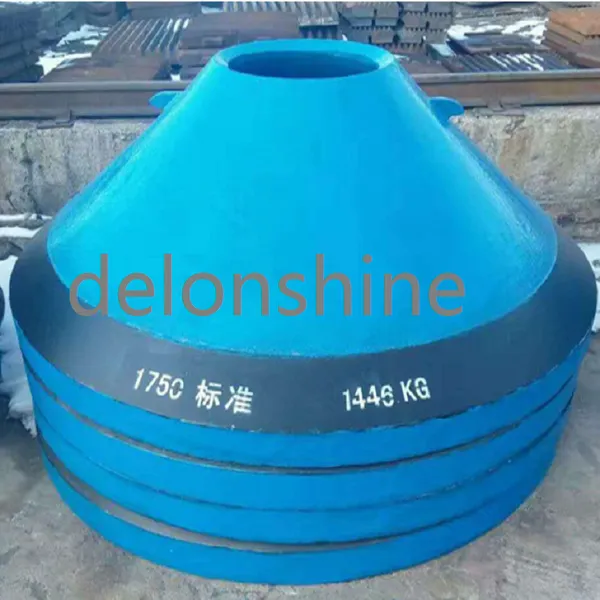 Read More
 -
Bowl Liner Explained: The Stationary Bowl Liner in a Cone Crusher
October 13, 2026An bowl liner cone crusher part is the stationary liner that lines the crushing chamber and breaks rock against a moving mantle by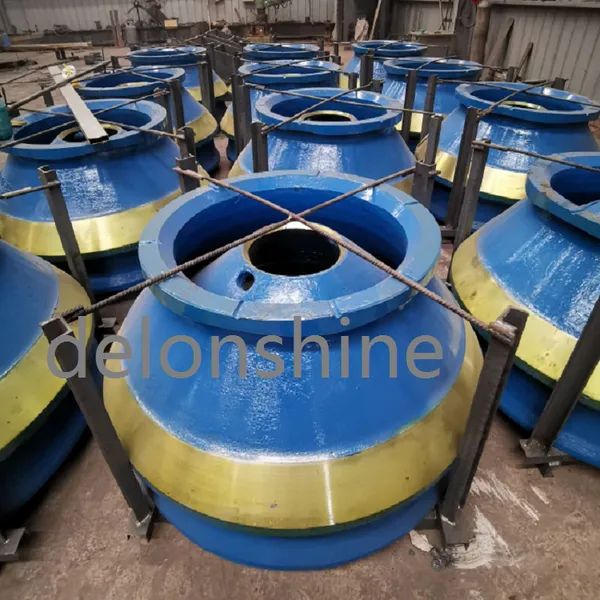 Read More
 -
Manganese Grade Selection for Cone Crusher Bowl Liners
October 13, 2026An Mn18 bowl liner and an Mn22 cone liner are the two grades that most cone crusher chambers are supplied in, and the choice between them decides how the part behaves when the chamber meets tramp metal. The manganese cone liner grade is not a quality label; it is a statement about how much manganese sits in the steel, and that figure changes the balance between hardness and toughness. This article sets out the chemistry behinRead More -
Cone Crusher Wear Parts Map: Mantle, Bowl Liner and Lock Nut
October 13, 2026A cone crusher wear parts map is a single drawing that shows where every wearing part sits inside the machine, so a plant orders against a position rather than against a description of a shape. Requests for a cone crusher wear parts map often arrive as a photograph of a worn ring on a bench, with no indication of which of the four or five similar rings in the machine it came from. A cone crusher head assembly carries the mantRead More

Contact Us
Recommended Products
-
 Vertical Mill Reducer Planetary Gear AssemblyNegotiableMOQ: 2 Combos
 -
High Precision Mining Equipment End Cover Wear Resistant Crusher End CapNegotiableMOQ: 2 Pieces
-
Heavy Duty Mining Equipment Cast HousingNegotiableMOQ: 2 Pieces
-
Mining Parts Concave MantleNegotiableMOQ: 2 Pieces
-
High Strength Cast Steel Crusher Lifting Beam Heavy Load Mining Equipment Spare PartNegotiableMOQ: 2 Pieces
-
OEM Replacement Mining Spare Parts for Stone Crushing PlantNegotiableMOQ: 2 Pieces
-
Cast Steel Ball Mill Head for Mineral ProcessingNegotiableMOQ: 2 Pieces
-
Large Diameter Cast Gear for Ore Grinding MillNegotiableMOQ: 2 Pieces
-
Wear Resistant Mining Spare PartsNegotiableMOQ: 2 Pieces
-
Industrial Wet Dry Ball Mill for Mineral ProcessingNegotiableMOQ: 2 Pieces


-
High Wear Resistant Ball Mill Wear Parts Ball Mill Gear Pinion Liner for Mining Processing PlantNegotiableMOQ: 2 Pieces
-
Heavy Duty Equipment CasingNegotiableMOQ: 2 Pieces
-
Customized Main Shaft for Cone CrusherNegotiableMOQ: 2 Pieces
-
Ball Mill Head With Flange and Bolt HolesNegotiableMOQ: 2 Pieces
-
Heavy Duty Equipment CasingNegotiableMOQ: 2 Pieces


-
Crusher Wear Parts for Mining MachineryNegotiableMOQ: 2 Pieces
-
High Manganese Steel Jaw Crusher Fixed & Swing PlatesNegotiableMOQ: 2 Pieces
-
Cast Steel Safety Toggle Plate for Jaw Crusher Overload ProtectionNegotiableMOQ: 2 Pieces
-
High Manganese Steel Mill LinerNegotiableMOQ: 2 Pieces
-
Main Shaft Steel Sleeve Lock Nut for Cone CrusherNegotiableMOQ: 2 Pieces