
 Business License

Export Logistics for Mining Spare Parts from China
Mining spare parts export logistics sits between two sets of constraints: the weight and shape of the parts, and the fixed schedule of the vessels that carry them.
A cast end cover weighing several tonnes does not fit the assumptions behind a standard container booking, and a buyer who discovers that at the port pays for the lesson.
This article covers how China port shipping for castings is arranged, which heavy parts sea freight method suits which load, and how documents and insurance fit together.
It is written for purchasing teams moving from a single trial order to a regular supply programme.
1. What Mining Spare Parts Export Logistics Has to Solve
Mining spare parts export logistics has to reconcile three things that pull in different directions: weight, shape and schedule.
A mill liner or an end cover is dense, so a small number of pieces can reach the payload limit of a container before the container looks full.
The same part may be too wide to pass through the door of a standard box, which rules that box out entirely.
And the vessel sails on a fixed day whether or not the castings are ready, so production and transport have to be planned together.
The destination adds its own limits.
A container that is legal on the water may be overweight for the road journey from the port to the mine, and several countries enforce strict axle limits.
Buyers in those markets often split a heavy shipment across two containers or book a flat rack instead, which costs more on the water and less on the road.
Understanding those limits at the quotation stage avoids most of the surprises.
Delonshine Technology asks for the destination and the site access route before recommending a loading method, because the answer changes with both.
2. Booking China Port Shipping for Castings
China port shipping for castings starts with a choice of port, and the choice is usually driven by the factory location rather than by the sailing schedule alone.
A foundry in the north east ships most naturally through Dalian, while plants further south use Tianjin, Qingdao or Shanghai.
The inland haulage to the port is part of the cost, so a port with a slightly longer voyage can still be the cheaper option.
Once the port is fixed, three deadlines drive the booking.
The booking cut off comes first, typically several days before the vessel sails, and it reserves space for the load.
The shipping instruction cut off follows, and this is where the shipper confirms the consignee, the marks and the description that will appear on the bill of lading.
The verified gross mass then has to be submitted before the container can be loaded, since a carrier will not accept a packed box without it.
Missing any of those deadlines usually means the load waits for the next sailing.
For a heavy part that is already at the port, a missed sailing is an expensive way to learn the schedule.
Shenyang Delonshine Technology books through forwarders at all four ports it uses and confirms the deadlines in writing when an order is placed.
A buyer comparing China port shipping for castings should compare the door to door figure rather than the ocean freight line alone, since terminal handling and inland transport differ between ports.
3. Choosing a Method for Heavy Parts Sea Freight
Heavy parts sea freight offers several methods, and the right one depends on the weight, the dimensions and the quantity.
A full container load suits parts that fit inside a standard box and stay within its payload limit.
A flat rack or an open top container suits a part that is too wide or too tall for a box, and a breakbulk or heavy lift vessel suits a single piece beyond the capacity of any container.
The table below sets out the usual choices.
| Load | Method | Consideration |
|---|---|---|
| Parts fitting a standard box | full container load | payload limit comes before volume |
| Over-width castings | flat rack | open sides, lashed to the platform |
| Over-height castings | open top container | loaded by crane, sheeted over |
| Mixed light and heavy items | full container load with bracing | heavy items on the floor, light on top |
| Single very heavy casting | breakbulk or heavy lift | crane capacity at both ports |
| Small urgent quantity | air freight | high cost per kilo |
Weight limits deserve a specific mention.
A 20 foot container has a nominal payload of roughly 28 tonnes, but road limits in many destinations reduce the practical figure well below that.
A buyer who needs the full weight is better served by two boxes or a flat rack, even though the ocean freight figure looks higher at first.
4. Heavy Parts Sea Freight and Container Loading
Heavy parts sea freight is decided long before the vessel sails, because the way a casting is placed inside a container determines whether it survives the voyage.
Every piece has to be restrained against movement in three directions, and a casting that shifts at sea becomes a hammer against the container wall.
Four points govern the loading plan.
Heavy pieces go on the container floor directly, never on top of a lighter item.
Weight is spread across the floor with timber dunnage, so the point load does not punch through the boards.
Bracing runs from the casting to a structural part of the container rather than to a thin panel.
And sharp edges are protected before strapping, since a steel band cut by a casting edge will part within hours.
Steel cradles are used for parts with an irregular shape.
A cradle made for one casting holds it at the correct angle and spreads the load over a broad base, and the same cradle can often be reused on the return order.
Timber used in packing or bracing must be heat treated to the international standard, and the marking is checked at the destination port.
5. Documentation for Mining Spare Parts Export
Documentation for mining spare parts export is short in list but unforgiving in detail.
One wrong number on a bill of lading can stop a container at the destination and add weeks to the schedule.
The table below lists the documents that normally travel with a shipment.
| Document | Purpose | Issued by |
|---|---|---|
| Commercial invoice | value and terms of sale | seller |
| Packing list | contents, weights and marks per package | seller |
| Bill of lading | contract of carriage and title | carrier or forwarder |
| Certificate of origin | origin for duty purposes | authority |
| Material certificate | proof of the grade supplied | foundry |
| Insurance certificate | cover for the voyage | insurer |
The bill of lading is the document to watch.
An original set must travel by courier and be surrendered at the destination, while a telex release releases the cargo against an electronic instruction.
A sea waybill avoids that step altogether and suits a buyer who does not need a negotiable document.
Whichever form is chosen, the description has to match the packing list exactly.
Errors in mining spare parts export logistics paperwork rarely stay local, and a description that differs from the packing list can hold a container at the destination for several days.
6. Port Handling and Inland Haulage for Castings
Port handling and inland haulage for castings is the stage most often underestimated in cost and in time.
A container lift is routine, but a 20 tonne casting on a flat rack needs a crane with the right capacity and a berth that can accommodate it.
The inland leg has its own constraints.
Road weight limits, bridge restrictions and urban curfews can all change the route that a heavy load may take.
A permit is often needed for an oversize or overweight movement, and the permit takes time to obtain.
Where a site has no hard standing for a heavy crane, the buyer may need to arrange a smaller crane or offload at a nearby depot.
Rail is sometimes an option for the inland leg in destinations with a strong network, and it can be cheaper for a long haul where the railhead is close to the site.
Buyers weighing China port shipping for castings often find that the inland leg inside the destination country costs more than the sea leg itself, which is why the route to site belongs in the quotation.
The decision belongs to the buyer in most sale terms, but a supplier who knows the destination can flag the constraint early.
A copper mine in South America ordered two end covers on a flat rack. The covers were within the container payload limit but exceeded the axle limit on the mountain road to the site. The buyer arranged a permit and split the load onto two trucks from the port, and the delivery completed two days later than planned rather than two weeks.
7. Insurance and Risk in Heavy Parts Sea Freight
Insurance in heavy parts sea freight is cheap relative to the value it protects, and the cover level should be chosen rather than assumed.
Marine cargo cover is normally written under one of three standard sets of conditions, offering broad, intermediate or narrow protection.
The broad form covers most external causes, the intermediate form excludes certain events, and the narrow form covers the listed perils alone.
Several risks are worth naming.
Condensation inside a container can rust machined faces on a long voyage, and a crate lined with a vapour barrier greatly reduces it.
Shifting cargo is the second, and it is controlled by lashing rather than by insurance.
Handling damage at the destination port is the third, and it is the reason a joint survey at the quay has value.
Cover should run from the workshop door to the site, not just from port to port.
A gap between the inland legs and the sea voyage is the classic place where a claim fails.
Delonshine works with the buyer and the forwarder to confirm that the insured leg matches the actual route the goods will take, and Shenyang Delonshine Technology Co Ltd provides the packing and loading detail an insurer needs before the booking is confirmed.
8. Reducing Cost in Mining Spare Parts Export Logistics
Reducing cost in mining spare parts export logistics is usually a matter of design and planning rather than of negotiating a lower freight rate.
The weight of a casting decides which method is available, so a small reduction in section can open up a cheaper option.
Four practical levers are worth considering.
Combining several parts in one container cuts the number of freight movements, since the sea leg is paid once.
Choosing a port close to the factory reduces inland haulage, which for a heavy load can be a large share of the total.
Booking early secures space on the planned sailing, while a late booking often pays a premium or waits.
And a reusable steel cradle can remove the cost of building new packing for every shipment.
Packing weight is a lever that is easy to overlook.
A crate built far heavier than the load needs adds freight on every shipment and provides nothing in return.
A crate designed to the actual load protects the part and keeps the bill down.
A quarry group in Africa consolidated three separate spare orders into one shipment of 18 tonnes. The parts had been arriving on three sailings a quarter, and consolidating them into one reduced the total freight and the port handling charges while keeping the same stock position.
9. Frequently Asked Questions about Export Logistics for Mining Spare Parts
9.1 How is container capacity decided for heavy castings?
Container capacity for heavy castings is decided by payload rather than by volume in most cases. A 20 foot container has a nominal payload of roughly 28 tonnes, and dense castings can reach that figure while the box is still half empty. Road weight limits at the destination often reduce the practical figure further, so a load that is legal at sea may need two containers on land. The loading plan should start from the payload limit and the axle limit together.
9.2 What is the difference between a flat rack and a standard container for castings?
A standard container encloses the cargo and protects it, but it cannot accept a casting wider than about 2.3 metres. A flat rack has no side walls or roof, so an over-width or over-height casting can be loaded by crane and lashed to the platform. The trade off is exposure, since the cargo sits in the open and needs its own protection against rain and spray. Flat racks are also usually charged at a higher rate than a standard box.
9.3 Which documents must travel with a mining spare parts shipment?
A mining spare parts shipment normally travels with a commercial invoice, a packing list, a bill of lading, a certificate of origin, a material certificate and an insurance certificate. The bill of lading is the one that causes the most delay when it is wrong, because the description has to match the packing list exactly. An original set must be couriered and surrendered at the destination, while a telex release or a sea waybill removes that step but changes the buyer's control over the cargo.
9.4 How can freight cost be lowered on a heavy parts sea freight shipment?
Heavy parts sea freight can be lowered by consolidating parts into fewer shipments, since the sea leg is paid once per container. Choosing a port close to the factory cuts inland haulage, which is a large share of the cost for a dense load. Booking early secures space on the planned sailing instead of paying a late premium, and a reusable steel cradle removes the cost of building new packing for every order. Packing built to the actual load rather than far heavier also saves weight on every sailing.
Recently Posted
-
Bowl Liner and Mantle: How the Two Cone Crusher Liners Work Together
October 14, 2026A mantle and bowl liner set that is renewed one half at a time usually costs a plant more than a cone liner pair changed as a set,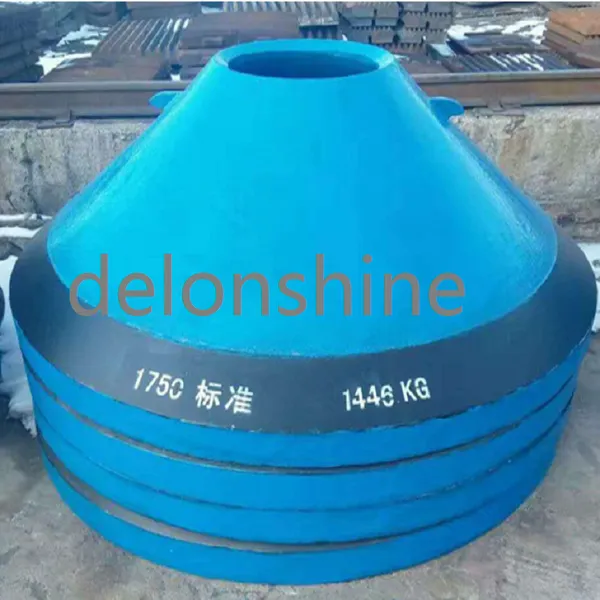 Read More
 -
Bowl Liner Explained: The Stationary Bowl Liner in a Cone Crusher
October 14, 2026An owl liner cone crusher part is the stationary liner that lines the crushing chamber and breaks rock against a moving mantle by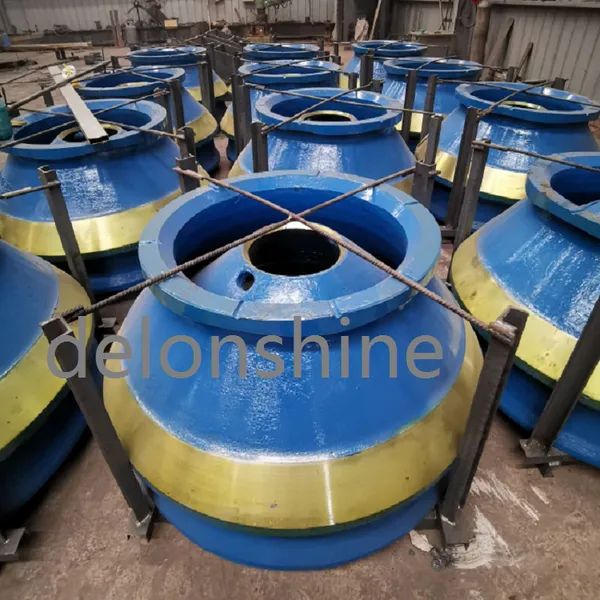 Read More
 -
Bowl Liner and Mantle: How the Two Cone Crusher Liners Work Together
October 13, 2026A mantle and bowl liner set that is renewed one half at a time usually costs a plant more than a cone liner pair changed as a set,
Read More -
Bowl Liner Explained: The Stationary Bowl Liner in a Cone Crusher
October 13, 2026An bowl liner cone crusher part is the stationary liner that lines the crushing chamber and breaks rock against a moving mantle by
Read More

Contact Us
Recommended Products
-
 Vertical Mill Reducer Planetary Gear AssemblyNegotiableMOQ: 2 Combos
 -
High Precision Mining Equipment End Cover Wear Resistant Crusher End CapNegotiableMOQ: 2 Pieces
-
Heavy Duty Mining Equipment Cast HousingNegotiableMOQ: 2 Pieces
-
Mining Parts Concave MantleNegotiableMOQ: 2 Pieces
-
High Strength Cast Steel Crusher Lifting Beam Heavy Load Mining Equipment Spare PartNegotiableMOQ: 2 Pieces
-
OEM Replacement Mining Spare Parts for Stone Crushing PlantNegotiableMOQ: 2 Pieces
-
Cast Steel Ball Mill Head for Mineral ProcessingNegotiableMOQ: 2 Pieces
-
Large Diameter Cast Gear for Ore Grinding MillNegotiableMOQ: 2 Pieces
-
Wear Resistant Mining Spare PartsNegotiableMOQ: 2 Pieces
-
Industrial Wet Dry Ball Mill for Mineral ProcessingNegotiableMOQ: 2 Pieces


-
High Wear Resistant Ball Mill Wear Parts Ball Mill Gear Pinion Liner for Mining Processing PlantNegotiableMOQ: 2 Pieces
-
Heavy Duty Equipment CasingNegotiableMOQ: 2 Pieces
-
Customized Main Shaft for Cone CrusherNegotiableMOQ: 2 Pieces
-
Ball Mill Head With Flange and Bolt HolesNegotiableMOQ: 2 Pieces
-
Heavy Duty Equipment CasingNegotiableMOQ: 2 Pieces


-
Crusher Wear Parts for Mining MachineryNegotiableMOQ: 2 Pieces
-
High Manganese Steel Jaw Crusher Fixed & Swing PlatesNegotiableMOQ: 2 Pieces
-
Cast Steel Safety Toggle Plate for Jaw Crusher Overload ProtectionNegotiableMOQ: 2 Pieces
-
High Manganese Steel Mill LinerNegotiableMOQ: 2 Pieces
-
Main Shaft Steel Sleeve Lock Nut for Cone CrusherNegotiableMOQ: 2 Pieces